Showing posts with label skin care products. Show all posts

Monday, July 16, 2018

20 Tasks to Simplify your Life

I aim to keep this post simple, but also to reflect on what I've done with my "summer off." I had a fear that if I turned down work, I would never be offered work again. This all-or-nothing type of thinking is not healthy. I also had a stigma associated with collecting unemployment. But this financial safety net has allowed me the freedom to buy and do things to make our lives better. This in turn makes us happier and better members of our community.

1) old mail = shred


I have a bad habit of letting mail pile up on our dining room table and then putting it in a bag and then putting that bag in the garage. I did this for years. Then I watched "hoarders" on netflix and got in gear. I started shredding this stuff by hand and then remembered that I could just as well take it to school. Plus side, I found some unused gift cards!

2) old papers = shred


I have a habit of keeping all student work and fearing throwing it out either because I thought I would forget what I've done in the classroom and also for reasons of confidentiality. Our mail services at CSUN has a program where you can request a trashcan for shredding and they do it for you. So I purged out so many old papers.

3) craft supplies = organized


I think it's every crafting diva's dream to have a 'craft room' where all the supplies are organized and accessible and projects can be started and stopped with ease. I can't say I have a 'craft room' but I do have a 'craft closet' and an oversized guest bedroom where I can do my papercrafts. Husband says no needles on carpeted floors, which I get, so the sewing machine is still in the garage.

4) bike supplies = organized


I'm sure it's also every gearhead's dream to have an organized garage where they can do maintenance and cleaning, to keep their equipment in tip top shape for the next adventure.

There's a funny store here in Northridge called "Mr. Stuff" and they have some really random inventory. One thing we bought there is this cart on wheels, which works really nicely for bike stuff. We've had it for 10 months now and I would say it is one of the best purchases I've made in the last year. It holds inner tubes, bike lights, helmets, locks, gloves, hats, bandannas, pumps, bags, all the things you need to grab and go. We built a bike rack to hold all our bikes and we have a bike stand to use when we need to clean or fix the bikes. These investments have lowered our stress and anxiety to make living a bikelife more enjoyable.

5) medicines = returned to pharmacy


I'm not sure if you have old prescription medications in you medicine cabinet, but I did. I had three bottles from 2008 and one from 2012. I knew that you can't flush them down the toilet because they can contaminate the municipal water supply or end up in the ocean, but I didn't know what was the best thing to do with them. Turns out Walgreen's pharmacies in California have a dropbox for this purpose. Not every location has one, so check online before you go.

6) electronics = recycled


We had two old cell phones, two old digital cameras, and a bunch of batteries that we dropped off at the Solvents/Automotive/Flammables/Electronics (S.A.F.E.) center. Now that I'm re-reading their flier, I should have also taken some old spray paint. Even though dear husband points out that landfills are sealed so that toxic wastes do not escape, I feel like this option may lead to reclaiming the trace amounts of rare earth elements that are present in our devices.

7) work office = organized, purged


This is an every semester thing, but it's important. I go through the stacks of chaos and rearrange important items into 3-ring binders. What paper can be recycled is put into a recycling bin. What paper must be shredded is sorted into the shredding bin. What supplies can be diverted into other chemical storage areas are moved from the office to the "Chem Club Room."

8) bedroom = new pillows & sheets


Not that this would bother everybody, but it bothered me. Our fitted sheets kept coming off the mattress. We had one set of cheap sheets, which didn't work at all. We went back to buy a more expensive set of sheets, which also didn't work but we tolerated them for over a year. Finally, I took those gift cards that I found going through the old mail and converted them into very expensive Martha Stewart sheets from Macy's. I also got new pillows. There are some things that you just can't buy used and I believe that pillows are one of those things.

9) home office = new bookshelf


There's a bookshelf that was in our garage when we moved in over a year ago. It's really nice and I always felt that it should be upstairs in the "library" a.k.a. guest bedroom a.k.a. craft room. But it was really heavy. Luckily, since we've been doing a new workout program, we're stronger. We finally carried that upstairs and it's just beckoning me to fill it with books.

10) computer = backed up


The cost of removable hard drives has come down so far. I got a new computer and used a removable hard drive to transfer files from the home computer to the new work computer. There's something satisfying about using a new, fast computer to search your old files.

11) bills = auto pay


It sounds so silly, but I've been paying bills each month manually over the phone. I finally got the monthly bills on autopay and it feels so great.

12) vitamins = restocked


I haven't been a big believer in vitamins, or maybe I should say that I go in phases. Anyhow, I threw all the expired vitamins out and bought new ones. Yeah, one could argue that calcium doesn't go bad like acetaminophen goes bad, but you never know what coatings and inert ingredients may do when left unattended or worse in hot storage units or in a hot garage. 

13) contact lenses = restocked


I am not sure why I'm so averse to doctor's offices, maybe it's the cost or the fear of finding out there's something seriously wrong with me. I also don't like to face the idea that I should get new glasses (for me a $600 investment). But I finally found a new optometrist in our new neighborhood and got the exam to get the new 1-year inventory of contact lenses.

I should say that part of simplifying your life involves adulting. Tasks such as sorting out what your insurance covers like ob-gyn, dental and vision. We've delved into doing this and although scary and intimidating, it's important to know what you don't know (known unknowns and unknown unknowns). That way when you really need it (in an emergency) it's already sorted.

14) seeds = harvested


Not everyone has a garden, and I get that, but I do. I feel so great now that my seeds are sorted. I use old cosmetic bags to sort them into families, that way when I want to share seeds or plant something I don't have to dig through the entire library.

15) car = washed, oil changed, registered, insured


Living a bikelife tends to lead to neglecting our car. We only have one car and it's very tiny. I swear I haven't taken it to a car wash in like 5 years until recently. Also, it was important to establish a new relationship with a service station for oil changes. The DMV has a kiosk where you can pay your car registration, and now there's even one of those kiosks at the grocery store!

16) junk email = unsubscribed


This may sound like a silly thing, but instead of spending idle time deleting junk emails, I spent a few hours (while waiting for the oil change and at the optometrist) unsubscribing from all the email lists that I am on. I got this idea from my students years ago (before I got a smartphone) and I finally spent the time doing it. Now when I check my inbox, it's all stuff I actually want to look at.

17) podcasts = subscribed


I spent time (and energy) looking for stuff to listen to on long drives (where there is not good radio reception) and now I'm on the podcast bandwagon. I downloaded an app called Castbox which automatically downloads podcasts I've subscribed to so that I can listen to them offline. I also want to say that Hoopla has changed my life. I listen to audiobooks there, which can also be downloaded.

18) laundry = washed


I love my laundry situation now. I finally got around to cleaning the washer and dryer (which used to live outside) and I bought more laundry soap. There's a luxury that I don't take for granted in having W/D hookups and the space for my drying racks. I have a fabulous clothing rack on wheels that is so easy to move around the garage. And hot days are perfect for drying laundry.

19) closet = sorted, purged, updated


What I have done in my closet is simplify, label and keep lean. Labeling all my drawers and bins helps dear husband contribute to putting away his and hers laundry.

20) bathroom = cleaned, purged, organized


Finally, cleaning the bathroom involved throwing away old lotions and cosmetics that are expired. See also 5, 12 and 13. It was fun going to the drugstore to get new contact lens solution and sunscreen and vitamins knowing there are empty spaces which they can go to. I read that one of the reasons people don't like dockless bikeshare in cities is because the bike seem like they are never "put away." Now I didn't grow up in a house where things got put away, we had quite a cluttered upbringing, and some say that clutter is a symptom of creativity, but also I've read that when things are put away it brings a sense of calm and peace. I like the sound of that.

Tuesday, April 17, 2018

What is Rosacea?

Rosacea is a painful skin condition that runs in my family. Women between ages 30 and 50 with fair skin can suffer from rosacea that is aggravated by sunlight, diet soda, stress and heat. I contacted my friend Sepi from CT Organics in 2016 when my skin was in such a bad state that I was at my wit's end.

I've been using Clinique "Redness Solutions Soothing Cleanser With Probiotic Technology" since around 2007. I also use Clinique "Broad Spectrum SPF 50 Sunscreen Face Cream" and more recently Clinique "SPF 50 Mineral Sunscreen Fluid For Face." They say the mineral sunscreen is virtually invisible, which is to say that it is like wearing clown white makeup. But for days when I'm out in the sun all day, I feel it provides better protection than the face cream.

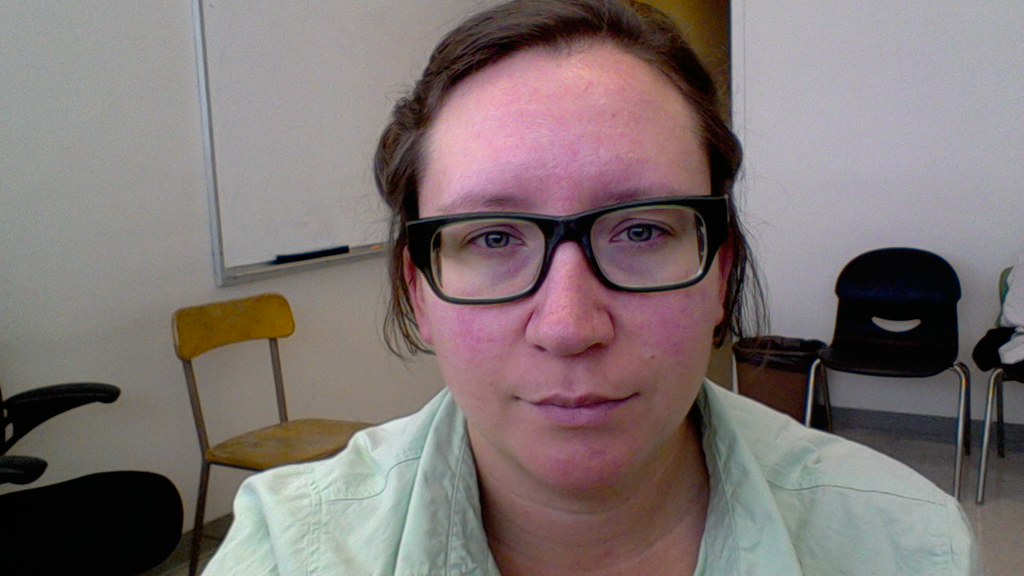
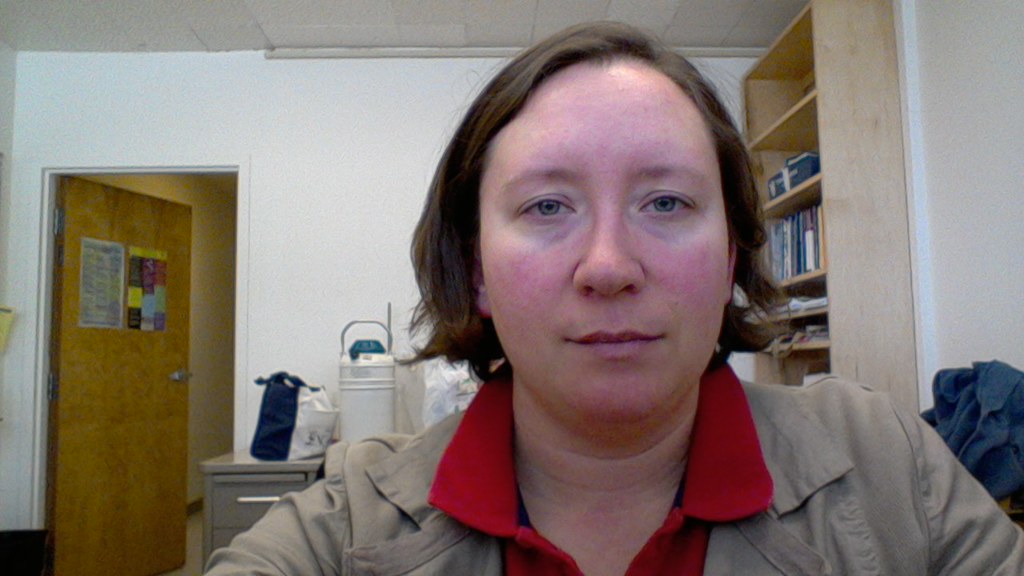
To treat the skin irritation, Sepi first gave me a sample of pure borage oil to make sure that wouldn't aggrevate the condition. Then she gave me a sample of Borage Pearl Powder cream to try. I've been applying it only to the areas of extreme redness. It's definitely working. The redness in my cheeks is less but I still get irritation on my chin that I'm trying to tame. I think maybe the chin is something that still gets sun even when the rest of my face is covered by a hat. Also, I was using only SPF 30 for awhile but I've gone back up to SPF 50.

Oct 2016
Nov 2016
March 2017

April 2018
I can't say enough wonderful things about the Borage Pearl Powder cream. The only thing I need to do is make sure I have a travel size. Last month, when I went to New Orleans (on a plane) I was limiting myself in terms of how many ounces I brought in my carry-on luggage. 3-1-1 for carry-ons = 3.4 ounce (100ml) bottle or less (by volume) ; 1 quart-sized, clear, plastic, zip-top bag; 1 bag per passenger placed in screening bin. The thing is that I brought a bunch of hair products which left less room for skin care in the 1 quart bag. Priorities~!

March 2018, New Orleans
Every day on top of the Borage Pearl Powder cream, I put Clinique "Dramatically Different Moisturizing Lotion+" and I use that to cover areas outside of the T-zone where my rosacea isn't. I sometimes use Clinique "All About Eyes" but not every day. Especially since I hardly go anywhere without my glasses these days, and then on top of that I wear goggles in lab 5 days a week. So nobody is really looking at my crow's feet. Then I put "Broad Spectrum SPF 30 Sunscreen Face Cream" on top of all that. Or SPF 50 if I'm planning to be outside for more than 20 minutes at a time.

When I've got TOO much sun or TOO much wind or if I've done TOO much gardening and my skin has been hit with dirt, I use Clinique "Moisture Surge™ Intense Skin Fortifying Hydrator" together with Clinique "Repairwear Laser Focus™ Wrinkle Correcting Eye Cream." I keep this on overnight or all weekend (plus staying indoors) to let the skin heal itself.

But I will say that this entire regimen WITHOUT the Borage Pearl Powder cream didn't work.


According to CT Organics website, borage seed oil contains high amount of gamma-linolenic acid (GLA) fatty acids that help reduce inflammation naturally.


I could say more about a BUNCH of other CT Organics products that I love, but that's all the time I have for today AND this product has been a game changer for me.

Tuesday, April 3, 2018

Anti-Aging Skin Series 14: You Can Dew It by XoM3

Happy New Year to everyone!!!!  Sorry for the delay in response, I have been busy with other projects.  I have been thinking about the direction of the 'Anti-Aging Skin Series' quite a bit over the break.  Up until now, the products which I have chosen to deconstruct have been off the store shelf.  A few months ago, I met Mandy of XoM3 products.  My last blog post was on her and how this year I would incorporate her products into the 'Anti-Aging Skin Series'.  Why?


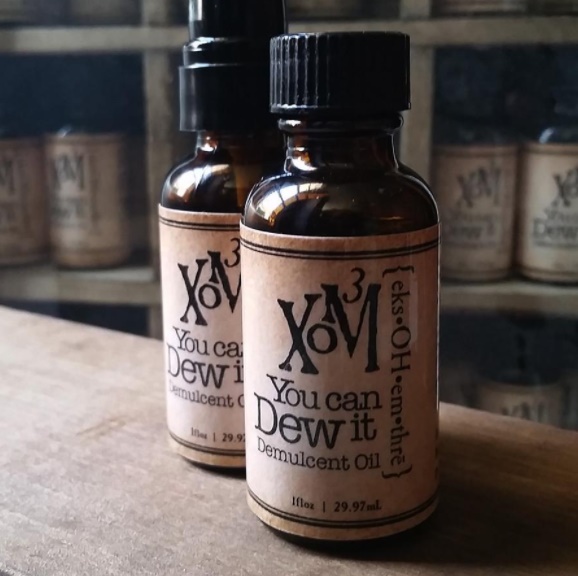
Specifically, because in addition to deconstructing the ingredient list on the bottle of a given product, we can find out exclusive information not yet known to the public about the formulator's (creators) intention in designing the skin care product.  Which makes us the consumers feel even a step closer to the process and the product.  Without further ado, lets dive into the first product from XoM3 product line: "You Can Dew It" as shown below:


Remember, if you are interested in reading any previous posts contained in the 'Anti-Aging Skin Series' please either choose the hyperlink "Aging" on the cover page (in the right hand corner) or click here.


"You Can Dew It"


First, to put the product into context from her website, Mandy has a product description which I directly quoted below from her website:


Seasonal and dry weather, time, or biology can do a number on delicate facial skin. Handcrafted You Can Dew It Demulcent Oil can help. Lush with organic and ethical ingredients, precious jojoba, rosehip seed, argon and evening primrose oils are infused with skin loving botanicals and essential oils of frankincense and ylang ylang to deliver a velvety, dew kissed finish for glowing results. 


Upon asking Mandy for a complete ingredient list, she was super kind to be open with her products.  She is interested in bringing awareness to the community of consumers in the skin care industry that she stands by her products and has nothing to hide.  She is very knowledgeable regarding the exact reason why a given ingredient is used in one of her products.  Which makes her product line even more attractive.


To start with, I will list each ingredient and list the function as I have done in past blog posts.  If the ingredients are 'highlighted or hyperlinked' then the reference page is from 'Environmental Working Group'.  Otherwise, the ingredient information reference number will be given along with the corresponding reference listed at the end of the blog post in the bibliography.  Below is a list of ingredients in "You Can Dew It":


1) Jojoba Oil:

About SIMMONDSIA CHINENSIS (JOJOBA) SEED OIL: Jojoba oil is extracted from seeds of the desert shrub, Simmondsia chinensis, native to California, Arizona and Mexico.

Function(s): Hair Conditioning Agent; Skin-Conditioning Agent - Occlusive; EMOLLIENT; SKIN CONDITIONING; VISCOSITY CONTROLLING


2) Yarrow:

A strong-scented, spicy, wild herb used in astringents and shampoos. (Ref.2)

Note: Astringent:  a substance that causes the contraction of body tissues, typically used to protect the skin and to reduce bleeding from minor abrasions. (Ref.3)


3) Argan Oil:

The oil is high in lipids, including the omega-9 oleic acid and the omega-6 linoleic acid as well as vitamin E.  Argan oil has anti-inflammatory properties. (Ref.3)


4) Calendula Officinalis (POT MARIGOLD) Flower Oil:

About CALENDULA OFFICINALIS (POT MARIGOLD) FLOWER OIL: Calendula Officinalis Flower Oil is an oil derived from the flowers of Calendula officinalis.

Function(s): Fragrance Ingredient; MASKING; SKIN CONDITIONING


5) Comfrey Extract:

The leaf and root contain allantoin, mucilage, tannins, starch, inulin, steroidal saponins, and pyrrolizine alkaloids. (Ref. 2)


6) Fankincense Oil:

Fragrant component used in skincare products; it can be a skin sensitizer, but is not considered a potent one. There is no research showing frankincense has any benefit for skin. (Ref.4)


7) Ylang Ylang:

About CANANGA ODORATA (YLANG YLANG) OIL: Oil obtained from the flowers of the ylang-ylang tree Cananga odorata.

Function(s): Fragrance Ingredient; MASKING


8) Primrose Oil:

About OENOTHERA BIENNIS (EVENING PRIMROSE) OIL: Evening Primrose oil is extracted from Oenothera biennis, a plant native to North America.

Function(s): Skin-Conditioning Agent - Miscellaneous; EMOLLIENT


That completes the ingredient list for the product "You Can Dew It" by XoM3 Botanical Solutions. On the bottom of the front of the bottle is the label -- "Demulcent Oil" which means -- "(of a substance) relieving inflammation or irritation."


Conclusion...


In the next post, I will provide a little background into the benefits of natural oils based on science.  I recently stumbled upon an article which I would like to work through to see the evidence of the benefits aside or along with those listed in the ingredients (functions) list above.


I also promised at the beginning of the series (this year) to include Mandy (the producer, formulator) opinion on the product.  I have to rescind that for the present time.  We are both looking into the Food & Drug Regulations guidelines on 'interviews' and 'product discussions.'  I will hopefully have more on that topic in the near future.


For the time being, I will move onto a new product after I discuss some benefits of natural oils in the next post.  Until next time, have a wonderful day.


Reference Bibliography:

1) Environmental Working Group

2) Cosmetic Dictionary

3) Google Dictionary

4) Paula's Choice 


Thursday, July 6, 2017

Where Do I Find Previous Anti-Aging Skin Series Blog Posts?

I had a realization the other day while writing the next blog post for the ongoing "Anti-Aging Skin Series".  While making a reference to a previous blog post in the series, I tried to look for that blog post.  When a user to our site clicks on the button on the "right hand side" of the web page titled "Anti-Aging Skin Series" the result is a list of all of the previous blog posts.   I will update the list as a new blog post is written.


Note: The blog posts are from most recent to oldest.


Anti-Aging Skin Series Post 13: Meet Mandy from XOM3 Botanical Solutions!


Anti-Aging Skin Series Post 12: What is in "Natural Facial Moisturizer"?


Anti-Aging Skin Series Post 11: "Natural Facial Moisturizer"


Anti-Aging Skin Series Post 10: What Is The Difference Between Products? Continued


Anti-Aging Skin Series Post 9: What Is The Difference Between Products?


Anti-Aging Skin Series Post 8: Suave Skin Solutions


Anti-Aging Skin Series Post 7: Part 3 -- Toxicity Analysis Of Jergen's Skin Lotion


Anti-Aging Skin Series Post 7: Part 2 -- Ingredient Analysis Of Jergen's Skin Firming Lotion


Anti-Aging Skin Series Post 6: Short Glossary Of Functions For Skin Care Ingredients


Anti-Aging Skin Series Post 5: Part 1 - Jergens Skin Firming Moisturizer Lotion


Anti-Aging Skin Series Post 4: What Is A Cosmetic Product?


Anti-Aging Skin Series Post 3: Skin -- Function - part 2


Anti-Aging Skin Series Post 2: Skin -- Function - part 1


Anti-Aging Skin Series Post 1: Skin -- Structure


Can You Please Break Down Into Bits Your Anti-aging Article?


Can Science Really Reverse Aging Skin?


Tuesday, December 6, 2016

Anti-Aging Skin Series Post 6: Short Glossary Of Functions For Skin Care Ingredients

In my last post on the the ingredients in Jergen's Skin Firming Lotion, I listed the ingredients (of which there were 29 in total) in the formulation.  Included in the listing was the primary and secondary function of each ingredient.  My intention with part II was to discuss the function of the ingredients and add insight into the toxicities associated with certain compounds.  As a reminder, this post is number 6 in a series called "Anti-Aging Skin Series" -- which was originally meant to deconstruct an original post located here.


Since the current series was my first attempt at deconstructing the chemicals inside skin care products, I have been oscillating (going back and forth) with a given layout of the series.  No, this is not your fault (the reader).  I am just trying to find a way to simplify the series to illustrate the science behind such products and furthermore the ingredients within.  The ultimate goal is to demystify the scams and myths behind 'anti-aging products' which seems to be growing toward an annual multi-billion dollar industry.


With that being said, to continue with the last post, I got caught up with a few of the ingredients having multiple functionalities listed like "Skin-conditioning agent" or "Absorbent".  This led me to form the glossary below -- which I hope will shed light on the purpose of listing the functions of each chemical ingredients on websites like the "Environmental Working Group" which provide great (and detailed) information to the public.


Glossary Terms:


To start with, I will proceed alphabetically.  I will cover the terms listed as functions in the last post which can be found here.


1) Absorbent:


From "The Free Dictionary.com" -- Absorbent: a substance that is capable of absorbing.


2) Adhesive:


From "wikipedia" for 'Adhesive':


Adhesive may be used interchangeably with glue, cement, mucilage, or paste,[1] and is any substance applied to one surface, or both surfaces, of two separate items that binds them together and resists their separation.[2] Adjectives may be used in conjunction with the word "adhesive" to describe properties based on the substance's physical or chemical form, the type of materials joined, or conditions under which it is applied.[3]
The use of adhesives offers many advantages over binding techniques such as sewing, mechanical fastening, thermal bonding, etc. These include the ability to bind different materials together, to distribute stress more efficiently across the joint, the cost effectiveness of an easily mechanized process, an improvement in aesthetic design, and increased design flexibility. Disadvantages of adhesive use include decreased stability at high temperatures, relative weakness in bonding large objects with a small bonding surface area, and greater difficulty in separating objects during testing.[4] Adhesives are typically organized by the method of adhesion. These are then organized into reactive and non-reactive adhesives, which refers to whether the adhesive chemically reacts in order to harden. Alternatively they can be organized by whether the raw stock is of natural or synthetic origin, or by their starting physical phase.


3) Anti-caking Agent:


From 'wikipedia' for 'Anti-caking Agent':


An anticaking agent is an additive placed in powdered or granulated materials, such as table salt or confectionaries to prevent the formation of lumps (caking) and for easing packaging, transport, and consumption.


Ex: a list of common 'anti-caking agents' (and articles) can be found here.


4)Anti-foaming Agent:


From 'wikipedia' for 'anti-foaming agent':


A defoamer or an anti-foaming agent is a chemical additive that reduces and hinders the formation of foam in industrial process liquids. The terms anti-foam agent and defoamer are often used interchangeably. Commonly used agents are insoluble oils, polydimethylsiloxanes and other silicones, certain alcohols, stearates and glycols. The additive is used to prevent formation of foam or is added to break a foam already formed.


5)Binding Agents:


From the website "Cosmetics and Skin.com" -- Binding Agents: binding agents such as gums, fats, or waxes which hold the product together.


6)Buffering Agent:


From 'wikipedia' for 'buffering agent':


A buffering agent is a weak acid or base used to maintain the acidity (pH) of a solution near a chosen value after the addition of another acid or base. That is, the function of a buffering agent is to prevent a rapid change in pH when acids or bases are added to the solution. Buffering agents have variable properties—some are more soluble than others; some are acidic while others are basic. As pH managers, they are important in many chemical applications, including agriculture, food processing, biochemistry, medicine and photography.


7)Denaturant:


From the website 'Cosmeticsinfo.org' -- Denaturant:

The process adds a small amount of a denaturant to the alcohol to make it taste bad, thus creating  alcohol  that is not suitable for drinking, but is otherwise similar for other purposes.


8)Emollient:


The definition of an 'Emollient' comes from 'wikipedia' for "Moisturizer":


Moisturizers or emollients are complex mixtures of chemical agents specially designed to make the external layers of the skin (epidermis) softer and more pliable. They increase the skin's hydration (water content) by reducing evaporation. Naturally occurring skin lipids and sterols, as well as artificial or natural oils, humectants, emollients, lubricants, etc., may be part of the composition of commercial skin moisturizers. They usually are available as commercial products for cosmetic and therapeutic uses, but can also be made at home using common pharmacy ingredients.


 The range of properties causes formulation chemists to break down the definition further.  Below is the list of definitions from the website "Chemists Corner" - taken directly from here:


Traditionally, emollients are considered ingredients which have smoothing or softening properties. They are put into formulas to provide moisturizing benefits and support a variety of conditioning claims. There are a number of types which we’ll list below.

Hydrophilic emollients

The term emollient is rather broad so things that are humectants can also be considered emollients. Water soluble ingredients like glycerin, sorbitol, and propylene glycol are all technically emollients. When you need conditioning, this are good ones for your water phase.

Lipophilic emollients

These are ingredients that are not soluble in water and make up the bulk of the available varieties of emollients. The one that you use depends on properties such as polarity, emolliency scores, spreading behavior, compatability with other ingredients, rheological behavior, and hydrolytic stability. This group can further be broken down by grouping them by their polairity.

Non-polar: These are mostly derived from petroleum and include ingredients like mineral oil, Isoparaffin, and Isohexadecane.

Polar: This includes a range of ingredients including materials such as natural oils (Jojoba oil, Olive oil, coconut oil), esters (Octyl Palmitate, Isopropyl stearate, Isopropyl palmitate) and alcohols (Octyl dodecanol).

Silicone fluid emollients

The final group is silicone fluids. They provide incredible levels of slickness and also feel light compared to lipophilic emollients. The most common ones used include Cyclomethicone and dimethicone. There are a number of varieties to choose from and each have different characteristics when it comes to viscosity, volatility, and ease of formulation.


9) Emulsifying Agent:


From the "UNC School of Pharmacy" -- Emulsifying Agent:


Emulsions are stabilized by adding an emulsifier or emulsifying agents. These agents have both a hydrophilic and a lipophilic part in their chemical structure. All emulsifying agents concentrate at and are adsorbed onto the oil:water interface to provide a protective barrier around the dispersed droplets. In addition to this protective barrier, emulsifiers stabilize the emulsion by reducing the interfacial tension of the system. Some agents enhance stability by imparting a charge on the droplet surface thus reducing the physical contact between the droplets and decreasing the potential for coalescence. Some commonly used emulsifying agents include tragacanth, sodium lauryl sulfate, sodium dioctyl sulfosuccinate, and polymers known as the Spans® and Tweens®.

Emulsifying agents can be classified according to: 1) chemical structure; or 2) mechanism of action. Classes according to chemical structure are synthetic, natural, finely dispersed solids, and auxiliary agents. Classes according to mechanism of action are monomolecular, multimolecular, and solid particle films. Regardless of their classification, all emulsifying agents must be chemically stable in the system, inert and chemically non-reactive with other emulsion components, and nontoxic and nonirritant. They should also be reasonably odorless and not cost prohibitive.


10) Emulsion Stabilizing Agent:


From 'wikipedia' for 'emulsion stabilization using polyelectrolytes':


Polyelectrolytes are charged polymers capable of stabilizing (or destabilizing) colloidal emulsions through electrostatic interactions. Their effectiveness can be dependent on molecular weight, pH, solvent polarity, ionic strength, and the hydrophilic-lipophilic balance (HLB). Stabilized emulsions are useful in many industrial processes, including deflocculation, drug delivery, petroleum waste treatment, and food technology.


11) Foam Boosting Agent:


From 'wikipedia' for 'foam boosting agent':


A foaming agent is a material that facilitates formation of foam such as a surfactant or a blowing agent. A surfactant, when present in small amounts, reduces surface tension of a liquid (reduces the work needed to create the foam) or increases its colloidal stability by inhibiting coalescence of bubbles.[1] A blowing agent is a gas that forms the gaseous part of the foam.


12) Film Forming Agent:


From 'Paula's Choice Skincare' for 'film-forming agents':


Large group of ingredients typically found in haircare products, but that also are widely used in skincare products, particularly moisturizers. Film-forming agents include PVP, acrylates, acrylamides, methacrylates, and various copolymers. When applied they leave a pliable, cohesive, and continuous covering over the hair or skin. The film has water-binding properties and leaves a smooth feel on skin. Film-forming agents can be weak skin sensitizers, but this almost always depends on the amount used; lower amounts generally are not problematic.


Additional definition -- 'wikipedia'


13) Humectant:


From 'Wikipedia' for 'humectant':


A humectant /hjuːˈmɛktənt/ is a hygroscopic substance used to keep things moist; it is the opposite of a desiccant. It is often a molecule with several hydrophilic groups, most often hydroxyl groups; however, amines and carboxyl groups, sometimes esterified, can be encountered as well (its affinity to form hydrogen bonds with molecules of water is the crucial trait). They are used in many products, including food, cosmetics, medicines and pesticides.
A humectant attracts and retains the moisture in the air nearby via absorption, drawing the water vapor into or beneath the organism's or object's surface.[1][2] By contrast, desiccants also attract ambient moisture, but adsorb—not absorb—it, by condensing the water vapor onto the surface, as a layer of film.[3]
When used as a food additive, a humectant has the effect of keeping the foodstuff moist.[4]
Humectants are sometimes used as a component of antistatic coatings for plastics.
In pharmaceuticals and cosmetics, humectants can be used in topical dosage forms to increase the solubility of a chemical compound's active ingredients, increasing the active ingredients' ability to penetrate skin, or its activity time. This hydrating property can also be needed to counteract a dehydrating active ingredient (e.g., soaps, corticoids, and some alcohols), which is why humectants are common ingredients in a wide range of cosmetic and personal care products that make moisturization claims (e.g., hair conditioners, body lotions, face or body cleansers, lip balms, and eye creams).


14) Masking Agent:


From 'wikipedia' for 'masking agent':


A masking agent is a reagent used in chemical analysis which reacts with chemical species that may interfere in the analysis. In sports a masking agent is used to hide or prevent detection of a banned substance or illegal drug like anabolic steroids or stimulants.


Additional:

--FDA : labeling cosmetics

--List of masking agents - 'thegoodscentscompany'

--Warnings: 'naturalcosmeticsnews'


15) Occlusive Agent:


From the website "ChemistsCorner" - Occlusive Agent:


Occlusive agents increase moisture levels by providing a physical barrier to epidermal water loss. Ingredients with occlusive properties include petrolatum, waxes, oils, and silicones. Some occlusive agents like petrolatum can leave a heavy feel so they are often combined with other ingredients, like emollients, to improve consumer appeal.


Additional resources: here and here


16) Opacifying Agent:


From 'wikipedia' for Opacifier:


An opacifier is a substance added to a material in order to make the ensuing system opaque. An example of a chemical opacifier is titanium dioxide (TiO2), which is used to opacify ceramic glazes and milk glass; bone ash is also used. Opacifiers must have a refractive index (RI) substantially different from the system.


17) Refatting Agent:


From the website 'wiktionary' - Refatting Agent: The replenishment of lipids to the skin.


18) Skin-conditioning Agent:


From the website "MiMi beauty" - Skin Conditioning Agent:


A skin conditioning agent and an essential fatty acid that helps maintain optimal skin health and function.  Lipid Organic products found in living systems that are insoluble in water, like fats. Cell membranes are made of lipids.


Additional resources: ChemistsCorner


19) Skin Protecting Agent (skin protectant):


From the website 'Walgreens' for Skin Protectants:


Remedy Dimethicone Skin Protectant provides a breathable barrier that protects against moisture. Also protects and helps relieve chapped or cracked skin. Protects against moisture loss. This product is equally intended for use as a long-lasting moisturizer.


20) Surfactant:


From 'wikipedia' for Surfactant:


Surfactants are compounds that lower the surface tension (or interfacial tension) between two liquids or between a liquid and a solid. Surfactants may act as detergents, wetting agents, emulsifiers, foaming agents, and dispersants.


21) Surfactant-Solubilizing Agent:


See 'wikipedia' page for 'Surfactant'.


Conclusion...


As you can see above, the functions are clarified by listing the definition of each.  Although, there are some glossary terms that refer to multiple terms in the glossary itself.  One example is a 'skin conditioning agent' -- an emollient, etc.  We need to think critically about the purpose of having the ingredient inside of the formulation.


Furthermore, listed above are the functions of the ingredients.  Lots of information have been left out.  One important piece is the relative concentration of each chemical.  Some companies do not list concentration to avoid duplication of their marketed project.  In the next post, we will return to the last post and look further into the lotion "Jergen's Skin firming" lotion in more detail.


Until then, Have a great day.


Tuesday, November 1, 2016

Anti-Aging Skin Series Post 5: Part 1 - Jergens Skin Firming Moisturizer Lotion

Continuing on with our journey through the scientific claims (in products) of "Anti-Aging" skin care products, the time has come to tackle a chosen product.  For those readers just joining the educational series, the series is called "Anti-Aging Skin Series" and by clicking on the title, previous posts can be accessed.  The series came out of an original post which was lengthy and addressed a couple of popular technologies.  One was artificial skin while the other was that reversing aging skin with the use of 'skin creams' which have claims of restoration of crucial ingredients in the human skin like 'collagen' or 'glycans' (on the surface of cells - which promote collagen growth).


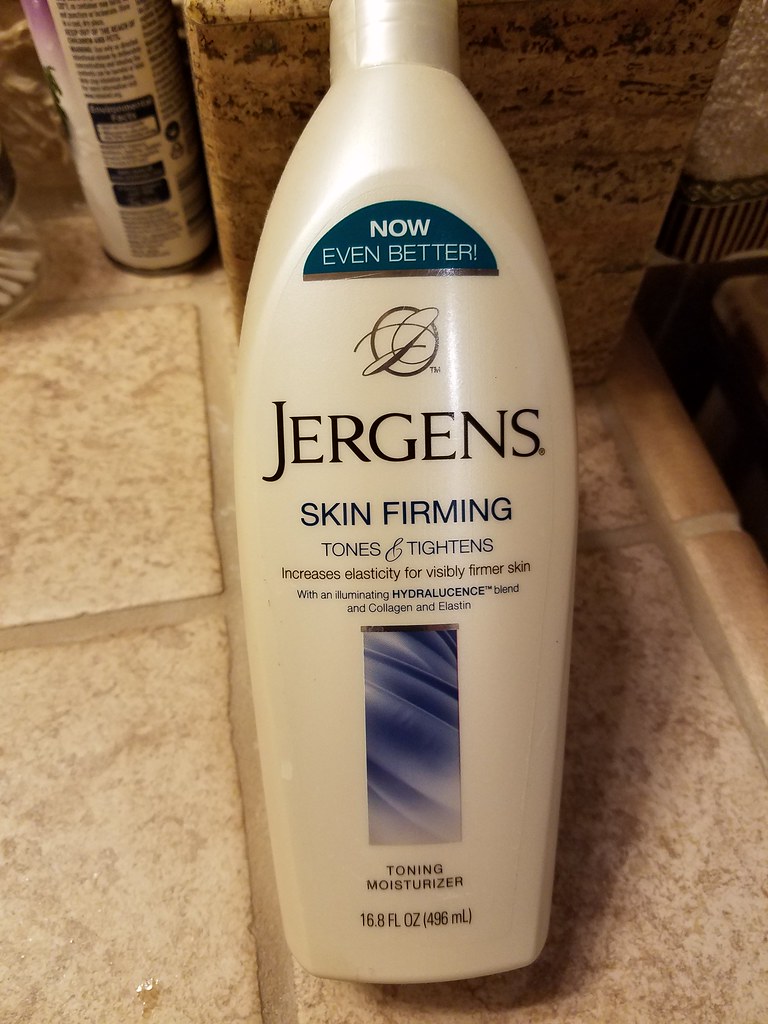
In the paragraphs below, we will look at a skin care product that is supposedly aimed at "skin firming" by 'tightening' or 'toning' the consumer's skin to appear young and healthy skin.  Specifically, we will break the blog post into two parts: 1) An Ingredient List and 2) a discussion about the ingredients and functionality of each.  Below is part 1 of the first product -- a Skin Firming Moisturizer product.


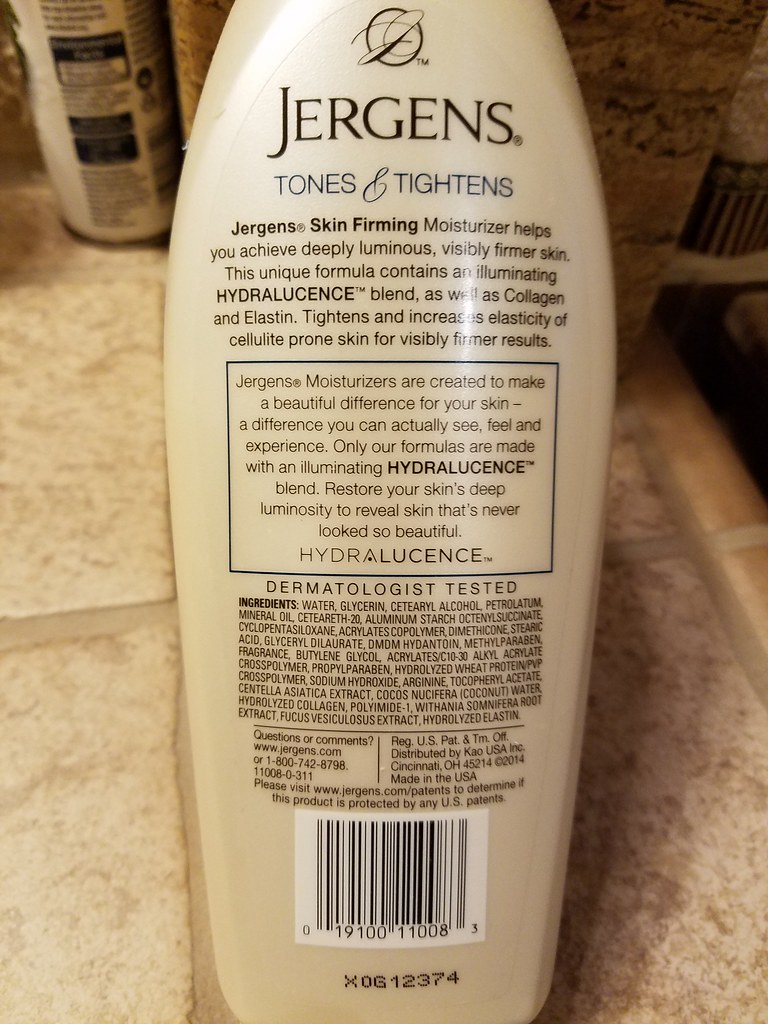
Here is a picture of the skin care product named 'Jergens Skin FirmingMoisturizer' below:


Without further ado, lets start exploring the skin firming moisturizer in greater detail.


Skin Firming Moisturizer


As I just mentioned, the product that we are exploring today is named 'Jergens Skin Firming Moisturizer' and is specifically for tightening and toning older skin to appear younger.  If we look at the product description from the website 'Amazon' -- here is what the site states as a selling point:

About the Product
JERGENS Skin Firming Moisturizer helps you achieve deeply luminous, visibly firmer skin. This unique formula tightens and increases elasticity of celllulite prone skin for visibly firmer results.
Reduces the appearance of cellulite and features a unique illuminating HYDRALUCENCE blend, Collagen, and Elastin.
Improves skin‘s resiliency, elasticity, and firmness. With an exclusive anti-cellulite Firm Perfecting Complex.
Relieves dryness and replenishes moisture to improve skin‘s tone, texture, and luminosity.


The marketing teams behind these products are amazing -- the teams can really sell a product.  I have to give credit where credit is due.  Of course, this credit is only from a 'selling standpoint' and not from a 'scientific standpoint' -- which we shall explore shortly.


According to the product manufacturer's claim, the skin firming moisturizer is a 'unique formula' that will increase "elasticity of cellulite prone skin for visibly firmer results."  Remember this claim along with other mystifying statements like "features a unique illuminating HYDRALUCENCE blend, Collagen, and Elastin."  From my read, the last statement is the most true statement: "Relieves dryness and replenishes moisture to improve skin's tone, texture, and luminosity."  After going through the ingredient list, these claims will be either proven true or false!


If the container is turned around to reveal the backside of the product container, the statement and ingredients are shown as follows:


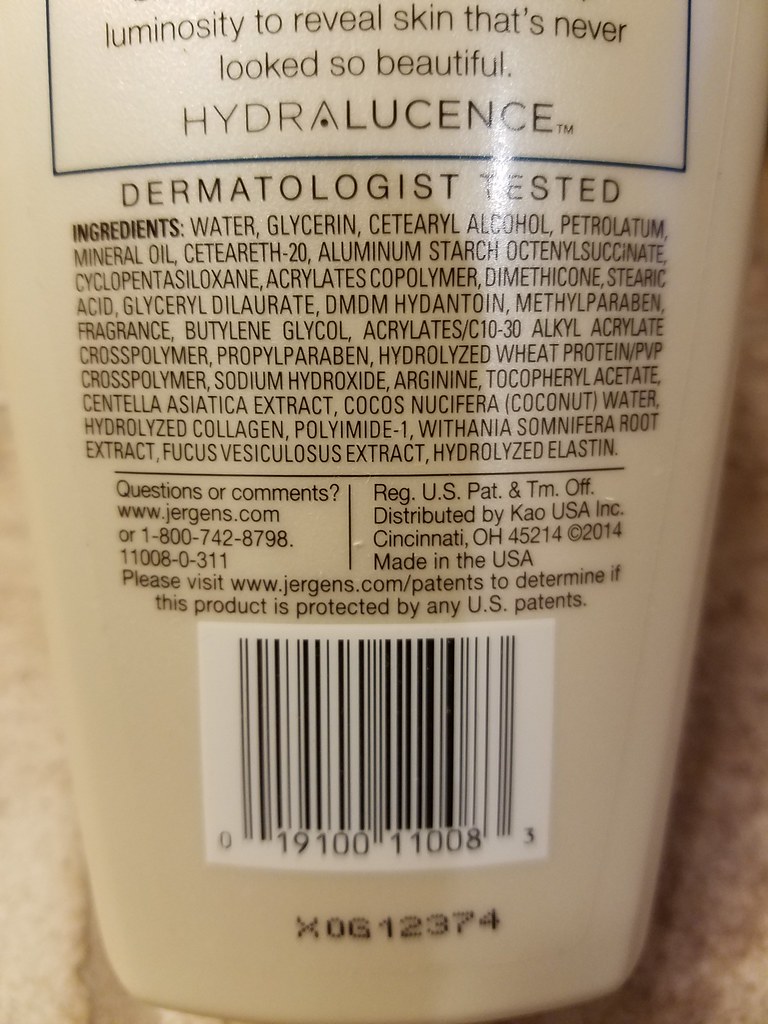
and zooming in on the ingredients, the list is shown below:


Remember in the original post that aging skin appears dry, flaky, and saggy due to the loss of 'collagen'.  Additionally, the 'saggy' skin is often referred to as 'crepey' skin too.  If a product was advertised to 'tighten' and 'tone' skin to make the skin appear to be more youthful skin, then obviously, the product would sell well and appeal to a large audience.  I imagine that is the case with the following product under review in this post.


How do the ingredients function to make skin appear 'tightened' and 'toned'?


If the ingredient list is explored into greater detail, a better understanding of the function of each ingredient will become apparent.  In the next section, a list will be formed using data collected on a very resource rich website 'Environmental Working Group'.  The EWG is a nonprofit organization whose mission is to demystify the harmful ingredients that are contained in consumer products and lobby in Washington D.C. toward safer use of chemicals in consumer products.  Their website is dense in information.


One of the overarching goals on the KaiserWellnessCenter blog is to provide you (the reader) with the correct resources that you can use for yourself in your journey toward wellness and a better understanding of the surrounding environment.  Below, I will list information 'about' the chemical in question and the 'function' of the chemical in question.  You might ask:


Where does this information come from?


One of the chemicals off of the ingredient list is "Aluminum Starch Octenyl Succinate" with an ingredient profile from the EWG that is shown below:


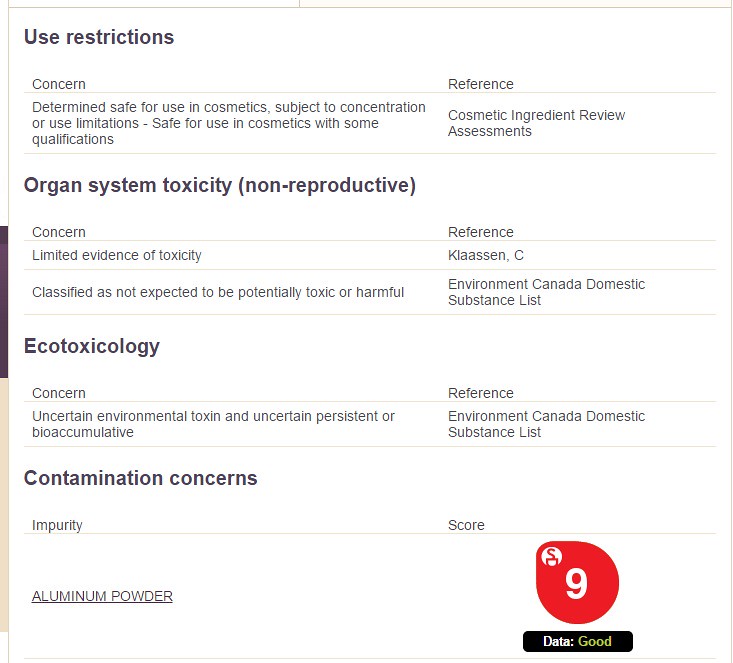
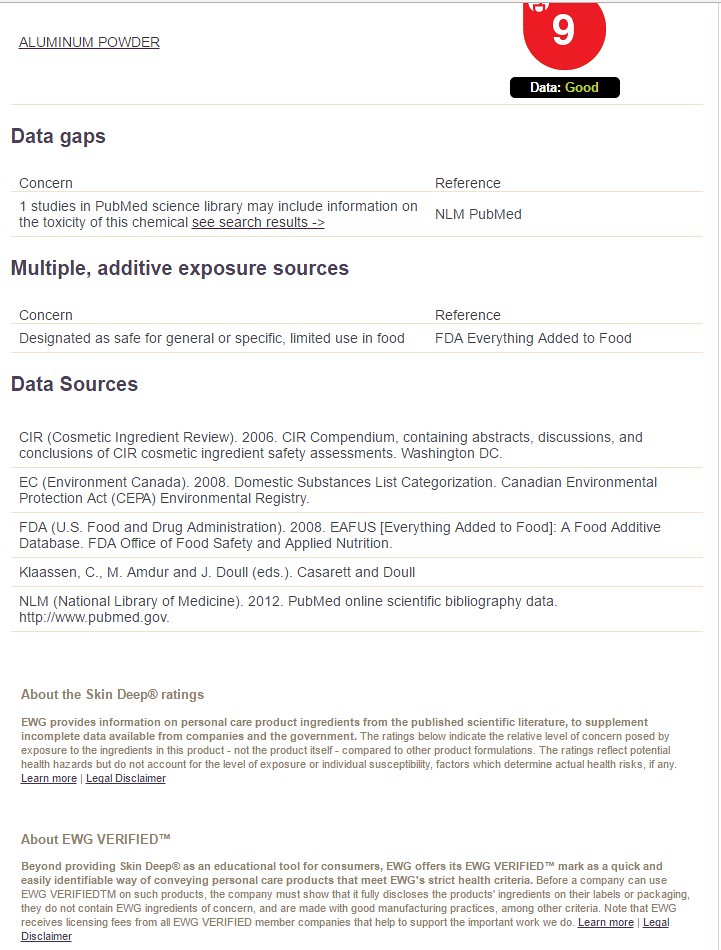
As you can see, the two pieces of information needed to understand the importance of the ingredient are the "about" and "function" of the chemical.  Also, the various names would be useful as different manufacturers of different products might choose to use different names.  The EWG provides a fair amount of information in the frame shown above.  Although, if you type in the chemical name like I did, there is more data on the chemical not shown in the image above.  I broke the webpage for "Aluminum Starch OctenylSuccinate" up into three images.  Here are the remaining two with additional toxicity data and resources on the references of the information above:


And ...


The EWG is one great resource to find information on chemicals in consumer products that are sold on the market.  Additional sites do exist along with reference books (like "A Consumer's Dictionary Of Cosmetic Ingredients") which will be mentioned as we explore different products.  For the purpose of the introductory post on a "skin firming moisturizer," the EWG will be the sole source of the ingredient list.  In the future, you will be able to type in a variation of a name and search for yourself.


Ingredient List


I just mentioned that a list of the two types of information would be made about each ingredient.   Each ingredient will be underlined and then followed by two sentences.  The first sentence will contain the "about" information.  Whereas the second sentence will contain the "function" of the chemical in the product.


Note: the information on the ingredient list is taken directly from the website - EWG.  This is to illustrate the first pass at deconstructing any ingredient list.  In future posts, only relevant functions will be extracted for the product under review.


Remember, click on any of the 30 chemicals listed and you will be directed to the original source -- the EWG website page for the chemical in question.


1) Water:

About: n/a

Function: Solvent


2) Glycerin:

About: Glycerin (also called glycerol) is a naturally occurring alcohol compound and a component of many lipids.

Function(s): Denaturant; Fragrance Ingredient; Hair Conditioning Agent; Humectant; Oral Care Agent;Oral Health Care Drug; Skin-Conditioning Agent - Humectant; Skin Protectant; Viscosity Decreasing Agent; PERFUMING; SOLVENT


3) Cetearyl Alcohol:

About: Cetearyl Alcohol is a mixture of cetyl and stearyl alcohols that can come from vegetable or synthetic sources.

Function(s): Emulsion Stabilizer; Opacifying Agent; Surfactant - Foam Booster; Viscosity IncreasingAgent - Aqueous; Viscosity Increasing Agent - Nonaqueous; EMOLLIENT; EMULSIFYING; EMULSION STABILISING; FOAM BOOSTING; VISCOSITY CONTROLLING


4) Petrolatum:

About: Petrolatum is a semisolid mixture of hydrocarbons obtained from petroleum.

Function(s): Hair Conditioning Agent; Skin-Conditioning Agent - Occlusive; Skin Protectant; EMOLLIENT; MOISTURISING; UV ABSORBER


5) Mineral oil:

About: Mineral Oil is a liquid mixture of hydrocarbons obtained from petroleum.

Function(s): Fragrance Ingredient; Hair Conditioning Agent; Skin-Conditioning Agent - Emollient;Skin-Conditioning Agent - Occlusive; Skin Protectant; Solvent; ANTISTATIC; PERFUMING; SKIN PROTECTING


6) Ceteareth-20:

About: Ceteareth-20 is the polyethylene glycol ether of cetearyl alcohol; may contain potentially toxic impurities such as 1,4-dioxane.


Function(s): Surfactant - Cleansing Agent; Surfactant - Solubilizing Agent.


7) Aluminum Starch Octenyl Succinate:

About: This ingredient is an aluminum salt of chemically modified starch.

Function(s): Absorbent; Anticaking Agent; Viscosity Increasing Agent - Nonaqueous; VISCOSITY CONTROLLING.


8) Cyclopentasiloxane:

About: Cyclopentasiloxane (cyclomethicone) is a silicon-based cyclic compound; may be associated with environmental toxicity.

Function(s): Hair Conditioning Agent; Skin-Conditioning Agent - Emollient; Solvent; SKIN CONDITIONING


9) Acrylates Copolymer:

About: Acrylates copolymer is composed of acrylic acid and methacrylic acid building blocks.

Function(s): Adhesive; Artificial Nail Builder; Binder; Film Former; Hair Fixative; Suspending Agent -Nonsurfactant; ANTISTATIC; BINDING; FILM FORMING


10) Dimethicone:

About: Dimethicone (also called polymethylsiloxane) is a silicon-based polymer used as a lubricant and conditioning agent.

Function(s): Antifoaming Agent; Skin-Conditioning Agent - Occlusive; Skin Protectant; EMOLLIENT; SKIN CONDITIONING; SKIN PROTECTING.


11) Stearic Acid:

About: Stearic acid is a naturally occurring fatty acid.

Function(s): Fragrance Ingredient; Surfactant - Cleansing Agent; Surfactant - Emulsifying AgentSurfactant-Cleansing Agent is included as a function for the soap form of Stearic Acid.; EMULSION STABILISING; MASKING; REFATTING.


12) Glyceryl Dilaurate:

About: Glyceryl Dilaurate is a diester of glycerin and lauric acid.

Function(s): Skin-Conditioning Agent - Emollient; EMULSIFYING.


13) DMDM hydantoin:

About (FORMALDEHYDE RELEASER): DMDM hydantoin is an antimicrobial formaldehyde releaser preservative.

Function(s): Preservative.


14) MethylParaben:

About: Methylparaben is in the paraben family of preservatives used by the food, pharmaceutical, and personal care product industries.

Function(s): Fragrance Ingredient; Preservative.


15) Fragrance:

About: The word "fragrance" or "parfum" on the product label represents an undisclosed mixture of various scent chemicals and ingredients used as fragrance dispersants such as diethyl phthalate.

Function(s): DEODORANT; MASKING; PERFUMING.


16) Butylene Glycol:

About: Butylene glycol (1.3-Butanediol) is a small organic alcohol used as solvent and conditioning agent.

Function(s): Fragrance Ingredient; Skin-Conditioning Agent - Miscellaneous; Solvent; ViscosityDecreasing Agent; HUMECTANT; MASKING; SKIN CONDITIONING; VISCOSITY CONTROLLING.


17) Acrylates/C10-30 Alkylacrylate Crosspolymer:

About: This ingredient is a polymer of actylic acid and related chemicals.

Function(s): Emulsion Stabilizer; Viscosity Increasing Agent - Aqueous; Viscosity Increasing Agent -Nonaqueous; EMULSION STABILISING; FILM FORMING; VISCOSITY CONTROLLING.


18) PropylParaben:

About: Propylparaben is in the paraben family of preservatives used by the food, pharmaceutical, and personal care product industries.

Function(s): Fragrance Ingredient; Preservative; PERFUMING.


19) Hydrolyzed Wheat Protein/PNP Crosspolymer:

About: Hydrolyzed Wheat Protein/PVP Crosspolymer is a crosslinked copolymer of HydrolyzedWheat Protein (q.v.) and PVP (q.v.).

Function(s): Film Former; Hair Conditioning Agent; Hair Fixative; FILM FORMING; HAIR FIXING.


20) Sodium Hydroxide:

About: Sodium Hydroxide is a highly caustic and reactive inorganic base.

Function(s): Denaturant; pH Adjuster; BUFFERING.


21) Arginine:

About: Arginine is a naturally occurring amino acid.

Function(s): Fragrance Ingredient; Hair Conditioning Agent; Skin-Conditioning Agent - Miscellaneous; ANTISTATIC; MASKING; SKIN CONDITIONING.


22) Tocopheryl Acetate:

About: Tocopheryl acetate is a chemical compound that consists of acetic acid and tocopherol (vitamin E)

Function(s): Antioxidant; Skin-Conditioning Agent - Miscellaneous; SKIN CONDITIONING.


23) Centella Asiatica Extract:

About: Extract of the leaves and roots of the medicinal plant Gotu Kola, Centella asiatica.

Function(s): Skin-Conditioning Agent - Miscellaneous; SKIN CONDITIONING.


24) Cocos Nucifera (Coconut) Water:

About: Cocos Nucifera (Coconut) Water is an aqueous solution of the steam distillate obtained fromCocos nucifera.

Function(s): Fragrance Ingredient; MASKING.


25) Hydrolyzed Collagen:

About: Hydrolyzed Collagen is a hydrolysate of animal or fish collagen derived by acid, enzyme orother method of hydrolysis. It is characterized by a significant level of hydroxyproline residues.

Function(s): Hair Conditioning Agent; Nail Conditioning Agent; Skin-Conditioning Agent - Miscellaneous; ANTISTATIC; EMOLLIENT; FILM FORMING; HUMECTANT; SKIN CONDITIONING.


26) Polyimide-1:

About: Polyimide-1 is a terpolymer that is made by reacting poly(isobutylene-alt-maleic anhydride)with dimethylaminopropylamine and methoxy-PEG/PPG-31/9-2-propylamine in a mixture of ethanol andWater.

Function(s): Film Former; Hair Fixative; FILM FORMING.


27) Withania Somnifera Root Extract:

About: Withania Somnifera Root Extract is an extract of the roots of Withania somnifera.

Function(s): Not Reported; SKIN CONDITIONING.


28) Fucus Vesiculosus Extract:

About: Fucus Vesiculosus Extract is an extract of the dried thallus of the bladderwrack alga, Fucusvesiculosus.

Function(s): Fragrance Ingredient; Skin-Conditioning Agent - Miscellaneous; PERFUMING.


29) Hydrolyzed Elastin:

Function(s): HAIR CONDITIONING; SKIN CONDITIONING.


That is all of the ingredients listed on the backside of the bottle of 'Jergens Skin Firming Moisturizer' with 'Hydralucence' technology.  The chemical named 'Hydralucence' was not listed on the above list -- why?  Because, the name is not of a chemical but of a technology.  More specifically, the 'Hydralucence' technology is the propietary blend.


Conclusion . . .


For the time being, the above information shall give you (the reader a start) into thinking about the functions of the ingredients.  Notice the following questions remain unanswered regarding the "skin firming lotion" advertised above:


1) What are the toxicities associated with each chemical on the list above?


2) What are the concentrations of each chemical?


3) How do all of the above chemicals function together to provide the marketed claims?


4) What does 'emollient' mean?


5) What is an 'humectant'?


6) What are some of the definitions of the terms listed in the 'functions' section?


These questions along with others will be entertained in the next post.  Remember, since the "Anti-Aging Skin Series" is about breaking down the initial post into digestible parts, we must stick with the tradition of doing so.  In the meantime, the above list along with the claims in the marketing listing provide you with a few terms and questions to think about until we tackle the functionality and myths associated with the ingredients and claims in the next post -- post 6.


Until next time, Have a great day!


Thursday, October 20, 2016

Anti-Aging Skin Series Post 4: What Is A Cosmetic Product?

The last post in the "Anti-Aging Skin Series" was tying up loose ends regarding the "function of skin".  In order to proceed to evaluate the effectiveness of a given anti-aging skin care product, we have to be able to validate the product first.  A given product will have claims associated with it that provide clarity as to the treatment on your skin.  Further, the ingredient list will provide the evidence that chemists can use to validate the claims.  Above all, to begin with, we must distinguish between a cosmetic product and other products.  What are the "other products"?  The other products are those whose claims fall outside the range of cosmetics.  Usually, these have to have approval by various agencies such as the "Food and Drug Administration."


Usual Disclaimer:


For some readers the material might be too elementary ( or too much detail).  I would challenge you to think deeply about the simplicity of the descriptions and also I will include links for you too (on the side with greater detail).


Overall Effect/Aim Of A Cosmetic Product


The overall aim of a cosmetic product is to provide the following:


1) Sense of effect


2) Desired effect


3) Manufacturer's claimed effect


After reading the above three effects you might be somewhat confused.  The following question might emerge as a result:


Why are all three not the same or a combined effect?


The reason lies within the claim of the product.  If I (a scientist) were to use a product with a claim, I would be looking to validate the claim.  Evidently, according to the "Chemist's Corner" that is only part of the achieved mission.  Why?  The most important statement from a cosmetic chemist is the following:


If the product does not make the person feel better, then the product designers of the product have failed.


Really?


Yes.  Even if the product fulfills the claim listed on the container (marketed as) and validated by the ingredients list?


The most important person to satisfy is the customer.  Which is one reason why I am breaking down the initial blog post into digestible bits.


Alternatively, the cosmetic industry understands this and can extend the claims (in fraudulent cases) in order to achieve the overall goal: satisfy the customer.  Once a customer is satisfied, then the message spreads about the success of the product and sales increase as a result.  Meanwhile, harm done to consumer propagates without understanding the nature of the fraudulent claim causing alarm.  There are regulatory procedures for a cosmetic product.  In the section below, the differences between a cosmetic product and a drug are highlighted.


What Is A Cosmetic Product?


To answer the question in the simplest terms, lets consult 'Wikipedia' for a definition of 'Cosmetics'.  An excerpt is shown below taken from the page:


Cosmetics, also known as make-up, are substances or products used to enhance the appearance or fragrance of the body. Many cosmetics are designed for use on the face and hair. In the 21st century, women generally use more cosmetics than men. They are generally mixtures of chemical compounds; some being derived from natural sources (such as coconut oil), and some being synthetics.[1] Common cosmetics include lipstick, mascara, eye shadow, foundation, rouge, skin cleansers and skin lotions, shampoo, hairstyling products (gel, hair spray, etc.), perfume, and cologne.
In the U.S., the Food and Drug Administration (FDA), which regulates cosmetics,[2] defines cosmetics as "intended to be applied to the human body for cleansing, beautifying, promoting attractiveness, or altering the appearance without affecting the body's structure or functions". This broad definition includes any material intended for use as a component of a cosmetic product. The FDA specifically excludes soap from this category.[3]


Relatively simple right?


Depending on who you ask, the definition can vary slightly or to a large extent.  A cosmetic product is a mixture of compounds.  Further, the "active ingredient" involved in the product is not necessarily correctly indicated on the label of the product.  Why do I mention this last statement?


Further, the FDA definition of a cosmetic product as indicated in the excerpt above specifies that the product CANNOT change the body's structure or functions.  That is extremely important to understand about skin care products.  Why?  Because, the claim may be specifying a change that falls into the category.  Can I point out an example of this?  Yes!


In the very first blog post which motivated the "Anti-Aging Skin Series," an excerpt was presented by Dr. Zoe Draelos regarding the efficacy and mode of action for "glycan skin care creams":


Dr. Draelos said the goal of glycan creams is to provide sugars or transform existing sugars to allow older cells to behave like younger cells. In theory, this would allow the skin to produce more collagen and heal better after injuries, including burns and cuts. Dr. Draelos notes one added benefit of glycan creams is that they are considered safe to apply to the skin because sugars are the body’s fuel.

However, Dr. Draelos notes current research has not shown if glycan creams can impact the skin to the extent that skin cell glycans begin to act more youthful. “The theory behind glycans’ impact on anti-aging is very much in its infancy,” said Dr. Draelos. “Currently there are other more proven treatments on the market, such as retinoids, but new research will provide additional targets for anti-aging strategies.”


You will recall that in the first part of the excerpt, Dr. Zoe Draelos describes the loss of glycans as a natural part of aging.   For the moment, a glycan is the intermediate (attached to the outside of the cell) toward making collagen.  As we age, the glycan levels vary and this reduction is thought to be responsible for the loss or reduction in collagen production.


Here is where a skin care product manufacturer might run into difficulty with product claims.  If the manufacturer states that the product enhances the production of collagen, then the product is not a "cosmetic product" and would be classified as a "drug" with different regulatory procedures to jump through to get to market.


Take home message?


The clear distinction between a cosmetic product and a drug is necessary for each of us (as consumers) to understand when seeking to purchase a product for an intended purpose.  Here are two excerpts taken from the "Food and Drug Administration's" website regarding the distinction.  First, the strict definitions of both a "drug" and a "cosmetic product" are shown below:


How does the law define a cosmetic?
The Federal Food, Drug, and Cosmetic Act (FD&C Act) defines cosmetics by their intended use, as "articles intended to be rubbed, poured, sprinkled, or sprayed on, introduced into, or otherwise applied to the human body...for cleansing, beautifying, promoting attractiveness, or altering the appearance" [FD&C Act, sec. 201(i)]. Among the products included in this definition are skin moisturizers, perfumes, lipsticks, fingernail polishes, eye and facial makeup preparations, cleansing shampoos, permanent waves, hair colors, and deodorants, as well as any substance intended for use as a component of a cosmetic product. 

How does the law define a drug?

The FD&C Act defines drugs, in part, by their intended use, as "articles intended for use in the diagnosis, cure, mitigation, treatment, or prevention of disease" and "articles (other than food) intended to affect the structure or any function of the body of man or other animals" [FD&C Act, sec. 201(g)(1)].


Furthermore, it is important to understand that both a "drug" and a "cosmetic product" have completely different "approval" routes.  Here is another excerpt taken from the FDA website regarding the approval routes for the two types of products:


How approval requirements are different ?

Under the FD&C Act, cosmetic products and ingredients, with the exception of color additives, do not require FDA approval before they go on the market. Drugs, however, must generally either receive premarket approval by FDA through the New Drug Application (NDA) process or conform to a "monograph" for a particular drug category, as established by FDA's Over-the-Counter (OTC) Drug Review. These monographs specify conditions whereby OTC drug ingredients are generally recognized as safe and effective, and not misbranded. Certain OTC drugs may remain on the market without an NDA approval until a monograph for its class of drugs is finalized as a regulation. However, once FDA has made a final determination on the status of an OTC drug category, such products must either be the subject of an approved NDA [FD&C Act, sec. 505(a) and (b)], or comply with the appropriate monograph for an OTC drug. (A note on the term "new drug": Despite the word "new," a "new drug" may have been in use for many years. If a product is intended for use as a drug, it must comply with the requirements outlined above.)


Having the knowledge above will allow you as a consumer to understand the various claims of the cosmetic product's manufacturer.  Further, the information above allows you to ask knowledgeable questions as a consumer into the efficacy and justifiable claims made.  And last but not least, you can now help the rest of the world by reporting false claims to the FDA to have the products removed from the market.  Especially, if a given product is causing consumers harm.


Conclusion ...


Over the course of writing the initial blog post which was lengthy, I have now come to realize that the skin care product business is varied in the amount of information presented on the back of each product container.  This will become apparent to the reader (you) in the weeks to come as we continue the series in investigating "anti-aging" products.  Additionally, I am surprised that consumers have so much trust in the cosmetic product market.  When all is said and done, at the end of the day, the consumer is both the market and the safety advocate.


What do I mean by this?


The cosmetic market is run by years of highly successful consumers passing on opinions regarding various products.  These opinions have been unmatched by scientific safety information.  Only after a problem is reported does a product get scrutinized.  Yes, certain ingredients have been approved to incorporate into cosmetic products.  Therein lies the large range in which these companies have to operate and market in.


As we move forward, examples will be shown of "anti-aging" products and the ingredients/claims will be further investigated.  I look forward to having the reader provide input where necessary (or interested) to enhance the quality of the material presented.


Until next time, have a great day!


Wednesday, August 3, 2016

Can You Please Break Down Into Bits Your Anti-aging Article?

Back in June, I wrote an article on titled "Can Science Really Reverse Aging Skin?" -- which was well read -- thank you for your interest in the topic.  After writing the article, Kayla, another author on Kaiserwellnesscenter expressed her views on the article - to say the least.  The first remark was an immediate -- "break down the article."


After 24 hours, the comment was revised to the following: "Out of the blog post, Mike, you could easily get 20 blog posts (short posts) in order for the rest of us to understand."  That was the overarching comment of the blog.  Is that far off the beaten path?  I will let you comment below?


After listening and thinking about her comment (for a month), I have decided to revisit that blog topic.  In the following series titled "Science and Anti-aging," I will simplify the "long-drawn out blog" which I wrote.  I thought that the blog post was good personally.  I will admit the post was lengthy and would be difficult for some people to digest it is one sitting.  Which is why I have decided to break the subject down further into easily digestible parts.


What do I need from you the reader?


A little help would be great in the form of comments.  If you are having difficulty with any of the subject matter contained in the series of blog posts, will you please leave a comment below and let me know?  Then I can address the subject.  If you feel uncomfortable having your comment published, just list in the comment "Please do not post this comment" and I will respect your request.


Alright, that is all I wanted to say for now.  In the next couple of weeks, I will role out the first post.  I am still planning the "bite size" content of each.  Again, if you would like to help in the planning process, please do not hesitate to leave a comment.  I hope that you have a wonderful day and I look forward to explaining further a complicated subject (even for me) in due time.  Cheers!


Wednesday, June 22, 2016

Can Science Really Reverse Aging Skin?

Given the fast pace of developments in both the pharmaceutical world coupled with the fast-paced realizations of the natural skin care products world, the question in the title is not totally out of the ordinary.  Don't you agree (you -- the reader -- participant)?  Recently, work has emerged from the scientific community that has been advertised as such.  Below, I will briefly introduce the idea published and the results -- which to me are surprising.


Anti-aging Products?


Seems almost contradictory from the standpoint of a chemist.  Although, when the subject is put into context, the developments seems positive.  At the same time, there is a strange part of listing a product as "anti-aging" in my mind that has never really resonated over the years.  Why?


Because, we are all born with the idea that from emerging from the womb, destruction is all down hill from there.  Our bodies being exposed to the environment spurs our immune systems along with every other defense mechanism available to signal the army -- "game on" -- lets get to work.


What do I mean by the phrase "game on" in the last sentence?


In the context of skin care products, the goal is to preserve the skin.  Really, the goal is to prevent degradation of the skin (or the top few layers of skin).  The three most destructive properties that contribute to the aging process are:


1) Exposure to the environment (chemical, irradiation, physical, etc.).


2) Aging, the natural process of skin shedding.


3) Treating the skin to prevent aging with skin care products.


Am I against skin care products?  Not at all.  But the natural process of aging is that over time, the exposure of the outermost layer of skin (or few layers) is going to cause aging -- which appears in the following visual manners:


1) Dry skin, flaky skin,


2) Saggy skin


3) pale looking skin


Should each of us be afraid of the inevitable appearance of skin?  No.


Should we try our best to preserve our skin from harm?


Of course.  That is unless the treatment is harmful itself.  In this blog post, I want to talk about a potentially harmful treatment that is being touted as a scientifically valid form of anti-aging treatment for our skin.  In the future, I will consult my colleague Sepi to discuss skin care treatment from the perspective of using her company's natural skin care product line -- "CT Organic."  First, lets look at the objective of reversing anti-aging skin.


Reversing The Aging Process Of Skin


In order to reverse the process of aging skin, from a scientists standpoint, a person would have to perform a procedure that involves programming genes in a patients body.  Since we are nowhere near that point, is there anything in the near future that can be done to restore or preserve our skin?  Yes, there are methods that can preserve (or prevent the aging process).


What are these methods?


First, lets look at the appearance of skin and the objective toward keeping the "young" skin active.  There are three main characteristics in skin appearance:


1) Skin tightness


2) Skin body (fullness)


3) Skin health (appearance -- dry or moist)


Am I right?


The goal is to have skin that appears healthy -- meaning has "body" and is moisturized along with the appropriate "tension"(not too tight or too loose).


How is this achieved with skin care products?


In order to back these assertions up, I thought that a good reference would be to look toward two sources: 1) the "Beauty Brains"  and 2) American Dermatology Association.


1) "Beauty Brains":


First, the "Beauty Brains" is a podcast hosted by two cosmetic chemists -- Dr. Perry Romanowski and Dr. Randy Schuller.  The purpose of the podcast is to analyze beauty products in the same fashion as the infamous "mythbusters" do with science.  How does this work?


Recently, there was a podcast specifically devoted to "anti-aging" skin care products.  In that show, the hosts discussed a new technology that involved a skin care patch that supposedly reversed the age of skin.  Fortunately, the Beauty Brains shot down the product and save the community the waste of time and effort.


What was interesting about the podcast in relation to the current blog post was the description of the aging skin and anti-aging products.  Here is an excerpt from the show - shown below:


  Crepey skin gets its name because it looks like tissue paper or crepe paper – the skin is loose and saggy and may have little bumps or ridges. It’s thought to be caused by a reduction in the collagen bundles that exist in dermis. Collagen loss occurs through the natural aging process but crepey skin can also be caused by massive weight loss or topical steroid use which thins the skin. There is no topical cure for this condition although if you can boost collagen production it could certainly help.


Crepey skin is equivalent to dry and loose skin.  I guess that the community likens this to crepe paper found in craft stores.  From the show hosts perspectives, there are products that give skin the appearance of younger skin.  There are some concerns associated with those products and should be reviewed before using them on your skin.  Why -- you might ask?


2) Academy of American Dermatology:


To answer the last question of consulting a physician or a skin care specialist about certain products, I will turn now to the Academy of American Dermatology for resources.  Both the "Beauty Brains" website and the Academy of American Dermatology websites are filled with a wealth of information regarding skin care products.


Collagen loss seems to be a large contributor to the aging of skin.  Although, up until a few years ago, the phenomenon was not known exactly.  There are still a large amount of unknowns associated with aging skin.  I found an article on the AAD website titled "New glycan creams, micronutrient creams hold promise for reducing the signs of aging skin" that discussed the popular use of glycan and micronutrient creams.  The article was an interview with Dr. Zoe Draelos, who is a Board-certified dermatologist, MD, FAAD, a consulting professor at Duke University School of Medicine, Durham, N.C. Here is an excerpt regarding the theory behind the use of such creams:


What is the theory behind glycans and anti-aging, and how do glycan creams work?
Dr. Draelos said a person’s glycan levels change during their lifetime. For example, one of the body’s most common glycans is glucose, and Dr. Draelos said glucose levels fall by about 50 percent from age 30 to age 60. In addition, existing glycans may not work as well as they once did.

“The theory is that glycan change and loss that occur with aging lead skin cells to not recognize or communicate with each other with the same vigor they did in their youth,” said Dr. Draelos. “This may be why aging skin doesn’t heal as well or make collagen as readily as it once did,” said Dr. Draelos.

Dr. Draelos said the goal of glycan creams is to provide sugars or transform existing sugars to allow older cells to behave like younger cells. In theory, this would allow the skin to produce more collagen and heal better after injuries, including burns and cuts. Dr. Draelos notes one added benefit of glycan creams is that they are considered safe to apply to the skin because sugars are the body’s fuel.

However, Dr. Draelos notes current research has not shown if glycan creams can impact the skin to the extent that skin cell glycans begin to act more youthful. “The theory behind glycans’ impact on anti-aging is very much in its infancy,” said Dr. Draelos. “Currently there are other more proven treatments on the market, such as retinoids, but new research will provide additional targets for anti-aging strategies.”


Furthermore, Dr. Draelos goes onto comment on the use of "micro-nutrients" to prevent aging skin:


What are the most promising micronutrients for anti-aging?
Micronutrients are vitamins and minerals that are essential for human survival. While necessary in our diet, Dr. Draelos said micronutrients are also popular additives in anti-aging skin care products because micronutrients play an important role in the body for healthy skin by preventing oxidative damage. There are recommended daily allowances for each of these micronutrients, but no evidence exists that increased consumption has anti-aging benefits. While vitamins A, C and E are commonly included in anti-aging products as antioxidants, Dr. Draelos said some anti-aging creams now include metals, such as copper, which is necessary in collagen production, or selenium, which functions as an antioxidant through an alternative pathway.

“While research has shown that metals such as selenium and copper have skin benefits when included in our diet, effectively adding these metals to a skin care cream can be a challenge because applying micronutrients to the skin may not be as effective as when consumed,” said Dr. Draelos.

Dr. Draelos recommends people see a board-certified dermatologist if they have questions about choosing anti-aging products. “I tell all my patients that protecting your skin from the sun is the best way to prevent the signs of aging – wear a broad-spectrum sunscreen with an SPF of 30 or higher, seek shade and cover up,” said Dr. Draelos. “There is as much diversity in anti-aging products as there is in people’s skin. A dermatologist can provide personalized recommendations.”


Reading the excerpts above should drive home the point of taking care of your skin with natural products.  Be careful of products that advertise too much in too short of time.  Contact a dermatologist for further information.  Understand the type of skin (oily, dry, rash, etc.) that you have to ensure that the product is good for you.


A large amount of products claim to replenish your skin with nutrients that your body is deficient in.  Beware of such claims.  Consult the Academy of American Dermatologists website links for further information on the following topics:


How to create an anti-aging skin care plan


How to select anti-aging skin care products


How to maximize results from anti-aging skin care products


The "Beauty Brains podcast series located here!


Last but not least, I want to discuss a new scientific finding that might claim to be "anti-aging" but could in fact be dangerous to your health.


Elastic Skin


Recently, I was surprise to open up the prestigious scientific journal Nature to see a "News & Commentary" brief article titled "Transparent film smoothes sagging skin back into shape" in the current issue (now a few weeks old).  Here is an excerpt from the article:


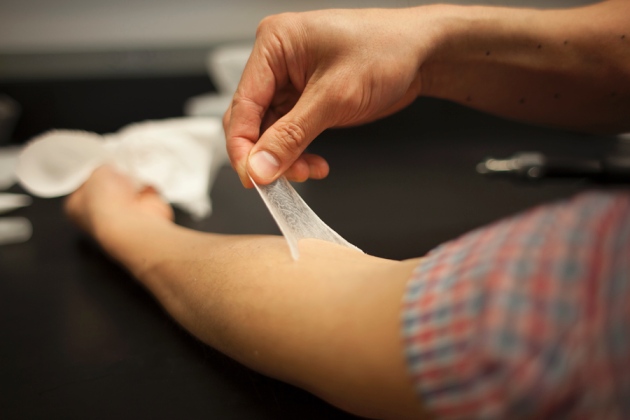
Materials scientists working with cosmetics firms have developed a transparent film that, for the first time, mimics the skin’s youthful elasticity. The silicone-based coating can be smeared onto the face or other areas of the body through two gel applications. Once hardened, it clings closely to the skin for more than 16 hours, says Robert Langer, a bioengineer at the Massachusetts Institute of Technology in Cambridge, who co-led development of the material.

The film — which Langer’s team dubs ‘second skin’ — can reduce the appearance of bags under the eyes and wrinkles, and can increase the elastic recoil of skin when it is pinched, he and colleagues report in a paper published in Nature Materials1. It also acts as a barrier that prevents water loss from dry skin, they report, suggesting that besides its cosmetic use, the film might offer an alternative to greasy ointments for people with skin complaints such as eczema, although it hasn't yet been trialled for that idea.


 After reading the brief commentary, I decided to go look at the article in the research section of the journal myself.   Sure enough, here is the research article titled "An Elastic Second Skin" with the following abstract shown below:


The invention is real.  If you read the introduction, the authors list several reasons why a person would be interested in using elastic skin.  The most important is to have healthy looking (not dehydrated) skin that gives off the appearance of health and wellness.


The above comments are not to suggest that the new product or invention is of no use.  Elastic skin could be of use to the film industry, cosmetic industry for modeling, the health industry for burn victims or patients with persistent skin diseases.  What I worry about is the fact that the average person will come along and use the product without thinking about possible cautions that could turn into disasters.  What might those be?  Take a look at the product shown below from in the picture from the article:


Source: Melanie Gonick


Elastic skin might be good for a patient with the listed conditions, such as eczema or psoriasis.  What the consumer should understand is that the skin is a major pathway for the body to excrete toxins through sweating.  The invention could claim that the product might help dry skin or help moisturize a person with persistently dry skin or flaky skin.  True, but also, if the elastic skin is worn over the old skin, there is no room to breathe and release toxins.


Conclusion . . .


Skin care is a multibillion dollar business.  Who would not like to look great with healthy and non-aging skin? The inevitable aspect of aging is that our bodies do get exposed to the environment.  As I suggested above, through the links to various websites with comments, there are pathways to reduce the damage to your skin.  Contact your dermatologist.  Or just practice simple measures such as hydrating your body enough.  Keep your skin moisturized.  Consult a skin care specialist to save yourself money by not over spending on skin care products that have outrageous claims.


Until next time, have a great day!