Showing posts with label healthy skin. Show all posts

Monday, June 18, 2018

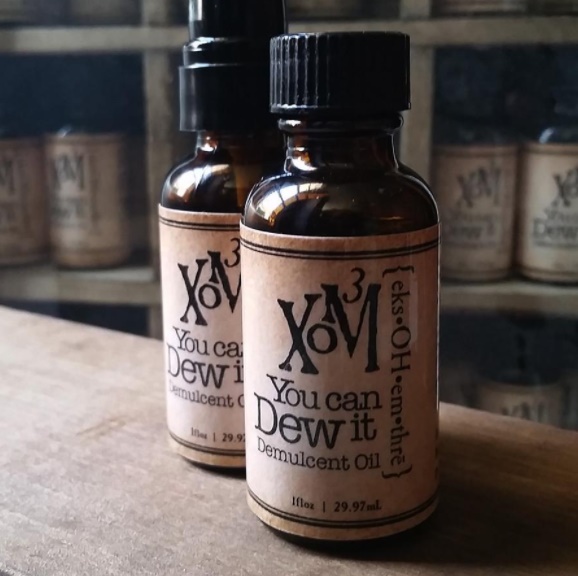
Anti-Aging Skin Series Post 15: A little science behind XoM3 Product -- You Can Dew It!

Source: XoM3


Remember my last post about the great facial product by XoM3 -- You Can Dew It!! -- shown above?  That might have seemed like a long time ago.  Furthermore, you may have been curious as to what I have been doing in the meantime.  Remember, I promised to talk about a science paper which I found regarding topical benefits of plant oils?  I have read the paper and am ready to discuss the topic a little.  Which means that the science behind the paper will be introduced.


Below, I have included the statements from the scientific paper titled "Anti-Inflammatory and Skin Barrier Repair Effects of Topical Application of Some Plant Oils".  The paper is a review of the literature of plant oils and their healing properties with respect to skin inflammation along with wound healing.  In total, the paper is around 20 pages with tables and rich in references.  Why do I mention this fact?  Because, there are a large number of statements made in the paper which need to be further investigated (looking further into their references -- specifically the studies to back up a claim).


As a result, I have had a large amount of difficulty deciding on how to interpret the heavy hitting scientific statements made to the public (or the reader -- you).  This has taken me a few weeks of indecision.  Finally, I decided to lay out the statements regarding the specific ingredients which are contained in the product by XoM3 product -- You Can Dew It!   Further, in the next blog post, I will go deeper into the contents of the paper regarding wound healing, anti-inflammation, anti-aging properties.  Feel free to go through this open access paper by yourself.  The paper can be found at either this link or here.


With that being said, let's move onto looking at results from a science article regarding the topical benefits of the ingredients in the product -- "You Can Dew It!" by XoM3 as reported in the cited article.


The following plant oils are contained in the facial treatment -- "You Can Dew It": 1) Jojoba Oil and 2) Argan Oil.  These two oils are specifically discussed and researched along with others which will be detailed in the next blog post.  First, I will list the statements regarding the two oils made in the research article I cite above.  The remainder of the ingredients will be listed by their respective 'overview' descriptions from 'WebMD' as shown below:


1) Jojoba Oil:


The section on Jojoba Oil states:


Jojoba (Simmondsia chinensis) is a long-lived, drought resistant, perennial plant. Jojoba oil exhibits a high oxidative stability and resistance to degradation [131]. Jojoba oil is widely used in cosmetic formulas such as sunscreens and moisturizers. It has been shown to be effective in enhancing the absorption of topical drugs [132–134]. The high content of wax esters makes jojoba oil a good repair option for dermatoses with altered skin barriers, such as seborrheic dermatitis, eczematous dermatitis, AD,and acne[98]. Jojoba oil also has a proven anti-inflammatory effect,with potential uses in a variety of skin conditions including skin infections, skin aging, and WH [99,132].


2) Argan Oil:


The section on Argan Oil:


Argan oil is produced from the kernels of Argania spinosa L. Argan oil is composed of mono-unsaturated (80%) and saturated (20%) fatty acids. It contains polyphenols, tocopherols, sterols, squalene,and triterpene alcohols. Traditionally,argan oil has been utilized in cooking,in the treatment of skin infections, and in skin/hair care products. Daily topical application of argan oil has also been shown to improve skin elasticity [81] and skin hydration by restoring the barrier function and maintaining the water-holding capacity [123]. Additionally, topical applications onto skin provide a softening and relaxing effect on the skin, as well as helping to facilitate the accumulation and transdermal delivery of topical drugs such as allantoin [82]. Recently, tocopherol-rich argan oil-based nanoemulsions has been developed as vehicles possessing anticancer activity in murine breast and colon carcinoma cells [83]. Argan oil has also been shown to be effective in enhancing WH created second-degree burns in rats [84].


3) Rose Hip Oil:

The section on Rose Hip Oil:


Rose hip oil is extracted from seeds of rose hip (Rosa canina L.). Rose hip oil contains substantial UFAs. The most abundant fatty acid is linoleic acid (35.9–54.8%), followed by α-linolenic acid (16.6–26.5%), and oleic acid (14.7–22.1%) [141]. An appreciable number of lipophilic antioxidants is present, especially the tocopherols and carotenoids. Rose hip oil also contains high level of phenolic acids, especially p-coumaric acid methyl ester, vanillin, and vanillic acid. Due its high composition of UFAs and antioxidants, this oil has relatively high protection against inflammation and oxidative stress [109]. Shabikin et al. has tested the efficacy of topical rose hip seed oil together with an oral fat-soluble vitamins on different inflammatory dermatitis such as eczema, neurodermatitis, and cheilitis, with promising findings of the topical use of rose hip seed oil on these inflammatory dermatoses [110]


Next, the following ingredients which make up the remainder of the facial moisturizer - 'You Can Dew It!' are the 'overview' statements from 'WebMD' as shown below:


4) Primrose Oil:

The statement is from the 'Overview' webpage on WebMD for Primrose oil:


Overview Information
Evening primrose oil is the oil from the seed of the evening primrose plant. Evening primrose oil is used for skin disorders such as eczema, psoriasis, and acne. It is also used for rheumatoid arthritis, weak bones (osteoporosis), Raynaud’s syndrome, multiple sclerosis (MS), Sjogren’s syndrome, cancer, high cholesterol, heart disease, a movement disorder in children called dyspraxia, leg pain due to blocked blood vessels (intermittent claudication), alcoholism, Alzheimer’s disease, and schizophrenia.
Some people use evening primrose oil for chronic fatigue syndrome (CFS); asthma; nerve damage related to diabetes; an itching disorder called neurodermatitis; hyperactivity in children and attention deficit-hyperactivity disorder (ADHD); obesity and weight loss; whooping cough; and gastrointestinal disorders including ulcerative colitis, irritable bowel syndrome, and peptic ulcer disease.
Women use evening primrose oil in pregnancy for preventing high blood pressure (pre-eclampsia), shortening labor, starting labor, and preventing late deliveries. Women also use evening primrose oil for premenstrual syndrome (PMS), breast pain, endometriosis, and symptoms of menopause such as hot flashes.
In foods, evening primrose oil is used as a dietary source of essential fatty acids.
In manufacturing, evening primrose oil is used in soaps and cosmetics.
In Britain, evening primrose oil used to be approved for treating eczema and breast pain. However, the Medicines Control Agency (MCA), the British equivalent of the US Food and Drug Administration (FDA), withdrew the licenses for evening primrose oil products marketed as prescription drug products for these uses. The licenses were withdrawn because the agency concluded that there is not enough evidence that they are effective. The manufacturer disagrees, but it hasn’t published studies yet to prove the effectiveness of evening primrose for these uses.
How does it work?
Evening primrose oil contains “fatty acids.” Some women with breast pain might not have high enough levels of certain ”fatty acids.” Fatty acids also seem to help decrease inflammation related to conditions such as arthritis and eczema.


5) Yarrow:


The statement below is from the 'Overview' webpage on 'WebMD' for Yarrow:


Overview Information
Yarrow is an herb. The above ground parts are used to make medicine.
Yarrow is used for fever, common cold, hay fever, absence of menstruation, dysentery, diarrhea, loss of appetite, gastrointestinal (GI) tract discomfort, and to induce sweating.
Some people chew the fresh leaves to relieve toothache.
Yarrow is applied to the skin to stop bleeding from hemorrhoids; for wounds; and as a sitz bath for painful, lower pelvic, cramp-like conditions in women. In combination with other herbs, yarrow is used for bloating, intestinal gas (flatulence), mild gastrointestinal (GI) cramping, and other GI complaints.  In foods, the young leaves and flowers of yarrow are used in salads.  In manufacturing, yarrow is also used as a cosmetic cleanser and in snuff. Yarrow oil is used in shampoos.
How does it work?
Yarrow contains many chemicals that might affect blood pressure and possibly have anti-inflammatory effects.


6) Calendula Oil:

The statement below is from the 'Overview' webpage on 'WebMD' for Calendula oil:


Overview Information
Calendula is a plant. The flower is used to make medicine.
Calendula flower is used to prevent muscle spasms, start menstrual periods, and reduce fever. It is also used for treating sore throat and mouth, menstrual cramps, cancer, and stomach and duodenal ulcers. Calendula has also been used for measles, smallpox, and jaundice.
Calendula is applied to the skin to reduce pain and swelling (inflammation) and to treat poorly healing wounds and leg ulcers. It is also applied to the skin (used topically) for nosebleeds, varicose veins, hemorrhoids, inflammation of the rectum (proctitis), ear infection, gum disease, peeling lips (exfoliative cheilitis), diaper rash, vaginal yeast infection, and inflammation of the lining of the eyelid (conjunctivitis). Essential oil of calendula has been used as an insect repellant.
Don’t confuse calendula with ornamental marigolds of the Tagets genus, which are commonly grown in vegetable gardens. 
How does it work?
It is thought that the chemicals in calendula help new tissue grow in wounds and decrease swelling in the mouth and throat.


7) Comfrey Extract:

The statement below is from the 'Overview' webpage on 'WebMD' for Comfrey Extract:


Overview Information
Comfrey is a plant. Even though this plant contains poisonous chemicals called pyrrolizidine alkaloids (PAs), the leaf, root, and root-like stem (rhizome) are used to make medicine. The amount of PAs found in comfrey changes according to the time of harvesting and the age of the plant. The roots have 10 times higher amounts of PAs than the leaves. Some products labeled “common comfrey” or Symphytum officinale actually contain the more poisonous “prickly comfrey” (Symphytum asperum) or “Russian comfrey” (Symphytum x uplandicum) species.
Comfrey is used as a tea for upset stomach, ulcers, heavy menstrual periods, diarrhea, bloody urine, persistent cough, painful breathing (pleuritis), bronchitis, cancer, and chest pain (angina). It is also used as a gargle for gum disease and sore throat.
Comfrey is applied to the skin for ulcers, wounds, joint inflammation, bruises, rheumatoid arthritis, swollen veins (phlebitis), gout, and fractures.
How does it work?
The chemicals in comfrey might have a healing effect and reduce inflammation when applied to the skin. However, comfrey contains toxic chemicals that can be absorbed through the skin.


8) Frankencense oil:

The statement below is from the 'Overview' webpage on 'WebMD' for Frankencense:


Overview Information
Frankincense is the hardened gum-like material (resin) that comes from cuts made in the trunk of the Boswellia carteri tree. People use it to make medicine.
Frankincense is used for colic and intestinal gas (flatulence). It is sometimes applied to the skin in hand cream.
The essential oil of frankincense is used on the skin and by inhalation as a pain-killer.
How does it work?
There isn't enough information available to know how frankincense works.


9) Ylang Ylang:

The statement below is from the 'Overview' webpage on 'WebMD' for Ylang Ylang:


Overview Information
Ylang ylang oil is made from the flowers of the herb Cananga odorata genuina.
People apply ylang ylang oil to the skin to promote relaxation, kill bacteria, lower high blood pressure, and increase sexual desire. It is also part of a combination spray used to kill head lice.
In foods and beverages, ylang ylang oil is used as a flavoring.
In manufacturing, it is used as a fragrance for cosmetics and soaps.
How does it work?
There isn’t enough information to know how ylang ylang oil might work.


This concludes the statements from the cited research article above along with the website 'WebMD' for the ingredients of the product by XoM3 -- You Can Dew It!


In total, the scientific paper I introduced only covered 2 ingredients listed on the back of the facial moisturizer -- You Can Dew It!  The overall message regarding the scientific research for those two ingredients (chemicals) is as follows:


Jojoba oil: Jojoba oil search returned the results of having a beneficial effect in skin barrier repair along with anti-aging properties.  The oil has both anti-oxidant and anti-inflammatory properties as referenced in the cited paper.  These benefits are important for a facial moisturizer developed to repair and return healthy looking skin.


Argan oil:  Argan oil is beneficial for wound healing and skin barrier repair as cited in the referenced paper.  There are questionable data regarding anti-aging properties or anti-oxidant properties.  Although, argan oil along with jojoba oil have anti-inflammatory properties when incorporated into a skin care product.


Rose Hip oil: Rose Hip is beneficial as an anti-oxidant and anti-inflammatory agent.  According to the table cited in the article, rose hip also contains anti-aging components which contribute to the overall properties of the moisturizer.


Conclusion...


The other ingredients are referenced with information from the website 'WebMD'.  In the next blog post, I will go further into the properties and benefits behind the science listed in the cited article.  Plants have beneficial properties as noted in the cited papers.  How to measure or design an experiment to test these ingredients is difficult, but ongoing.  As science moves forward, the knowledge will increase proportionately on the safety of the ingredients used in cosmetic products.


Until next time, have a great day!


Related Blog Posts:


Anti-Aging Skin Series 14: You Can Dew It by XoM3


Index of Anti-Aging Blog Posts


Tuesday, April 17, 2018

What is Rosacea?

Rosacea is a painful skin condition that runs in my family. Women between ages 30 and 50 with fair skin can suffer from rosacea that is aggravated by sunlight, diet soda, stress and heat. I contacted my friend Sepi from CT Organics in 2016 when my skin was in such a bad state that I was at my wit's end.

I've been using Clinique "Redness Solutions Soothing Cleanser With Probiotic Technology" since around 2007. I also use Clinique "Broad Spectrum SPF 50 Sunscreen Face Cream" and more recently Clinique "SPF 50 Mineral Sunscreen Fluid For Face." They say the mineral sunscreen is virtually invisible, which is to say that it is like wearing clown white makeup. But for days when I'm out in the sun all day, I feel it provides better protection than the face cream.

To treat the skin irritation, Sepi first gave me a sample of pure borage oil to make sure that wouldn't aggrevate the condition. Then she gave me a sample of Borage Pearl Powder cream to try. I've been applying it only to the areas of extreme redness. It's definitely working. The redness in my cheeks is less but I still get irritation on my chin that I'm trying to tame. I think maybe the chin is something that still gets sun even when the rest of my face is covered by a hat. Also, I was using only SPF 30 for awhile but I've gone back up to SPF 50.

Oct 2016
Nov 2016
March 2017

April 2018
I can't say enough wonderful things about the Borage Pearl Powder cream. The only thing I need to do is make sure I have a travel size. Last month, when I went to New Orleans (on a plane) I was limiting myself in terms of how many ounces I brought in my carry-on luggage. 3-1-1 for carry-ons = 3.4 ounce (100ml) bottle or less (by volume) ; 1 quart-sized, clear, plastic, zip-top bag; 1 bag per passenger placed in screening bin. The thing is that I brought a bunch of hair products which left less room for skin care in the 1 quart bag. Priorities~!

March 2018, New Orleans
Every day on top of the Borage Pearl Powder cream, I put Clinique "Dramatically Different Moisturizing Lotion+" and I use that to cover areas outside of the T-zone where my rosacea isn't. I sometimes use Clinique "All About Eyes" but not every day. Especially since I hardly go anywhere without my glasses these days, and then on top of that I wear goggles in lab 5 days a week. So nobody is really looking at my crow's feet. Then I put "Broad Spectrum SPF 30 Sunscreen Face Cream" on top of all that. Or SPF 50 if I'm planning to be outside for more than 20 minutes at a time.

When I've got TOO much sun or TOO much wind or if I've done TOO much gardening and my skin has been hit with dirt, I use Clinique "Moisture Surge™ Intense Skin Fortifying Hydrator" together with Clinique "Repairwear Laser Focus™ Wrinkle Correcting Eye Cream." I keep this on overnight or all weekend (plus staying indoors) to let the skin heal itself.

But I will say that this entire regimen WITHOUT the Borage Pearl Powder cream didn't work.


According to CT Organics website, borage seed oil contains high amount of gamma-linolenic acid (GLA) fatty acids that help reduce inflammation naturally.


I could say more about a BUNCH of other CT Organics products that I love, but that's all the time I have for today AND this product has been a game changer for me.

Tuesday, April 3, 2018

Anti-Aging Skin Series 14: You Can Dew It by XoM3

Happy New Year to everyone!!!!  Sorry for the delay in response, I have been busy with other projects.  I have been thinking about the direction of the 'Anti-Aging Skin Series' quite a bit over the break.  Up until now, the products which I have chosen to deconstruct have been off the store shelf.  A few months ago, I met Mandy of XoM3 products.  My last blog post was on her and how this year I would incorporate her products into the 'Anti-Aging Skin Series'.  Why?


Specifically, because in addition to deconstructing the ingredient list on the bottle of a given product, we can find out exclusive information not yet known to the public about the formulator's (creators) intention in designing the skin care product.  Which makes us the consumers feel even a step closer to the process and the product.  Without further ado, lets dive into the first product from XoM3 product line: "You Can Dew It" as shown below:


Remember, if you are interested in reading any previous posts contained in the 'Anti-Aging Skin Series' please either choose the hyperlink "Aging" on the cover page (in the right hand corner) or click here.


"You Can Dew It"


First, to put the product into context from her website, Mandy has a product description which I directly quoted below from her website:


Seasonal and dry weather, time, or biology can do a number on delicate facial skin. Handcrafted You Can Dew It Demulcent Oil can help. Lush with organic and ethical ingredients, precious jojoba, rosehip seed, argon and evening primrose oils are infused with skin loving botanicals and essential oils of frankincense and ylang ylang to deliver a velvety, dew kissed finish for glowing results. 


Upon asking Mandy for a complete ingredient list, she was super kind to be open with her products.  She is interested in bringing awareness to the community of consumers in the skin care industry that she stands by her products and has nothing to hide.  She is very knowledgeable regarding the exact reason why a given ingredient is used in one of her products.  Which makes her product line even more attractive.


To start with, I will list each ingredient and list the function as I have done in past blog posts.  If the ingredients are 'highlighted or hyperlinked' then the reference page is from 'Environmental Working Group'.  Otherwise, the ingredient information reference number will be given along with the corresponding reference listed at the end of the blog post in the bibliography.  Below is a list of ingredients in "You Can Dew It":


1) Jojoba Oil:

About SIMMONDSIA CHINENSIS (JOJOBA) SEED OIL: Jojoba oil is extracted from seeds of the desert shrub, Simmondsia chinensis, native to California, Arizona and Mexico.

Function(s): Hair Conditioning Agent; Skin-Conditioning Agent - Occlusive; EMOLLIENT; SKIN CONDITIONING; VISCOSITY CONTROLLING


2) Yarrow:

A strong-scented, spicy, wild herb used in astringents and shampoos. (Ref.2)

Note: Astringent:  a substance that causes the contraction of body tissues, typically used to protect the skin and to reduce bleeding from minor abrasions. (Ref.3)


3) Argan Oil:

The oil is high in lipids, including the omega-9 oleic acid and the omega-6 linoleic acid as well as vitamin E.  Argan oil has anti-inflammatory properties. (Ref.3)


4) Calendula Officinalis (POT MARIGOLD) Flower Oil:

About CALENDULA OFFICINALIS (POT MARIGOLD) FLOWER OIL: Calendula Officinalis Flower Oil is an oil derived from the flowers of Calendula officinalis.

Function(s): Fragrance Ingredient; MASKING; SKIN CONDITIONING


5) Comfrey Extract:

The leaf and root contain allantoin, mucilage, tannins, starch, inulin, steroidal saponins, and pyrrolizine alkaloids. (Ref. 2)


6) Fankincense Oil:

Fragrant component used in skincare products; it can be a skin sensitizer, but is not considered a potent one. There is no research showing frankincense has any benefit for skin. (Ref.4)


7) Ylang Ylang:

About CANANGA ODORATA (YLANG YLANG) OIL: Oil obtained from the flowers of the ylang-ylang tree Cananga odorata.

Function(s): Fragrance Ingredient; MASKING


8) Primrose Oil:

About OENOTHERA BIENNIS (EVENING PRIMROSE) OIL: Evening Primrose oil is extracted from Oenothera biennis, a plant native to North America.

Function(s): Skin-Conditioning Agent - Miscellaneous; EMOLLIENT


That completes the ingredient list for the product "You Can Dew It" by XoM3 Botanical Solutions. On the bottom of the front of the bottle is the label -- "Demulcent Oil" which means -- "(of a substance) relieving inflammation or irritation."


Conclusion...


In the next post, I will provide a little background into the benefits of natural oils based on science.  I recently stumbled upon an article which I would like to work through to see the evidence of the benefits aside or along with those listed in the ingredients (functions) list above.


I also promised at the beginning of the series (this year) to include Mandy (the producer, formulator) opinion on the product.  I have to rescind that for the present time.  We are both looking into the Food & Drug Regulations guidelines on 'interviews' and 'product discussions.'  I will hopefully have more on that topic in the near future.


For the time being, I will move onto a new product after I discuss some benefits of natural oils in the next post.  Until next time, have a wonderful day.


Reference Bibliography:

1) Environmental Working Group

2) Cosmetic Dictionary

3) Google Dictionary

4) Paula's Choice 


Thursday, July 6, 2017

Where Do I Find Previous Anti-Aging Skin Series Blog Posts?

I had a realization the other day while writing the next blog post for the ongoing "Anti-Aging Skin Series".  While making a reference to a previous blog post in the series, I tried to look for that blog post.  When a user to our site clicks on the button on the "right hand side" of the web page titled "Anti-Aging Skin Series" the result is a list of all of the previous blog posts.   I will update the list as a new blog post is written.


Note: The blog posts are from most recent to oldest.


Anti-Aging Skin Series Post 13: Meet Mandy from XOM3 Botanical Solutions!


Anti-Aging Skin Series Post 12: What is in "Natural Facial Moisturizer"?


Anti-Aging Skin Series Post 11: "Natural Facial Moisturizer"


Anti-Aging Skin Series Post 10: What Is The Difference Between Products? Continued


Anti-Aging Skin Series Post 9: What Is The Difference Between Products?


Anti-Aging Skin Series Post 8: Suave Skin Solutions


Anti-Aging Skin Series Post 7: Part 3 -- Toxicity Analysis Of Jergen's Skin Lotion


Anti-Aging Skin Series Post 7: Part 2 -- Ingredient Analysis Of Jergen's Skin Firming Lotion


Anti-Aging Skin Series Post 6: Short Glossary Of Functions For Skin Care Ingredients


Anti-Aging Skin Series Post 5: Part 1 - Jergens Skin Firming Moisturizer Lotion


Anti-Aging Skin Series Post 4: What Is A Cosmetic Product?


Anti-Aging Skin Series Post 3: Skin -- Function - part 2


Anti-Aging Skin Series Post 2: Skin -- Function - part 1


Anti-Aging Skin Series Post 1: Skin -- Structure


Can You Please Break Down Into Bits Your Anti-aging Article?


Can Science Really Reverse Aging Skin?


Tuesday, November 1, 2016

Anti-Aging Skin Series Post 5: Part 1 - Jergens Skin Firming Moisturizer Lotion

Continuing on with our journey through the scientific claims (in products) of "Anti-Aging" skin care products, the time has come to tackle a chosen product.  For those readers just joining the educational series, the series is called "Anti-Aging Skin Series" and by clicking on the title, previous posts can be accessed.  The series came out of an original post which was lengthy and addressed a couple of popular technologies.  One was artificial skin while the other was that reversing aging skin with the use of 'skin creams' which have claims of restoration of crucial ingredients in the human skin like 'collagen' or 'glycans' (on the surface of cells - which promote collagen growth).


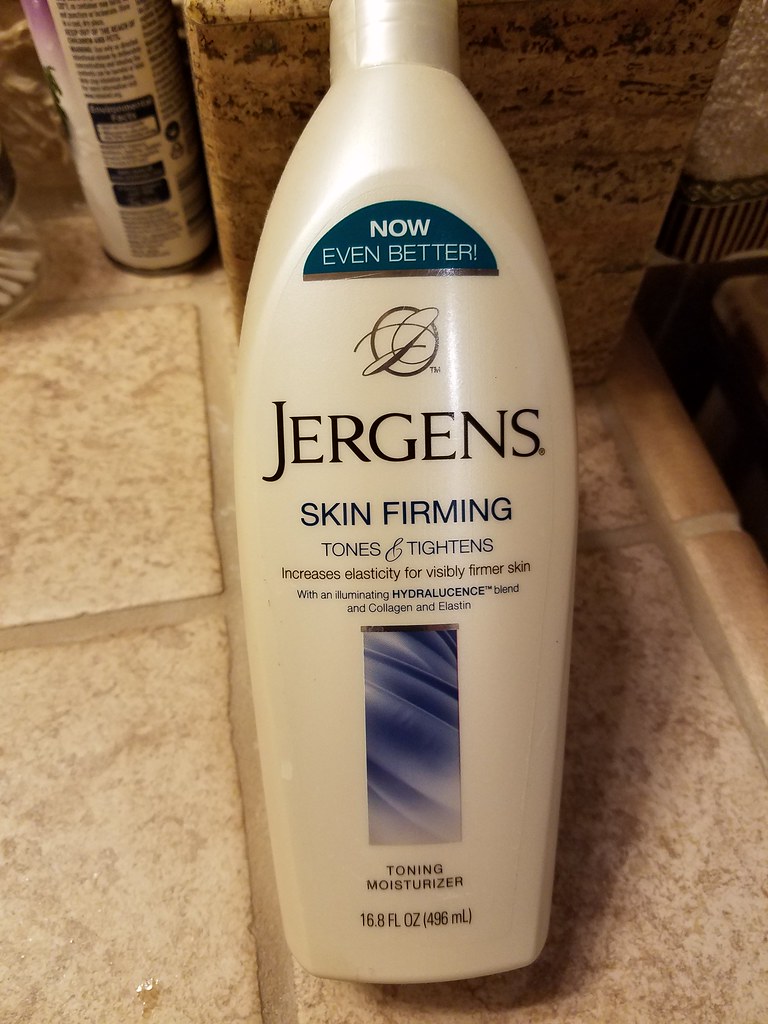
In the paragraphs below, we will look at a skin care product that is supposedly aimed at "skin firming" by 'tightening' or 'toning' the consumer's skin to appear young and healthy skin.  Specifically, we will break the blog post into two parts: 1) An Ingredient List and 2) a discussion about the ingredients and functionality of each.  Below is part 1 of the first product -- a Skin Firming Moisturizer product.


Here is a picture of the skin care product named 'Jergens Skin FirmingMoisturizer' below:


Without further ado, lets start exploring the skin firming moisturizer in greater detail.


Skin Firming Moisturizer


As I just mentioned, the product that we are exploring today is named 'Jergens Skin Firming Moisturizer' and is specifically for tightening and toning older skin to appear younger.  If we look at the product description from the website 'Amazon' -- here is what the site states as a selling point:

About the Product
JERGENS Skin Firming Moisturizer helps you achieve deeply luminous, visibly firmer skin. This unique formula tightens and increases elasticity of celllulite prone skin for visibly firmer results.
Reduces the appearance of cellulite and features a unique illuminating HYDRALUCENCE blend, Collagen, and Elastin.
Improves skin‘s resiliency, elasticity, and firmness. With an exclusive anti-cellulite Firm Perfecting Complex.
Relieves dryness and replenishes moisture to improve skin‘s tone, texture, and luminosity.


The marketing teams behind these products are amazing -- the teams can really sell a product.  I have to give credit where credit is due.  Of course, this credit is only from a 'selling standpoint' and not from a 'scientific standpoint' -- which we shall explore shortly.


According to the product manufacturer's claim, the skin firming moisturizer is a 'unique formula' that will increase "elasticity of cellulite prone skin for visibly firmer results."  Remember this claim along with other mystifying statements like "features a unique illuminating HYDRALUCENCE blend, Collagen, and Elastin."  From my read, the last statement is the most true statement: "Relieves dryness and replenishes moisture to improve skin's tone, texture, and luminosity."  After going through the ingredient list, these claims will be either proven true or false!


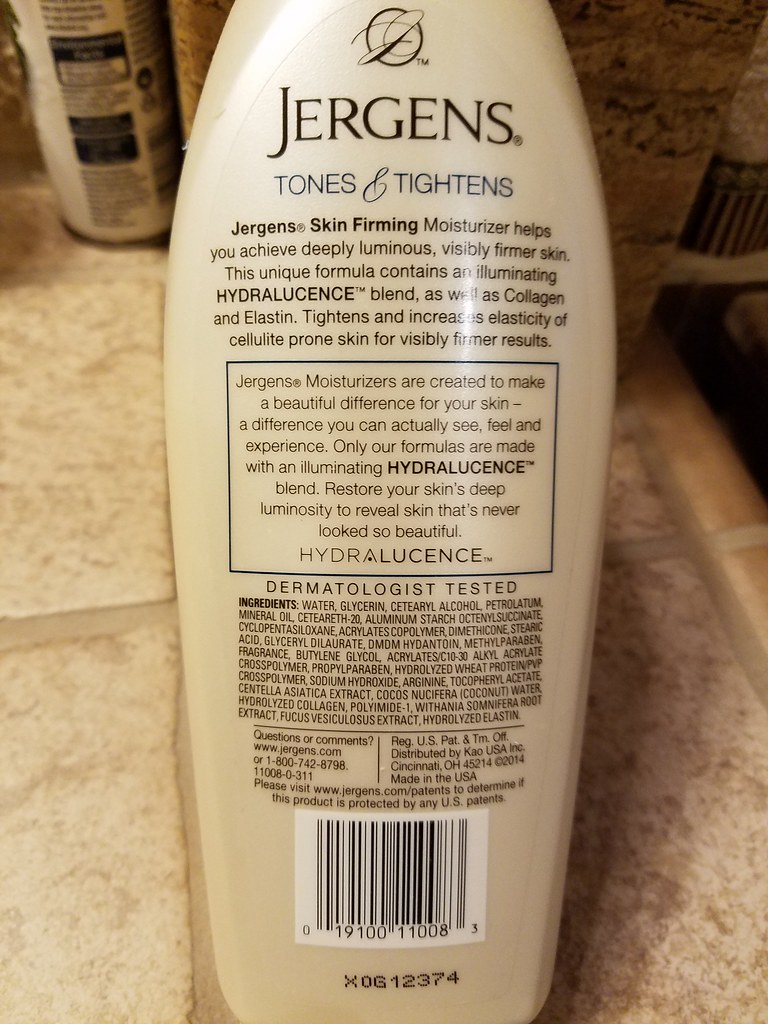
If the container is turned around to reveal the backside of the product container, the statement and ingredients are shown as follows:


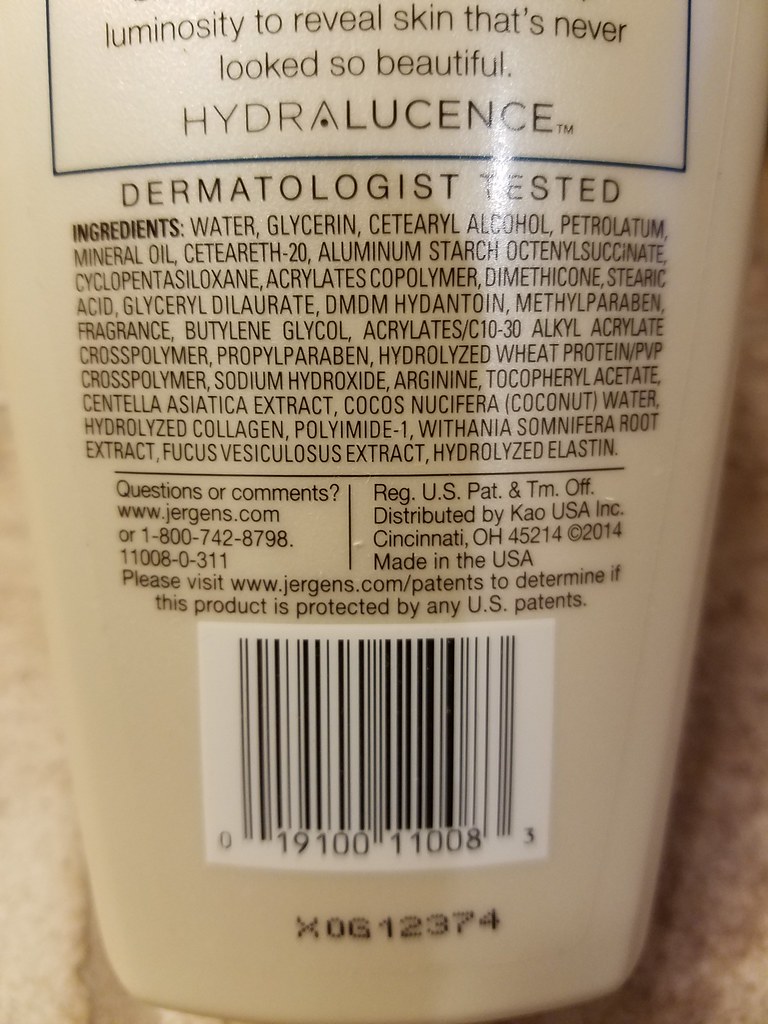
and zooming in on the ingredients, the list is shown below:


Remember in the original post that aging skin appears dry, flaky, and saggy due to the loss of 'collagen'.  Additionally, the 'saggy' skin is often referred to as 'crepey' skin too.  If a product was advertised to 'tighten' and 'tone' skin to make the skin appear to be more youthful skin, then obviously, the product would sell well and appeal to a large audience.  I imagine that is the case with the following product under review in this post.


How do the ingredients function to make skin appear 'tightened' and 'toned'?


If the ingredient list is explored into greater detail, a better understanding of the function of each ingredient will become apparent.  In the next section, a list will be formed using data collected on a very resource rich website 'Environmental Working Group'.  The EWG is a nonprofit organization whose mission is to demystify the harmful ingredients that are contained in consumer products and lobby in Washington D.C. toward safer use of chemicals in consumer products.  Their website is dense in information.


One of the overarching goals on the KaiserWellnessCenter blog is to provide you (the reader) with the correct resources that you can use for yourself in your journey toward wellness and a better understanding of the surrounding environment.  Below, I will list information 'about' the chemical in question and the 'function' of the chemical in question.  You might ask:


Where does this information come from?


One of the chemicals off of the ingredient list is "Aluminum Starch Octenyl Succinate" with an ingredient profile from the EWG that is shown below:


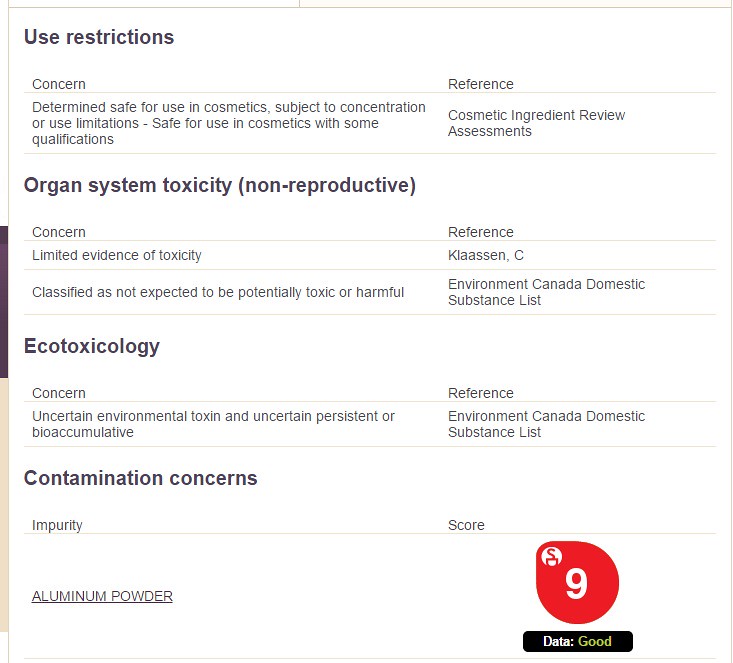
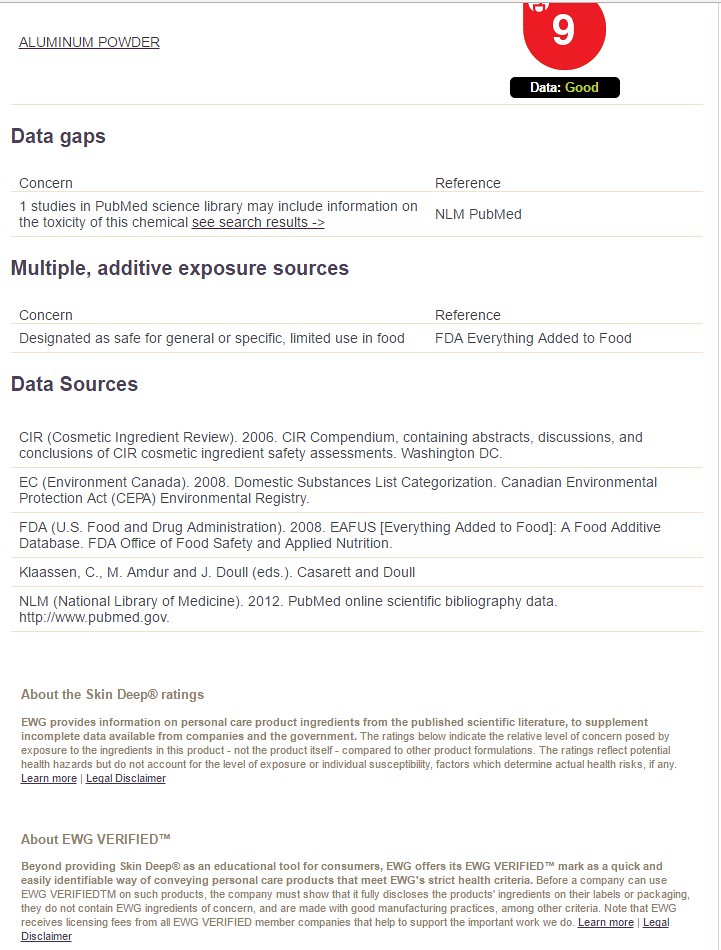
As you can see, the two pieces of information needed to understand the importance of the ingredient are the "about" and "function" of the chemical.  Also, the various names would be useful as different manufacturers of different products might choose to use different names.  The EWG provides a fair amount of information in the frame shown above.  Although, if you type in the chemical name like I did, there is more data on the chemical not shown in the image above.  I broke the webpage for "Aluminum Starch OctenylSuccinate" up into three images.  Here are the remaining two with additional toxicity data and resources on the references of the information above:


And ...


The EWG is one great resource to find information on chemicals in consumer products that are sold on the market.  Additional sites do exist along with reference books (like "A Consumer's Dictionary Of Cosmetic Ingredients") which will be mentioned as we explore different products.  For the purpose of the introductory post on a "skin firming moisturizer," the EWG will be the sole source of the ingredient list.  In the future, you will be able to type in a variation of a name and search for yourself.


Ingredient List


I just mentioned that a list of the two types of information would be made about each ingredient.   Each ingredient will be underlined and then followed by two sentences.  The first sentence will contain the "about" information.  Whereas the second sentence will contain the "function" of the chemical in the product.


Note: the information on the ingredient list is taken directly from the website - EWG.  This is to illustrate the first pass at deconstructing any ingredient list.  In future posts, only relevant functions will be extracted for the product under review.


Remember, click on any of the 30 chemicals listed and you will be directed to the original source -- the EWG website page for the chemical in question.


1) Water:

About: n/a

Function: Solvent


2) Glycerin:

About: Glycerin (also called glycerol) is a naturally occurring alcohol compound and a component of many lipids.

Function(s): Denaturant; Fragrance Ingredient; Hair Conditioning Agent; Humectant; Oral Care Agent;Oral Health Care Drug; Skin-Conditioning Agent - Humectant; Skin Protectant; Viscosity Decreasing Agent; PERFUMING; SOLVENT


3) Cetearyl Alcohol:

About: Cetearyl Alcohol is a mixture of cetyl and stearyl alcohols that can come from vegetable or synthetic sources.

Function(s): Emulsion Stabilizer; Opacifying Agent; Surfactant - Foam Booster; Viscosity IncreasingAgent - Aqueous; Viscosity Increasing Agent - Nonaqueous; EMOLLIENT; EMULSIFYING; EMULSION STABILISING; FOAM BOOSTING; VISCOSITY CONTROLLING


4) Petrolatum:

About: Petrolatum is a semisolid mixture of hydrocarbons obtained from petroleum.

Function(s): Hair Conditioning Agent; Skin-Conditioning Agent - Occlusive; Skin Protectant; EMOLLIENT; MOISTURISING; UV ABSORBER


5) Mineral oil:

About: Mineral Oil is a liquid mixture of hydrocarbons obtained from petroleum.

Function(s): Fragrance Ingredient; Hair Conditioning Agent; Skin-Conditioning Agent - Emollient;Skin-Conditioning Agent - Occlusive; Skin Protectant; Solvent; ANTISTATIC; PERFUMING; SKIN PROTECTING


6) Ceteareth-20:

About: Ceteareth-20 is the polyethylene glycol ether of cetearyl alcohol; may contain potentially toxic impurities such as 1,4-dioxane.


Function(s): Surfactant - Cleansing Agent; Surfactant - Solubilizing Agent.


7) Aluminum Starch Octenyl Succinate:

About: This ingredient is an aluminum salt of chemically modified starch.

Function(s): Absorbent; Anticaking Agent; Viscosity Increasing Agent - Nonaqueous; VISCOSITY CONTROLLING.


8) Cyclopentasiloxane:

About: Cyclopentasiloxane (cyclomethicone) is a silicon-based cyclic compound; may be associated with environmental toxicity.

Function(s): Hair Conditioning Agent; Skin-Conditioning Agent - Emollient; Solvent; SKIN CONDITIONING


9) Acrylates Copolymer:

About: Acrylates copolymer is composed of acrylic acid and methacrylic acid building blocks.

Function(s): Adhesive; Artificial Nail Builder; Binder; Film Former; Hair Fixative; Suspending Agent -Nonsurfactant; ANTISTATIC; BINDING; FILM FORMING


10) Dimethicone:

About: Dimethicone (also called polymethylsiloxane) is a silicon-based polymer used as a lubricant and conditioning agent.

Function(s): Antifoaming Agent; Skin-Conditioning Agent - Occlusive; Skin Protectant; EMOLLIENT; SKIN CONDITIONING; SKIN PROTECTING.


11) Stearic Acid:

About: Stearic acid is a naturally occurring fatty acid.

Function(s): Fragrance Ingredient; Surfactant - Cleansing Agent; Surfactant - Emulsifying AgentSurfactant-Cleansing Agent is included as a function for the soap form of Stearic Acid.; EMULSION STABILISING; MASKING; REFATTING.


12) Glyceryl Dilaurate:

About: Glyceryl Dilaurate is a diester of glycerin and lauric acid.

Function(s): Skin-Conditioning Agent - Emollient; EMULSIFYING.


13) DMDM hydantoin:

About (FORMALDEHYDE RELEASER): DMDM hydantoin is an antimicrobial formaldehyde releaser preservative.

Function(s): Preservative.


14) MethylParaben:

About: Methylparaben is in the paraben family of preservatives used by the food, pharmaceutical, and personal care product industries.

Function(s): Fragrance Ingredient; Preservative.


15) Fragrance:

About: The word "fragrance" or "parfum" on the product label represents an undisclosed mixture of various scent chemicals and ingredients used as fragrance dispersants such as diethyl phthalate.

Function(s): DEODORANT; MASKING; PERFUMING.


16) Butylene Glycol:

About: Butylene glycol (1.3-Butanediol) is a small organic alcohol used as solvent and conditioning agent.

Function(s): Fragrance Ingredient; Skin-Conditioning Agent - Miscellaneous; Solvent; ViscosityDecreasing Agent; HUMECTANT; MASKING; SKIN CONDITIONING; VISCOSITY CONTROLLING.


17) Acrylates/C10-30 Alkylacrylate Crosspolymer:

About: This ingredient is a polymer of actylic acid and related chemicals.

Function(s): Emulsion Stabilizer; Viscosity Increasing Agent - Aqueous; Viscosity Increasing Agent -Nonaqueous; EMULSION STABILISING; FILM FORMING; VISCOSITY CONTROLLING.


18) PropylParaben:

About: Propylparaben is in the paraben family of preservatives used by the food, pharmaceutical, and personal care product industries.

Function(s): Fragrance Ingredient; Preservative; PERFUMING.


19) Hydrolyzed Wheat Protein/PNP Crosspolymer:

About: Hydrolyzed Wheat Protein/PVP Crosspolymer is a crosslinked copolymer of HydrolyzedWheat Protein (q.v.) and PVP (q.v.).

Function(s): Film Former; Hair Conditioning Agent; Hair Fixative; FILM FORMING; HAIR FIXING.


20) Sodium Hydroxide:

About: Sodium Hydroxide is a highly caustic and reactive inorganic base.

Function(s): Denaturant; pH Adjuster; BUFFERING.


21) Arginine:

About: Arginine is a naturally occurring amino acid.

Function(s): Fragrance Ingredient; Hair Conditioning Agent; Skin-Conditioning Agent - Miscellaneous; ANTISTATIC; MASKING; SKIN CONDITIONING.


22) Tocopheryl Acetate:

About: Tocopheryl acetate is a chemical compound that consists of acetic acid and tocopherol (vitamin E)

Function(s): Antioxidant; Skin-Conditioning Agent - Miscellaneous; SKIN CONDITIONING.


23) Centella Asiatica Extract:

About: Extract of the leaves and roots of the medicinal plant Gotu Kola, Centella asiatica.

Function(s): Skin-Conditioning Agent - Miscellaneous; SKIN CONDITIONING.


24) Cocos Nucifera (Coconut) Water:

About: Cocos Nucifera (Coconut) Water is an aqueous solution of the steam distillate obtained fromCocos nucifera.

Function(s): Fragrance Ingredient; MASKING.


25) Hydrolyzed Collagen:

About: Hydrolyzed Collagen is a hydrolysate of animal or fish collagen derived by acid, enzyme orother method of hydrolysis. It is characterized by a significant level of hydroxyproline residues.

Function(s): Hair Conditioning Agent; Nail Conditioning Agent; Skin-Conditioning Agent - Miscellaneous; ANTISTATIC; EMOLLIENT; FILM FORMING; HUMECTANT; SKIN CONDITIONING.


26) Polyimide-1:

About: Polyimide-1 is a terpolymer that is made by reacting poly(isobutylene-alt-maleic anhydride)with dimethylaminopropylamine and methoxy-PEG/PPG-31/9-2-propylamine in a mixture of ethanol andWater.

Function(s): Film Former; Hair Fixative; FILM FORMING.


27) Withania Somnifera Root Extract:

About: Withania Somnifera Root Extract is an extract of the roots of Withania somnifera.

Function(s): Not Reported; SKIN CONDITIONING.


28) Fucus Vesiculosus Extract:

About: Fucus Vesiculosus Extract is an extract of the dried thallus of the bladderwrack alga, Fucusvesiculosus.

Function(s): Fragrance Ingredient; Skin-Conditioning Agent - Miscellaneous; PERFUMING.


29) Hydrolyzed Elastin:

Function(s): HAIR CONDITIONING; SKIN CONDITIONING.


That is all of the ingredients listed on the backside of the bottle of 'Jergens Skin Firming Moisturizer' with 'Hydralucence' technology.  The chemical named 'Hydralucence' was not listed on the above list -- why?  Because, the name is not of a chemical but of a technology.  More specifically, the 'Hydralucence' technology is the propietary blend.


Conclusion . . .


For the time being, the above information shall give you (the reader a start) into thinking about the functions of the ingredients.  Notice the following questions remain unanswered regarding the "skin firming lotion" advertised above:


1) What are the toxicities associated with each chemical on the list above?


2) What are the concentrations of each chemical?


3) How do all of the above chemicals function together to provide the marketed claims?


4) What does 'emollient' mean?


5) What is an 'humectant'?


6) What are some of the definitions of the terms listed in the 'functions' section?


These questions along with others will be entertained in the next post.  Remember, since the "Anti-Aging Skin Series" is about breaking down the initial post into digestible parts, we must stick with the tradition of doing so.  In the meantime, the above list along with the claims in the marketing listing provide you with a few terms and questions to think about until we tackle the functionality and myths associated with the ingredients and claims in the next post -- post 6.


Until next time, Have a great day!