Showing posts with label aging. Show all posts

Tuesday, April 3, 2018

Anti-Aging Skin Series 14: You Can Dew It by XoM3

Happy New Year to everyone!!!!  Sorry for the delay in response, I have been busy with other projects.  I have been thinking about the direction of the 'Anti-Aging Skin Series' quite a bit over the break.  Up until now, the products which I have chosen to deconstruct have been off the store shelf.  A few months ago, I met Mandy of XoM3 products.  My last blog post was on her and how this year I would incorporate her products into the 'Anti-Aging Skin Series'.  Why?


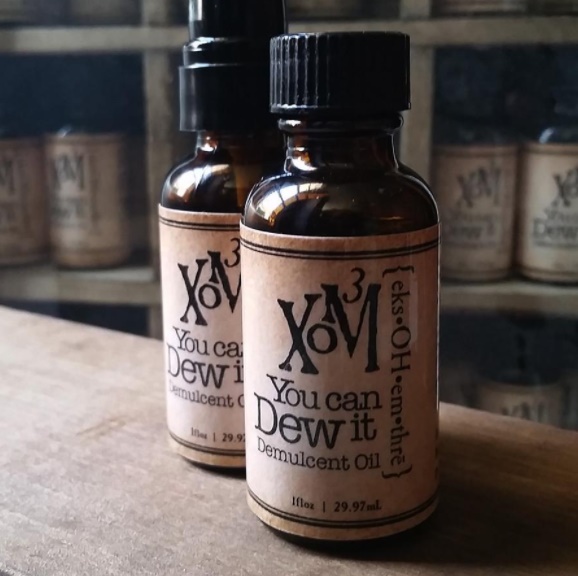
Specifically, because in addition to deconstructing the ingredient list on the bottle of a given product, we can find out exclusive information not yet known to the public about the formulator's (creators) intention in designing the skin care product.  Which makes us the consumers feel even a step closer to the process and the product.  Without further ado, lets dive into the first product from XoM3 product line: "You Can Dew It" as shown below:


Remember, if you are interested in reading any previous posts contained in the 'Anti-Aging Skin Series' please either choose the hyperlink "Aging" on the cover page (in the right hand corner) or click here.


"You Can Dew It"


First, to put the product into context from her website, Mandy has a product description which I directly quoted below from her website:


Seasonal and dry weather, time, or biology can do a number on delicate facial skin. Handcrafted You Can Dew It Demulcent Oil can help. Lush with organic and ethical ingredients, precious jojoba, rosehip seed, argon and evening primrose oils are infused with skin loving botanicals and essential oils of frankincense and ylang ylang to deliver a velvety, dew kissed finish for glowing results. 


Upon asking Mandy for a complete ingredient list, she was super kind to be open with her products.  She is interested in bringing awareness to the community of consumers in the skin care industry that she stands by her products and has nothing to hide.  She is very knowledgeable regarding the exact reason why a given ingredient is used in one of her products.  Which makes her product line even more attractive.


To start with, I will list each ingredient and list the function as I have done in past blog posts.  If the ingredients are 'highlighted or hyperlinked' then the reference page is from 'Environmental Working Group'.  Otherwise, the ingredient information reference number will be given along with the corresponding reference listed at the end of the blog post in the bibliography.  Below is a list of ingredients in "You Can Dew It":


1) Jojoba Oil:

About SIMMONDSIA CHINENSIS (JOJOBA) SEED OIL: Jojoba oil is extracted from seeds of the desert shrub, Simmondsia chinensis, native to California, Arizona and Mexico.

Function(s): Hair Conditioning Agent; Skin-Conditioning Agent - Occlusive; EMOLLIENT; SKIN CONDITIONING; VISCOSITY CONTROLLING


2) Yarrow:

A strong-scented, spicy, wild herb used in astringents and shampoos. (Ref.2)

Note: Astringent:  a substance that causes the contraction of body tissues, typically used to protect the skin and to reduce bleeding from minor abrasions. (Ref.3)


3) Argan Oil:

The oil is high in lipids, including the omega-9 oleic acid and the omega-6 linoleic acid as well as vitamin E.  Argan oil has anti-inflammatory properties. (Ref.3)


4) Calendula Officinalis (POT MARIGOLD) Flower Oil:

About CALENDULA OFFICINALIS (POT MARIGOLD) FLOWER OIL: Calendula Officinalis Flower Oil is an oil derived from the flowers of Calendula officinalis.

Function(s): Fragrance Ingredient; MASKING; SKIN CONDITIONING


5) Comfrey Extract:

The leaf and root contain allantoin, mucilage, tannins, starch, inulin, steroidal saponins, and pyrrolizine alkaloids. (Ref. 2)


6) Fankincense Oil:

Fragrant component used in skincare products; it can be a skin sensitizer, but is not considered a potent one. There is no research showing frankincense has any benefit for skin. (Ref.4)


7) Ylang Ylang:

About CANANGA ODORATA (YLANG YLANG) OIL: Oil obtained from the flowers of the ylang-ylang tree Cananga odorata.

Function(s): Fragrance Ingredient; MASKING


8) Primrose Oil:

About OENOTHERA BIENNIS (EVENING PRIMROSE) OIL: Evening Primrose oil is extracted from Oenothera biennis, a plant native to North America.

Function(s): Skin-Conditioning Agent - Miscellaneous; EMOLLIENT


That completes the ingredient list for the product "You Can Dew It" by XoM3 Botanical Solutions. On the bottom of the front of the bottle is the label -- "Demulcent Oil" which means -- "(of a substance) relieving inflammation or irritation."


Conclusion...


In the next post, I will provide a little background into the benefits of natural oils based on science.  I recently stumbled upon an article which I would like to work through to see the evidence of the benefits aside or along with those listed in the ingredients (functions) list above.


I also promised at the beginning of the series (this year) to include Mandy (the producer, formulator) opinion on the product.  I have to rescind that for the present time.  We are both looking into the Food & Drug Regulations guidelines on 'interviews' and 'product discussions.'  I will hopefully have more on that topic in the near future.


For the time being, I will move onto a new product after I discuss some benefits of natural oils in the next post.  Until next time, have a wonderful day.


Reference Bibliography:

1) Environmental Working Group

2) Cosmetic Dictionary

3) Google Dictionary

4) Paula's Choice 


Thursday, July 6, 2017

Where Do I Find Previous Anti-Aging Skin Series Blog Posts?

I had a realization the other day while writing the next blog post for the ongoing "Anti-Aging Skin Series".  While making a reference to a previous blog post in the series, I tried to look for that blog post.  When a user to our site clicks on the button on the "right hand side" of the web page titled "Anti-Aging Skin Series" the result is a list of all of the previous blog posts.   I will update the list as a new blog post is written.


Note: The blog posts are from most recent to oldest.


Anti-Aging Skin Series Post 13: Meet Mandy from XOM3 Botanical Solutions!


Anti-Aging Skin Series Post 12: What is in "Natural Facial Moisturizer"?


Anti-Aging Skin Series Post 11: "Natural Facial Moisturizer"


Anti-Aging Skin Series Post 10: What Is The Difference Between Products? Continued


Anti-Aging Skin Series Post 9: What Is The Difference Between Products?


Anti-Aging Skin Series Post 8: Suave Skin Solutions


Anti-Aging Skin Series Post 7: Part 3 -- Toxicity Analysis Of Jergen's Skin Lotion


Anti-Aging Skin Series Post 7: Part 2 -- Ingredient Analysis Of Jergen's Skin Firming Lotion


Anti-Aging Skin Series Post 6: Short Glossary Of Functions For Skin Care Ingredients


Anti-Aging Skin Series Post 5: Part 1 - Jergens Skin Firming Moisturizer Lotion


Anti-Aging Skin Series Post 4: What Is A Cosmetic Product?


Anti-Aging Skin Series Post 3: Skin -- Function - part 2


Anti-Aging Skin Series Post 2: Skin -- Function - part 1


Anti-Aging Skin Series Post 1: Skin -- Structure


Can You Please Break Down Into Bits Your Anti-aging Article?


Can Science Really Reverse Aging Skin?


Tuesday, June 27, 2017

Anti-Aging Skin Series Post 10: What Is The Difference Between Products? Continued

What happened to the "Anti-Aging Skin Series"?  Is that what you have been thinking over the last month?  As I mentioned in a previous blog post, I have had some writer's block.  Although, on a positive note, I have had the chance to review a 'Masters thesis' for a friend in cosmetic chemistry.  Which as a result has broadened my understanding of 'anti-aging' skin care formulations.  I will talk more about this in the future.


With this in mind, we are continuing on with the last post.  For those who have not read that post, there were two products (anti-aging skin creams) that were compared.  One product was Jergens Skin Firming Moisturizing lotion.  The second was Suave Skin Moisturizing lotion.  Here are the two products shown below:


And ....


If you click on the name below the image, you will be directed to the original blog post which was written earlier on each product.  Note that next to each picture of each product, there are bullet points which highlight the individual claims that are unique to each product.  Additionally, you will remember that in the previous blog I highlighted the common ingredients (in list form) along with a list of the unique ingredients to each product.


The importance of these lists was to highlight the "common ingredients" along with the "unique" ingredients.  In this blog post, I would like to discuss (somewhat briefly) the different ingredients and match them up to the individual claims.


Jergens Skin Firming Moisturizing Lotion:


To start with, take the first product Jergens Skin Firming Moisturizing Lotion.  The ingredients which are unique to this product are shown below:


If we inspect the list above, the ingredients will support the claims of the product: 1) "tones and tightens skin" 2) "increases elasticity for visibly firmer skin" and 3) "with an illuminating Hydralucence blend and collagen and elastin".


The chemical acrylates copolymer will form a semi-solid film by combining with dimethicone.  This could work as a "skin firming" agent to make the skin appear "tighter and firmer".  Add to this mix the ingredients "hydrolyzed elastin" and "hydrolyzed collagen" to make up a layer with body.  By "body" I mean that adding "hydrolyzed collagen" and holding the chemicals underneath the skin, there is a sense of "collagen restoration" to the skin -- making the skin appear to have more "body."


Remember that there are plenty of theories that collagen restoration is possible with various chemicals.  Each pathway and process needs to be studied in more detail.  Although, early suggestions is that chemicals such as 'vitamin D' is effective at restoration.  The exact mechanism is not known.  To substitute for the inability to generate 'collagen' which supports the skin's 'body' and "strength" -- different polymers and collagen are added with various chemicals.  Wash the lotion off and return to your skin.


Now I should make a note: The polymer blend which provides a "skin" or "barrier" which makes the skin appear to be "firmer" also acts as a trap.  "Hydrolyzed elastin" acts as a "humectant" which is retain water.  In the process of absorbing water and trapping is underneath the "polymer film" the corneum layer is being hydrated and protected against damage.


As far as "anti-aging" properties, the moisturizing ability of this system is accomplished by the mechanism just discussed.  Providing a barrier between your younger skin and the environment.


Suave - Skin Solutions:


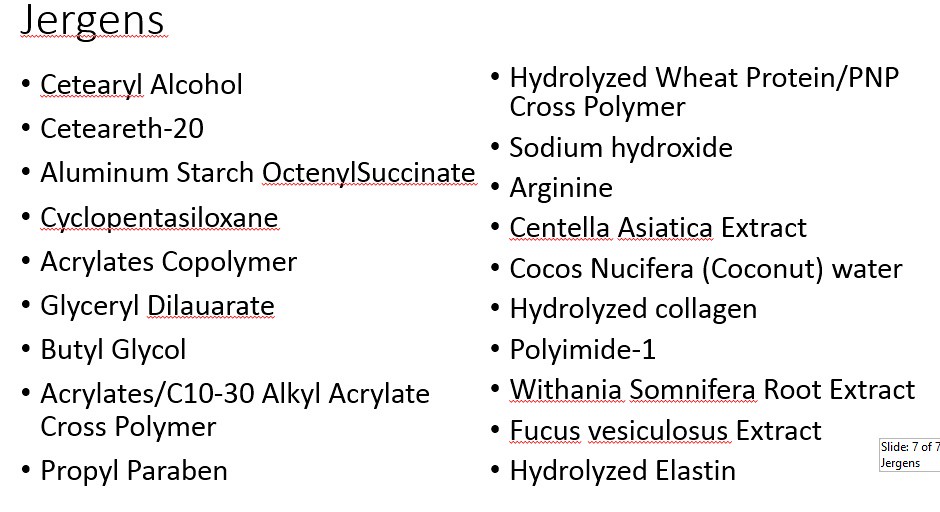
Understanding how Jergens works will help us in understanding how the next product Suave Skin Solution lotion works too.  The ingredients unique to this blend are shown below:


Remember the claims made by the product manufacturer: 1) "Revitalizing with vitamin E"  2) "Age defying moisture" and 3) "....Amazing grace firming body emulsion".  The third claim is made by the composition of polymers added to the formulation.


"Carbomer" is a polymer which will form a layer or film with dimethicone and glyceryl stearate.  Other ingredients such as glycol stearate and cetyl alcohol will act as a "stabilizer" or an "emulsifier" to the polymers which are present.  Cetyl Alcohol is a waxy crystalline substance which will help provide "body" to the formulation.


The first claim that involves the chemical 'vitamin E' is supported by removing 'free radicals'.  Free radicals are formed when damage occurs to molecules making up your skin.  The result is an unstable 'radical molecule' which will react readily with other molecules like DNA or skin molecules.  During the interaction, the original molecules are altered and therefore cannot function regularly.  Which is to say, the skin molecules are damaged and will be rendered useless -- hence part of the process of 'aging'.


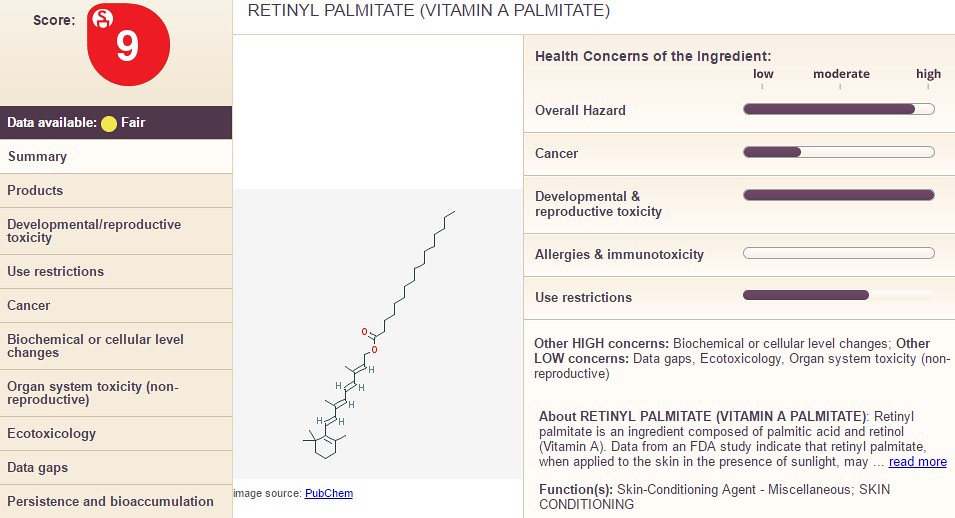
The ingredient which is truly unique to this product and acts like an "anti-aging" component is the "Retinyl Palmitate".  Here is the profile from the "Environmental Working Group" shown below:


Retinyl Palmitiate is dangerous for a few reasons.  Notice that ratings on the scale above in the upper left hand corner.  On the right hand corner, the scale is from 0-10, with retinyl palmitate coming in at 9 -- not great.


The main danger is that the ingredient promotes 'cell division' which results in accelerated 'aging'.  In the short term, the 'accelerated aging' appears to be restoring "younger skin" to the surface.  Although, if you were to think of the skin cells making up skin as having 'a finite' number of 'cell divisions' over the course of your lifetime, you would realize the danger.  If you keep regenerating skin to look healthy, eventually, you will have no defense system against UV radiation and other environmental damage that is done to the outer layer of your skin.


The last claim that I would like to discuss is the "age defying moisturizer" which is accomplished through 'trapping' moisture inside of the skin.   This is accomplished with the chemicals which act like a "humectant" and "emollient" along with the polymers which form the film on the layer of your skin.


Conclusion:


In closing, this has been a short comparison of the unique chemicals to each formulation.  Over time with other products added to the blog post, the ingredients will become more apparent.  At this stage, the most important realization is that skin is best protected by reducing the environmental exposure during the day.  Reduce the amount of sun exposure.  Reduce the amount of 'dry weather' that your skin is exposed to.  Hydrate your skin by applying a "moisturizer" to your skin.  Protect your skin.  That is the best 'anti-aging' treatment that you can provide at this moment.


Until next time, have a great day.


Thursday, May 25, 2017

Mike's Mental Awareness Journey: Changing Your Environment!

Here is a simple question for you to ask yourself:


Are you content with your life? 


If the answer is no, then ask yourself what part of your environment needs to change.  I recently had the experience of changing environments and realized the great difference that such a change can provide.  If you want to understand why the recent blog posts in the series "Anti-Aging Skin Series" then read this short post.  Of course, to read my new entry into Mike's Mental Awareness Journey, you will have to click on the following link -- click here.


If you are looking to change your environment and need to see if the time is correct, then read what happened to me.  Remember to have an open mind and be willing to change to accommodate a new environment.  Push forward and the future will be better if the change is correct for you.  I look forward to continuing the "anti-aging skin series" very soon.  Stay tuned.


Until next time, have a great day!


Friday, May 5, 2017

Anti-Aging Skin Series Post 9: What Is The Difference Between Products?

Up to the present blog post, we have really covered quite a bit -- even if that does not seem to be the case.  The original article (blog post) was filled with a couple of solutions toward aging which have since come into question.  I say question since the information in the last 8 blog posts is comprehensive in resources and broad in questions regarding cosmetic chemistry.  You can access the feed of previous posts by clicking here.  Included in those posts are two products -- skin care products -- which were deconstructed as far as ingredients.  In the present post, I would like to "roughly" compare the two products.


At this point, you might be thinking the following: Mike, you are comparing two different manufacturers 'skincare' solutions (i.e., Moisturizing, skin tightening, hydration, etc.).  That is analogous to comparing 'apples to oranges.'  Typically, a comparison might involve two different products made by the same manufacturer.  One would be an advancement in front of the other -- or an evolution from an earlier product.  In the present blog post, I am choosing to look at the ingredient profile of two different products.  After reading this post, you should be able to look at a couple of different skin lotions and identify some common ingredients.  With that in mind, lets dive into looking at two products that were deconstructed in the following posts: 5, 6, 7, and 8.


Skin Moisturizing


The first product to be deconstructed was "Jergens Skin Firming Moisturizing Lotion" in the picture shown below:


The ingredients were deconstructed over the next four posts: (1) Post #5 (ingredient list), (2) Post #6 (Glossary of functions), and (3) Post #7 (ingredient analysis) and (4) Post #7-part#3 (toxicological introduction).  Additionally, I used this product to discuss the toxicology resources available on the internet in post #8.  After deconstructing Jergens, I thought the next product which would be relevant would be from a different manufacturer but with the same intention.  I chose a product called "Suave Skin Solutions - Lotion" which is shown in the picture below:


The post was relatively straight forward in that the ingredients were listed along with the functions of the ingredients.  I left the classifications of 'non-polar', 'polar', and emulsifier up to the reader to compare.  Once we get through a few different lotions, you should be able to look at the back of any product and have an initial idea as to the function of the ingredient.  This is a start.


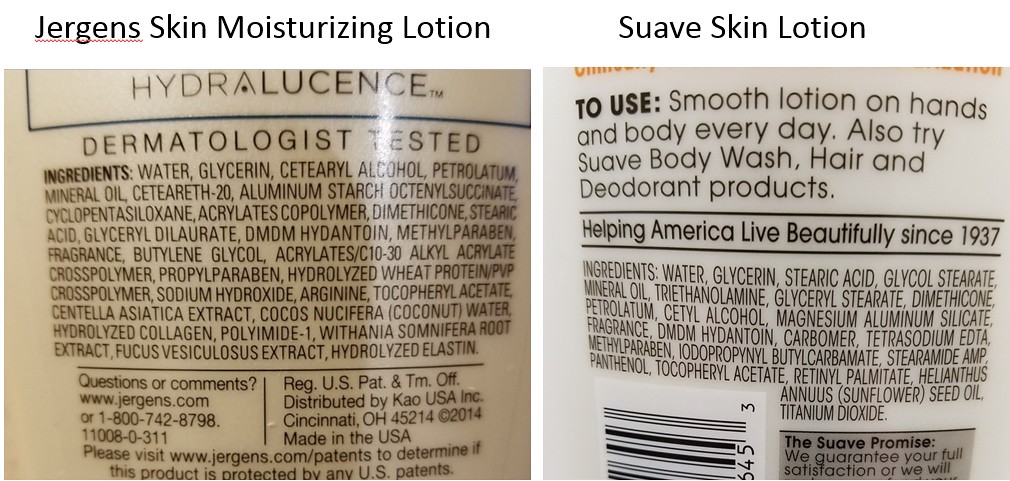
If we take both products and show their ingredient list side by side, we could then get a better understanding of the similarities and differences in each.  Both products should deviate to an extent since their claims will be slightly different along with the obvious observation that their manufacturers are different.  Here is a picture of the ingredient lists side by side shown below:


When comparing ingredient lists, naturally, one immediately looks for similarities in the ingredients used in each product.  A list is shown below of the "common ingredients" from each product:


And the leftover ingredients from each define the distinct differences to each products -- not including the product claims -- which we will get to in the next post.  The remaining ingredients for the Jergens lotion are shown below:


The remaining ingredients for the Suave skin care lotion are shown below:


As you can see, there are more in the Jergens lotion -- which should not mean anything in particular.  In order to define the fine differences between the two products, we must look to the claims on the front and back as shown below:


And for Suave:


As you can see, there are a few different chemicals (ingredients) which are unique to each brand.  In order to differentiate between the two, a closer inspection into the ingredients along with the claims made by each brand needs to be performed.


In the next post, I will discuss "claims" which are written in the images (or photos) on each brand and their relevance to the overall differences between the two products.  Both products aim to provide smooth, soft, and young looking skin.  By breaking down the differences in each ingredients along with the claims, the purpose of adding each ingredients will become better known.  Alternately, by inspecting the different ingredients, we will learn more about each ingredient and how it can be used in other skin care products.


Until next time, have a great day!


Wednesday, March 15, 2017

Anti-Aging Skin Series Post 8: Suave Skin Solutions

Anti-Aging skin care solutions are still controversial to say the least.  In the last two posts, I covered a product - Jergen's Skin Firming Moisturizing Lotion.  You got to see the function of each ingredient from the list on the rear of the bottle of lotion.  An intermediate post was to clarify the functions of each ingredient with a short glossary of terms.  The second part of the analysis was concerned with the toxicity of the ingredients in the bottle.  From that analysis, the take away message was to inspect the ingredients on the back of each bottle.  Chances are that the concentration of a 'unwanted' ingredient (toxic) is less than the lethal level (LD50).  Although, in that post, I illustrated different avenues by which to find out toxicity information on a given ingredient.


The posts listed above are part of the "Anti-Aging Skin Series" which originated out of a lengthy post on the state of anti-aging in science -- an introductory post.  From this post, a further deconstruction was needed which resulted in a series which will evaluate different products with claims of "Anti-Aging" capabilities.  I will dig into the science of the claims if possible or at least shed light.  Regardless, the reader (you) will learn a large amount of information about the various ingredients listed on the back side of the product containers.  With that in mind, time to move onto the next product.


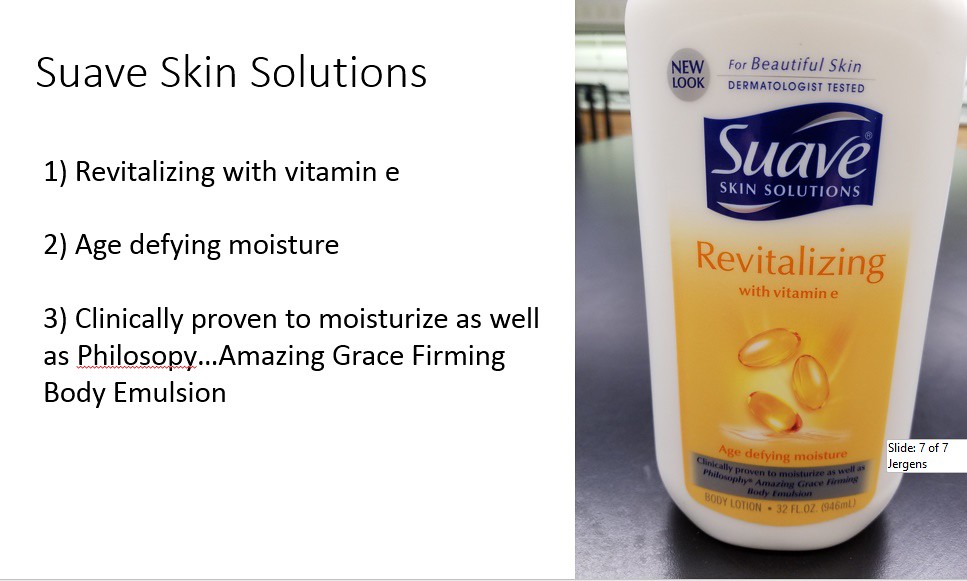
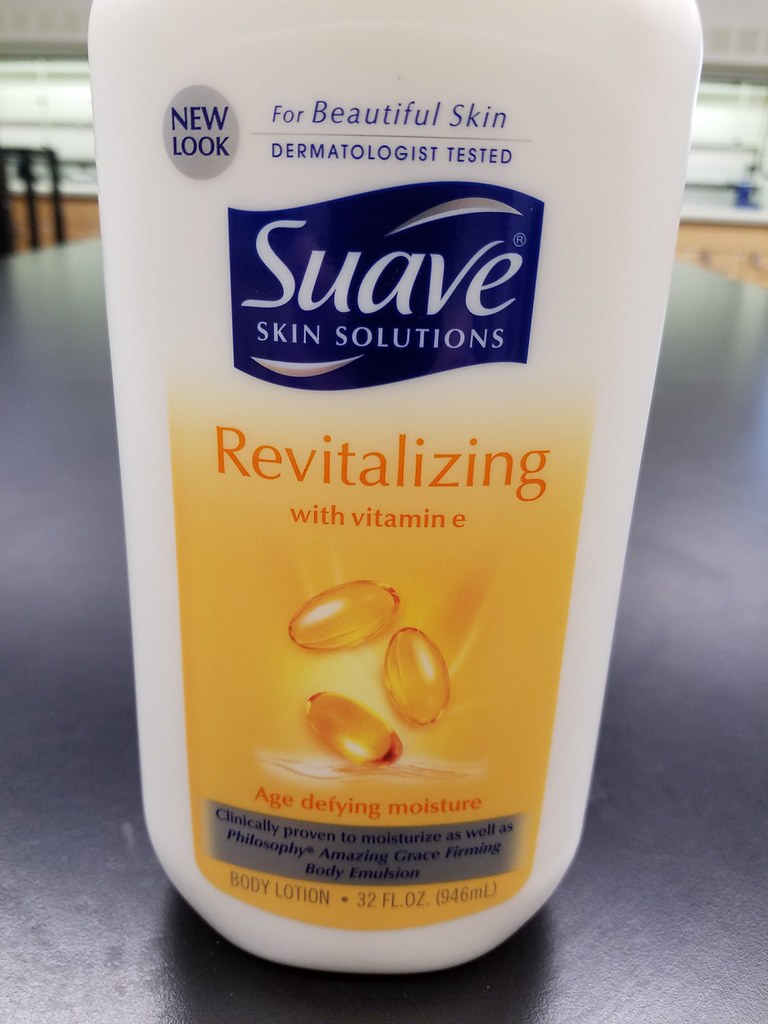
Now that the first product was deconstructed, I thought that the time has come to move onto another product.  The next product is also a lotion -- Suave Skin Solutions -- with claims of "Revitalizing with vitamin E".  The picture of the front of the bottle is shown below:


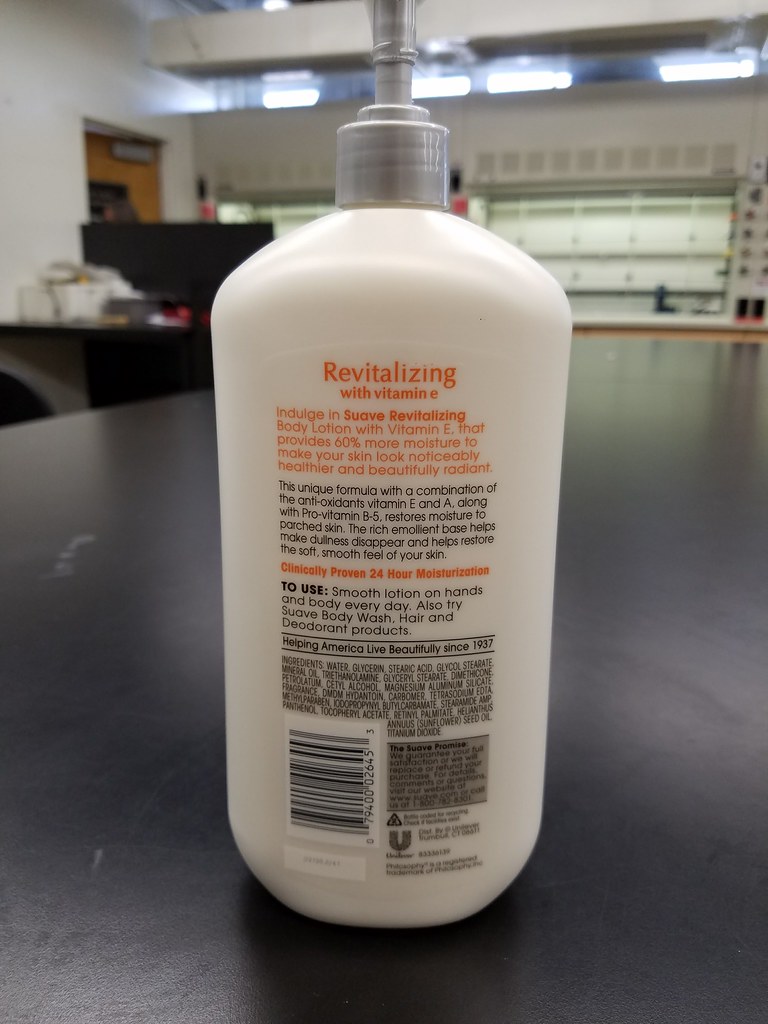
According to the print on the front face of the bottle, the following claims are made: "Dermatologist tested", "Age defying moisture", ....   Here is a photo of the back of the bottle:


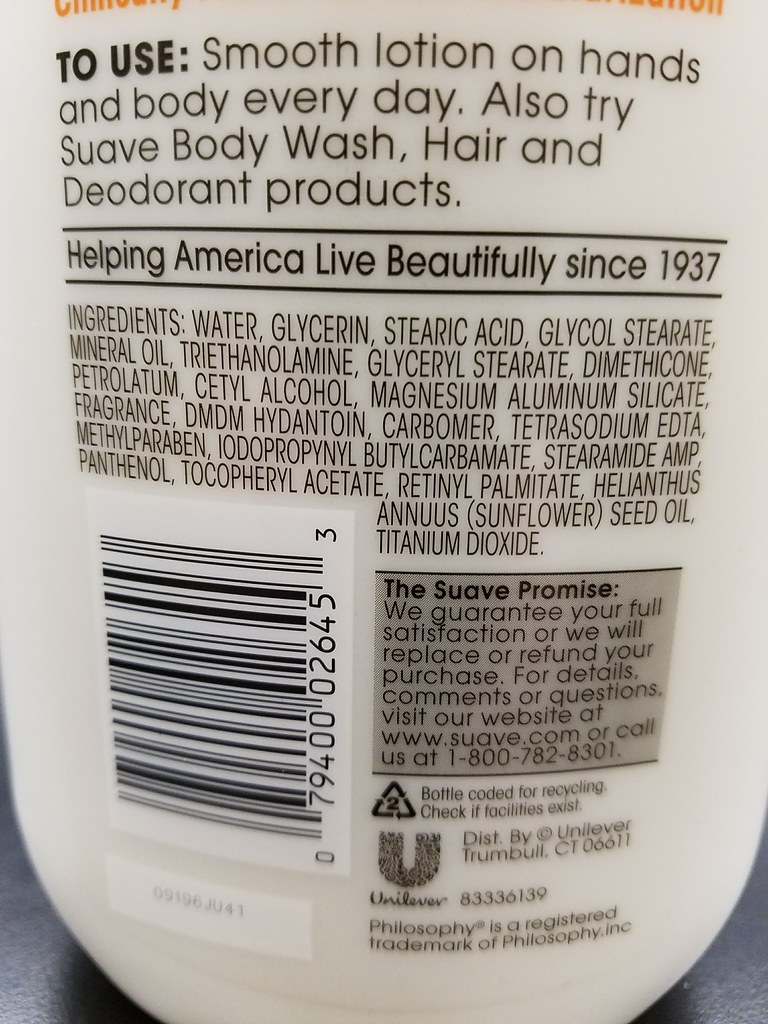
and if the ingredient list is zoomed in on, the following picture is shown of the ingredient list:


Ingredients:


The following list is of the ingredients on the back of the bottle of Suave Skin Solutions Lotion.  Data shown below is taken from the website EWG.


1) Cetyl Alcohol:


About CETYL ALCOHOL: Cetyl alcohol is a long chain organic alcohol; according to the PETA's Caring Consumer guide, this ingredient can be of either animal or plant origin.
This ingredient may be derived from animals. From PETA's Caring Consumer: Wax found in spermaceti from sperm whales or dolphins. Alternatives: Vegetable cetyl alcohol (e.g., coconut), synthetic spermaceti.
Function(s): Emulsion Stabilizer; Fragrance Ingredient; Opacifying Agent; Surfactant - Emulsifying Agent;Surfactant - Foam Booster; Viscosity Increasing Agent - Aqueous; Viscosity Increasing Agent -Nonaqueous; EMOLLIENT; EMULSION STABILISING; FOAM BOOSTING; MASKING; VISCOSITY CONTROLLING
Synonym(s): 1-HEXADECANOL; CETANOL; HEXADECAN-1-OL; N-HEXADECYL ALCOHOL; PALMITYL ALCOHOL; ADOL; ADOL 52; ADOL 520; ADOL 54; ALCOHOL C-16; ATALCO C


2) Carbomer:


About CARBOMER: Carbomer is a large polymeric chemical composed of acrylic acid monomers.
Function(s): Emulsion Stabilizer; Viscosity Increasing Agent - Aqueous; EMULSION STABILISING; GEL FORMING; VISCOSITY CONTROLLING
Synonym(s): CARBOMER 934; CARBOMER 934 P; CARBOMER 941; CARBOPOL 910; CARBOXYVINYLPOLYMER; CARBOMER 934; CARBOPOL 934; CARBOPOL 941


3) Dimethicone:


About DIMETHICONE: Dimethicone (also called polymethylsiloxane) is a silicon-based polymer used as a lubricant and conditioning agent.
Function(s): Antifoaming Agent; Skin-Conditioning Agent - Occlusive; Skin Protectant; EMOLLIENT; SKIN CONDITIONING; SKIN PROTECTING
Synonym(s): DIMETHICONE COPOLYOL; DIMETHYL SILICONE; HIGHLY POLYMERIZED METHYL POLYSILOXANE; METHYL POLYSILOXANE; SILICONE L-45; DC 1664; DIMETHICONE 350; DIMETICONE; DOW CORNING 1664; MIRASIL DM 20; VISCASIL 5M


4) DMDM Hydantoin:


About DMDM HYDANTOIN (FORMALDEHYDE RELEASER): DMDM hydantoin is an antimicrobial formaldehyde releaser preservative. People exposed to such formaldehyde-releasing ingredients may develop a formaldehyde allergy or an allergy to the ingredient itself and its decomposition products. In the U.S., approximately 20% of cosmetics and personal care products contain a formaldehyde-releaser and the frequency of contact allergy to these ingredients is much higher among Americans compared to studies in Europe. 
Function(s): Preservative
Synonym(s): DMDM HYDANTOIN, 1,3-BIS (HYDROXYMETHYL) -5,5-DIMETHYL- 2,4-IMIDAZOLIDINEDIONE; 1,3-BIS (HYDROXYMETHYL) -5,5-DIMETHYLIMIDAZOLIDINE-2,4-DIONE; 1,3-BIS (HYDROXYMETHYL) -5,5-DIMETHYLIMIDAZOLIDINE-2,4-DIONE (+) ; 1,3-DIHYDROXYMETHYL-5,5 DIMETHYLHYDANTOIN; 1,3-DIMETHYLOL-5,5-DIMETHYL HYDANTOIN; 2,4-IMIDAZOLIDINEDIONE, 1,3-BIS (HYDROXYMETHYL) -5,5-DIMETHYL-; 2,4IMIDAZOLIDINEDIONE, 1,3BIS (HYDROXYMETHYL) 5,5DIMETHYL; 1,3-BIS (HYDROXYMETHYL) -5,5-DIMETHYLHYDANTOIN; 2,4-IMIDAZOLIDINEDIONE, 1,3-BIS (HYDROXYMETHYL) -5,5-DIMETHYL- (9CI) ; DANTOIN DMDMH 55; DIMETHYLOL-5,5-DIMETHYLHYDANTOIN


5) Fragrance:


About FRAGRANCE: The word "fragrance" or "parfum" on the product label represents an undisclosed mixture of various scent chemicals and ingredients used as fragrance dispersants such as diethyl phthalate. Fragrance mixes have been associated with allergies, dermatitis, respiratory distress and potential effects on the reproductive system.
Function(s): DEODORANT; MASKING; PERFUMING
Synonym(s): AROMA; PARFUM


6) Glycerin:


About GLYCERIN: Glycerin (also called glycerol) is a naturally occurring alcohol compound and a component of many lipids. Glycerin may be of animal or vegetable origin. This ingredient is listed in the PETA's Caring Consumer guide as a byproduct of soap manufacture which typically uses animal fat.
This ingredient may be derived from animals. From PETA's Caring Consumer: A byproduct of soap manufacture (normally uses animal fat). In cosmetics, foods, mouthwashes, chewing gum, toothpastes, soaps, ointments, medicines, lubricants, transmission and brake fluid, and plastics. Derivatives: Glycerides, Glyceryls, Glycreth-26, Polyglycerol. Alternatives: vegetable glycerin—a byproduct of vegetable oil soap. Derivatives of seaweed, petroleum.
Function(s): Denaturant; Fragrance Ingredient; Hair Conditioning Agent; Humectant; Oral Care Agent;Oral Health Care Drug; Skin-Conditioning Agent - Humectant; Skin Protectant; Viscosity Decreasing Agent; PERFUMING; SOLVENT
Synonym(s): 1,2,3-PROPANETRIOL; 1,2,3-TRIHYDROXYPROPANE; 1,2,3PROPANETRIOL; CONCENTRATED GLYCERIN; GLYCERINE; GLYCEROL; GLYCYL ALCOHOL; 1,2,3-PROPANETRIOL; 1,2,3-TRIHYDROXYPROPANE; 90 TECHNICAL GLYCERINE; CITIFLUOR AF 2


7) Glyceryl Stearate:


About GLYCERYL STEARATE SE: Glyceryl Stearate SE (self-emulsifying) is a lipid used as surfactant and emulsifying agent.
Function(s): Surfactant - Emulsifying Agent
Synonym(s): OCTADECANOIC ACID, ESTER WITH 1,2,3PROPANETRIOL; SELF-EMULSIFYING GLYCERYL MONOSTEARATE; STEARINE


8) Glycol Stearate:


About GLYCOL STEARATE: Glycol Stearate is composed ethylene glycol and stearic acid, a naturally occurring fatty acid.
Function(s): Emulsion Stabilizer; Opacifying Agent; Skin-Conditioning Agent - Emollient; EMULSIFYING; SURFACTANT
Synonym(s): 2-HYDROXYETHYL ESTER OCTADECANOIC ACID; 2-HYDROXYETHYL ESTER STEARIC ACID; 2-HYDROXYETHYL OCTADECANOATE; 2-HYDROXYETHYL STEARATE; ETHYLENE GLYCOL MONOSTEARATE; GLYCOL MONOSTEARATE; OCTADECANOIC ACID, 2-HYDROXYETHYL ESTER; OCTADECANOIC ACID, 2HYDROXYETHYL ESTER; STEARIC ACID, 2-HYDROXYETHYL ESTER; CLINDROL SEG; EMEREST 2350


9) Helianthus Annuus (sunflower) seed oil:


About HELIANTHUS ANNUUS (SUNFLOWER) OIL: Sunflower oil is extracted from the seeds of the sunflower, Helianthus annuus.
Function(s): Skin-Conditioning Agent - Miscellaneous; Skin-Conditioning Agent - Occlusive; EMOLLIENT
Synonym(s): HELIANTHUS ANNUUS (SUNFLOWER) SEED OIL, SUNFLOWER OIL; HELIANTHUS ANNUUS OIL; OILS, SUNFLOWER SEED; SOLVENT SUNFLOWER OIL; SUNFLOWER OIL; SUNFLOWER OIL; SUNFLOWER SEED OIL; SUNFLOWER SEED OILS


10) Iodopropynyl Butylcarbamate:


About IODOPROPYNYL BUTYLCARBAMATE: Iodopropynyl butylcarbamate is used as a preservative in cosmetic formulations; it is acutely toxic by inhalation and should not be used in products that can be aerosolized or inhaled.
Function(s): PRESERVATIVE
Synonym(s): 3-IODO-2-PROPYNYL BUTYLCARBAMATE; BUTYL-3-IODO-2-PROPYNYL ESTER CARBAMIC ACID; BUTYL-3-IODO-2-PROPYNYLCARBAMATE; BUTYLCARBAMIC ACID, 3-IODO-2-PROPYNYL ESTER; CARBAMIC ACID, BUTYL, 3IODO2PROPYNYL ESTER; CARBAMIC ACID, BUTYL-3-IODO-2-PROPYNYL ESTER; IDOPROPYNL BUTYLCARBAMATE; IODOPROPYL BUTYLCARBAMATE; IODOPROPYNL BUTYLCARBAMATE; IPBC


11) Magnesium Aluminum Silicate:


About MAGNESIUM ALUMINUM SILICATE: Magnesium Aluminum Silicate is a complex silicate refined from naturally occurring minerals.
Function(s): Absorbent; Anticaking Agent; Opacifying Agent; Slip Modifier; Viscosity Increasing Agent -Aqueous; VISCOSITY CONTROLLING
Synonym(s): ALUMINIUM MAGNESIUM SILICATE (2:1:2) ; ALUMINUM MAGNESIUM SALT SILICIC ACID; ALUMINUM MAGNESIUM SILICATE; ALUMINUM MAGNESIUM SILICON OXIDE; SILICIC ACID, ALUMINUM MAGNESIUM SALT; VEEGUM; ALUMINOSILICIC ACID, MAGNESIUM SALT; ALUMINUM MAGNESIUM SILICATE


12) Methylparaben:


About METHYLPARABEN: Methylparaben is in the paraben family of preservatives used by the food, pharmaceutical, and personal care product industries. Parabens mimic estrogen and can act as potential hormone (endocrine) system disruptors.
Possible impurity in: CITRUS GRANDIS (GRAPEFRUIT) SEED EXTRACT (895 products), CITRUS PARADISI (GRAPEFRUIT) SEED EXTRACT (4 products), see all ingredients | products
Function(s): Fragrance Ingredient; Preservative
Synonym(s): 4-HYDROXY- METHYL ESTER BENZOIC ACID; 4-HYDROXYBENZOIC ACID, METHYL ESTER; 4-HYDROXYBENZOIC ACID, METHYL ESTER, POTASSIUM SALT; BENZOIC ACID, 4-HYDROXY-, METHYL ESTER; BENZOIC ACID, 4-HYDROXY-, METHYL ESTER, POTASSIUM SALT; BENZOIC ACID, 4-HYDROXY-, METHYL ESTER, SODIUM SALT; BENZOIC ACID, 4HYDROXY, METHYL ESTER; BENZOIC ACID, 4HYDROXY, METHYL ESTER, SODIUM SALT; METHYL 4-HYDROXYBENZOATE; METHYL ESTER 4-HYDROXYBENZOIC ACID; METHYL ESTER BENZOIC ACID, 4-HYDROXY-


13) Mineral Oil:


Other MODERATE concerns: Organ system toxicity (non-reproductive)
About MINERAL OIL: Mineral Oil is a liquid mixture of hydrocarbons obtained from petroleum.
Function(s): Fragrance Ingredient; Hair Conditioning Agent; Skin-Conditioning Agent - Emollient;Skin-Conditioning Agent - Occlusive; Skin Protectant; Solvent; ANTISTATIC; PERFUMING; SKIN PROTECTING
Synonym(s): DEOBASE; HEAVY MINERAL OIL; LIGHT MINERAL OIL; LIQUID PARAFFIN; LIQUID PETROLATUM; PARAFFIN OIL; PARAFFIN OILS; PARAFFINUM LIQUIDUM; PETROLEUM WHITE MINERAL OIL; PROLATUM OIL; WHITE MINERAL OIL, PETROLEUM


14) Panthenol:


About PANTHENOL: Panthenol is a form of vitamin B5, used as a moisturizer and lubricating compound. This ingredient is listed in the PETA's Caring Consumer guide as a substance that can be of either animal or plant origin.
This ingredient may be derived from animals. From PETA's Caring Consumer: Can come from animal or plant sources or synthetics. In shampoos, supplements, emollients, etc. In foods. Derivative: Panthenyl. Alternatives: synthetics, plants.
Function(s): Hair Conditioning Agent; ANTISTATIC; SKIN CONDITIONING
Synonym(s): D-PANTOTHENYL ALCOHOL; DEXPANTHENOL; DL-PANTOTHENYL ALCOHOL; PANTHENOL , DL-FORM; PANTOTHENOL; PANTOTHENYL ALCOHOL; PROVITAMIN B5; (+-) -PANTOTHENYL ALCOHOL; ALCOOL DL-PANTOTENILICO (ITALIAN) ; DL-PANTOTHENYL ALCOHOL; PANTENOL


15) Petrolatum:


About PETROLATUM: Petrolatum is a semisolid mixture of hydrocarbons obtained from petroleum.
Function(s): Hair Conditioning Agent; Skin-Conditioning Agent - Occlusive; Skin Protectant; EMOLLIENT; MOISTURISING; UV ABSORBER
Synonym(s): MINERAL GREASE (PETROLATUM) ; MINERAL JELLY; PETROLATUM AMBER; PETROLATUM WHITE; PETROLEUM JELLY; YELLOW PETROLATUM


16) Retinyl Palmitate:


About RETINYL PALMITATE (VITAMIN A PALMITATE): Retinyl palmitate is an ingredient composed of palmitic acid and retinol (Vitamin A). Data from an FDA study indicate that retinyl palmitate, when applied to the skin in the presence of sunlight, may speed the development of skin tumors and lesions. FDA, Norwegian and German health agencies have raised a concern that daily skin application of vitamin A creams may contribute to excessive vitamin A intake for pregnant women and other populations.
Function(s): Skin-Conditioning Agent - Miscellaneous; SKIN CONDITIONING
Synonym(s): RETINYL PALMITATE, AXEROPHTHOL PALMITATE; HEXADECANOATE RETINOL; RETINOL PALMITATE; RETINOL, HEXADECANOATE; VITAMIN A PALMITATE; AQUASOL A; AROVIT; OPTOVIT-A; RETINOL PALMITATE; VITAMIN A PALMITATE


17) Stearamide AMP:


Function(s): Surfactant - Foam Booster; Viscosity Increasing Agent - Aqueous; FOAM BOOSTING; VISCOSITY CONTROLLING
Synonym(s): N- (2-HYDROXY-1,1-DIMETHYLETHYL) - OCTADECANAMIDE; N- (2-HYDROXY-1,1-DIMETHYLETHYL) OCTADECANAMIDE; OCTADECANAMIDE, N- (2-HYDROXY-1,1-DIMETHYLETHYL) -


18) Stearic Acid:


About STEARIC ACID: Stearic acid is a naturally occurring fatty acid. It is listed in the PETA's Caring Consumer guide as a substance of animal origin, since stearic acid is primarily derived from rendered fat of farm and domestic animals.
This ingredient may be derived from animals. From PETA's Caring Consumer: Fat from cows and sheep and from dogs and cats euthanized in animal shelters, etc. Most often refers to a fatty substance taken from the stomachs of pigs. Can be harsh, irritating. Used in cosmetics, ... read more
Function(s): Fragrance Ingredient; Surfactant - Cleansing Agent; Surfactant - Emulsifying AgentSurfactant-Cleansing Agent is included as a function for the soap form of Stearic Acid.; EMULSION STABILISING; MASKING; REFATTING
Synonym(s): N-OCTADECANOIC ACID; OCTADECANOIC ACID; 1-HEPTADECANECARBOXYLIC ACID; CENTURY 1240; CETYLACETIC ACID; DAR-CHEM 14; EMERSOL 120; EMERSOL 132; EMERSOL 150; FORMULA 300; GLYCON DP


19) Tetrasodium EDTA:


About TETRASODIUM EDTA: EDTA (ethylenediaminetetraacetic acid) is a chelating agent, used to sequester and decrease the reactivity of metal ions that may be present in a product.
Function(s): Chelating Agent
Synonym(s): EDETATE SODIUM; ETHYLENEDIAMINETETRAACETIC ACID TETRASODIUM SALT; GLYCINE, N,N 1,2ETHANEDIYLBIS [N (CARBOXYMETHYL) , TETRASODIUM SALT; GLYCINE, N,N'-1,2-ETHANEDIYLBIS [N- (CARBOXYMETHYL) -, TETRASODIUM SALT; N,N'-1,2-ETHANEDIYL BIS [N- (CARBOXYMETHYL) GLYCINE, TETRASODIUM SALT; N,N'-1,2-ETHANEDIYLBIS [N- (CARBOXYMETHYL) - TETRASODIUM SALT GLYCINE; N,N'-1,2-ETHANEDIYLBIS [N- (CARBOXYMETHYL) GLYCINE] , TETRASODIUM SALT; SODIUM EDETATE; TETRASODIUM EDE TATE TETRAHYDRATE; TETRASODIUM EDETATE; TETRASODIUM EDETATE DIHYDRATE


20) Titanium Dioxide:


About TITANIUM DIOXIDE: Titanium dioxide is an inorganic compound used in a range of body care products such as sunscreens and makeup. It appears to have low skin penetration but inhalation is a concern.
Function(s): Colorant; Opacifying Agent; Sunscreen Agent; Ultraviolet Light Absorber
Synonym(s): 1385RN 59; 1700 WHITE; 234DA; 500HD; 63B1 WHITE; A 200 (PIGMENT) ; A 330 (PIGMENT) ; A-FIL; A-FIL CREAM; A-FN 3; AEROLYST 7710


21) Tocopheryl Acetate:


About TOCOPHERYL ACETATE: Tocopheryl acetate is a chemical compound that consists of acetic acid and tocopherol (vitamin E)
Function(s): Antioxidant; Skin-Conditioning Agent - Miscellaneous; SKIN CONDITIONING
Synonym(s): 3,4-DIHYDRO-2,5,7,8-TETRAMETHYL-2- (4,8,12-TRIMETHYLTRIDECYL) -2H-BENZOPYRAN-6-YL ACETATE; 3,4-DIHYDRO-2,5,7,8-TETRAMETHYL-2- (4,8,12-TRIMETHYLTRIDECYL-2H-BENZOPYRAN-6-OL, ACETATE; ACETATE 3,4-DIHYDRO-2,5,7,8-TETRAMETHYL-2- (4,8,12-TRIMETHYLTRIDECYL-2H-BENZOPYRAN-6-OL; ALPHA-TOCOPHERYL ACETATE; D-A-TOCOPHERYL ACETATE; D-ALPHA-TOCOPHERYL ACETATE; DL-A -TOCOPHERYL ACETATE; DL-ALPHA TOCOPHERYL ACETATE; DL-ALPHA-TOCOPHERYL ACETATE; TOCOPHEROL ACETATE; TOCOPHERYL ACETATE, DL-ALPHA


22) Triethanolamine:


About TRIETHANOLAMINE: Triethanolamine is a strongly alkaline substance used as surfactant and pH adjusting chemical.
Function(s): Fragrance Ingredient; pH Adjuster; Surfactant - Emulsifying Agent; BUFFERING; MASKING
Synonym(s): 2,2',2"-NITRILOTRIS [ETHANOL] ; 2,2',2''-NITRILOTRIETHANOL; ETHANOL, 2,2 ,2 NITRILOTRIS; ETHANOL, 2,2',2"-NITRILOTRIS-; TEA; TROLAMINE; 2,2',2''-NITRILOTRIETHANOL; ALKANOLAMINE 244; DALTOGEN; NITRILO-2,2',2''-TRIETHANOL; STEROLAMIDE


23) Water:


Function(s): SOLVENT
Synonym(s): AQUA; DEIONIZED WATER; DISTILLED WATER; ONSEN-SUI; PURIFIED WATER; DIHYDROGEN OXIDE; DISTILLED WATER


These are the ingredients listed on the backside of the bottle of Suave Lotion (image shown above).  The toxicities were not listed in this post.  As I mentioned in the last post, the toxicities can be found on the EWG - Environmental Working Group website that I hyperlinked for each ingredient.  In the next post, I will discuss the anti-aging claims made in this lotion which have some credibility from science.


What is interesting is that the same ingredient that is claimed to have anti-aging properties in this product also has the greatest toxicity associated with the product.


Can you guess or determine which ingredient I am speaking of?


Conclusion...


In the paragraphs above, I listed the ingredients in the second product -- Suave Lotion - that is deconstructed as part of our 'anti-aging skin series'.  Additionally, the names of synonymous ingredient names were given with each chemical.  This is helpful when product manufacturers would like to distinguish their product aside from other popular lotions (moisturizers) on the market.


In the next post, I will discuss the differences between Suave Lotion and Jergen's Skin Firming Moisturizing Lotion.  Additionally, I will answer the question regarding which ingredient is the anti-aging chemical and also holds the award for being the most 'toxic' ingredient in the formulation.


Until next time, have a great day.


Saturday, February 25, 2017

Anti-Aging Skin Series Post 7: Part 3 -- Toxicity Analysis Of Jergen's Skin Lotion

Have I lost you yet?  Are you bored with the series "Anti-Aging Skin Series"?  Would you like a greater depth of information on cosmetic products? Please feel free to leave comments in the section below.  I understand that the first product deconstruction has taken a long time.  But the essential features of a product are the chemicals incorporated within them.  And how those chemicals behave on your skin is critical to your trust in a given product.  Therefore, understanding the basics is important when purchasing future cosmetic products.


Continuing on with the "Anti-Aging Skin Series" -- the time has come to comment on the toxicity of the ingredients in the first product I analyzed -- Jergen's Skin Firming Moisturizer.  As you will recall, in the first part of the analysis of the skin firming lotion (Anti-Aging Skin Series Post 5), I introduced you to the sources (EWG, Paula's Choice, and David Suzuki are three examples) of chemical information on where to find the ingredients listed on the back of cosmetic products.   This post gave you an idea of the function of the ingredient.  In an intermediate post, I decided to compile a short list of a glossary of functions for you to refer to for greater information on each function.  Understanding the function of each ingredient gives you a better idea of why the ingredient was needed in the product in the first place.


The next logical post (Part 2) was an exploration of the ingredients in terms of function and also a categorization of the ingredients into the nature of their chemical structure.  Those chemicals that possess a greater amount of 'non-polar' character where categorized as 'non-polar'.  Whereas, on the other side of the spectrum are molecules which have a higher degree of charge difference in their structure and are therefore classified as 'polar'.  In order to bring these two different types of structure into a homogeneous mixture (a cosmetic product that does not separate), an 'emulsifier' is used.  As a result of the analysis, in the future products analyzed in this series, you will have a better understanding of the need to incorporate each into a given cosmetic product.  The next product I chose to breakdown and analyze is from a claimed "green" company with no harsh chemicals.  But before I get to that product, I wanted to speak a little on the toxicity of chemicals found in cosmetic products.  Below are a few thoughts and images to drive home the point -- toxicity lies on a spectrum (a range).


What Is Toxicity?


If the valuable resource "Wikipedia" were consulted for an understanding of the meaning 'Toxicity,' the following introduction would be seen below:


Toxicity is the degree to which a substance can damage an organism.[1] Toxicity can refer to the effect on a whole organism, such as an animal, bacterium, or plant, as well as the effect on a substructure of the organism, such as a cell (cytotoxicity) or an organ such as the liver (hepatotoxicity). By extension, the word may be metaphorically used to describe toxic effects on larger and more complex groups, such as the family unit or society at large. Sometimes the word is more or less synonymous with poisoning in everyday usage.
A central concept of toxicology is that the effects of a toxin are dose-dependent; even water can lead to water intoxication when taken in too high a dose, whereas for even a very toxic substance such as snake venom there is a dose below which there is no detectable toxic effect. Toxicity is species-specific, making cross-species analysis problematic. Newer paradigms and metrics are evolving to bypass animal testing, while maintaining the concept of toxicity endpoints.[2]


 The toxicity of a given substance is dependent on the damage done to a given organism or plant.  Damage can be broken down into substructures of organisms or plants -- specific parts (organs, metabolic pathways, etc.).   That is where the definition gets difficult.  Further, toxicity depends on dose -- i.e., how much of the substance was administered?  Routes of exposure are just as critical as the amount of substance given.  These are just a couple of the main considerations to think about when assessing the toxicity associated with a given chemical.


Next, the type of toxic entity is important to consider in a given assessment.  Below are the four types of toxic entities taken from "Wikipedia":


  • Chemical toxicants include inorganic substances such as, lead, mercury, hydrofluoric acid, and chlorine gas, and organic compounds such as methyl alcohol, most medications, and poisons from living things. While some weakly radioactive substances, such as uranium, are also chemical toxicants, more strongly radioactive materials like radium are not, their harmful effects (radiation poisoning) being caused by the ionizing radiation produced by the substance rather than chemical interactions with the substance itself. 
  • Disease-causing microorganisms and parasites are toxic in a broad sense, but are generally called pathogens rather than toxicants. The biological toxicity of pathogens can be difficult to measure because the "threshold dose" may be a single organism. Theoretically one virus, bacterium or worm can reproduce to cause a serious infection. However, in a host with an intact immune system the inherent toxicity of the organism is balanced by the host's ability to fight back; the effective toxicity is then a combination of both parts of the relationship. In some cases, e.g. cholera, the disease is chiefly caused by a nonliving substance secreted by the organism, rather than the organism itself. Such nonliving biological toxicants are generally called toxins if produced by a microorganism, plant, or fungus, and venoms if produced by an animal. 
  • Physical toxicants are substances that, due to their physical nature, interfere with biological processes. Examples include coal dust, asbestos fibers or finely divided silicon dioxide, all of which can ultimately be fatal if inhaled. Corrosive chemicals possess physical toxicity because they destroy tissues, but they're not directly poisonous unless they interfere directly with biological activity. Water can act as a physical toxicant if taken in extremely high doses because the concentration of vital ions decreases dramatically if there's too much water in the body. Asphyxiant gases can be considered physical toxicants because they act by displacing oxygen in the environment but they are inert, not chemically toxic gases. 
  • As already mentioned, radiation can have a toxic effect on organisms.[3]


I understand that the two excerpts above are lengthy and might be redundant.  Although, when the toxicity of an ingredient is taken into account, the mechanism by which the chemical or agent takes in damaging organs is crucial toward understanding the overall toxicity.  In the Jergen's Skin Firming Moisturizing Lotion, there were around 29 ingredients.  To break down the toxicity of each compound would be cumbersome.  The four elements of 'Risk-Assessment' are: Hazard Identification, Dose-Response Assessment, Exposure Assessment, and Risk Characterization.


The terms listed at the end of the last paragraph might sound dangerous.  The manufacturers are responsible for listing the information regarding the four elements listed above.  You might be wondering the following:


Where do I find toxicity information?


If you are a chemist, the first place you might look is at the "Materials Safety Data Sheet".  Right about now, you are probably wondering the following question:


How do I find the 'msds' sheet for a given chemical?


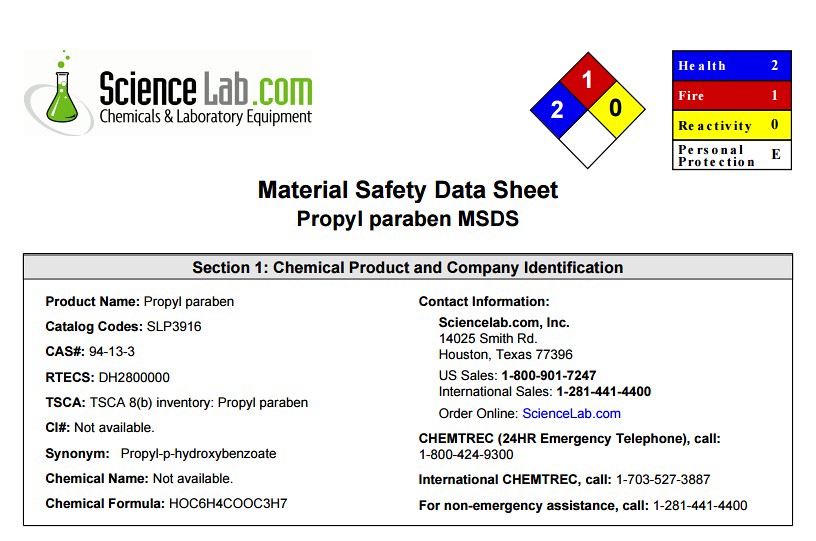
The process is easy.  Type into a search engine like "Google" the following:  Propyl Paraben msds .  The result is shown below for the 'msds' for Propyl Paraben:


If you click on the 3rd option that appears to be a 'pdf' then the entire (5 page) 'Material Safety Data Sheet' will be downloaded.  You will notice that there are 16 sections boxed out on the form as follows:


1) Chemical Product and Company Identification

2) Composition and Information on Ingredients

3) Hazards Identification

4) First Aid Measures

5) Fire and Explosion Data

6) Accidental Release Measures

7) Handling and Storage

8) Exposure Controls/Personal Protection

9) Physical and Chemical Properties

10) Stability and Reactivity Data

11) Toxicological Information

12) Ecological Information

13) Disposal Considerations

14) Transport Information

15) Other Regulatory Information

16) Other Information


Is that list comprehensive enough for you?


The purpose of the 'msds' information is to give the chemist or any other person working with a chemical the 'heads up' in terms of the properties and hazards associated with the chemical.  In this case, the chemical is Propyl Paraben -- which is a preservative in Jergen's Skin Firming Moisturizing Lotion.


In terms of toxicity of a given chemical, a toxicologist will look the four elements listed above.  From the 'msds' information, the most important factor will be the "LD50" value.  According to 'Wikipedia' the 'LD50' value is defined as:


In toxicology, the median lethal dose, LD50 (abbreviation for "lethal dose, 50%"), LC50 (lethal concentration, 50%) or LCt50 is a measure of the lethal dose of a toxin, radiation, or pathogen. The value of LD50 for a substance is the dose required to kill half the members of a tested population after a specified test duration. LD50 figures are frequently used as a general indicator of a substance's acute toxicity. A lower LD50 is indicative of increased toxicity.


With units of dose/body mass:


 The LD50 is usually expressed as the mass of substance administered per unit mass of test subject, typically as milligrams of substance per kilogram of body mass, sometimes also stated as nanograms (suitable for botulinum), micrograms, or grams (suitable for paracetamol) per kilogram. Stating it this way allows the relative toxicity of different substances to be compared, and normalizes for the variation in the size of the animals exposed (although toxicity does not always scale simply with body mass).


The above definition is worded in a complicated fashion.  But what if you are interested in the general data surrounding the ingredient.  Is the ingredient toxic in cosmetic products?  If you choose to look at the 'msds' for the ingredient Propyl Paraben, you will find the following sections useful as shown below taken as screenshots of the downloaded 'pdf':


The first section shown above is the general information regarding the chemical Propyl Paraben.  Note that the information contained on the following parts of the 'msds' apply to the chemical's use in a variety of manufacturing situations.   Which is why the 'msds' sheet is not printed on the back or included with a cosmetic product.  The next section is useful (probably the most useful) to the consumer of a cosmetic product -- "Composition and Information on Ingredients":
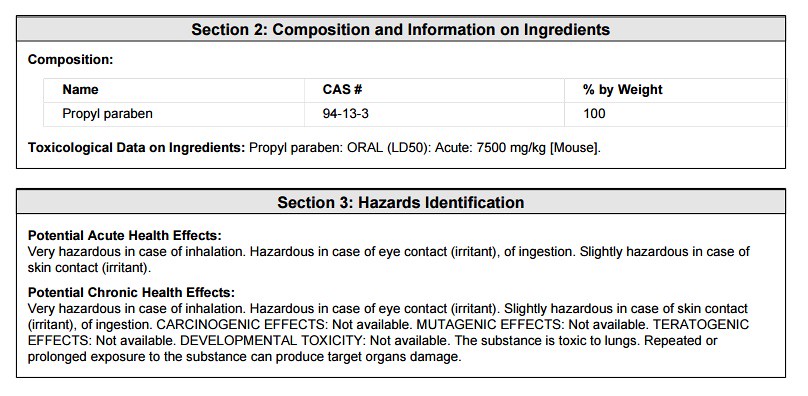


Upon first inspection of the ingredient information, you are probably wondering why this ingredient would ever be used in a cosmetic or food product.  The above information exemplifies why the parameter of "concentration" is so important.  In a typical cosmetic formulation, Propyl Paraben is probably around 5% of the total concentration.  Therefore, the toxicity information of the LD50 is negligible.  Below, I will show a calculation to prove such.  The information above and below might be useful though to those with sensitive skin toward the class of chemicals known as "parabens".  Below is the first aid measures as stated on the 'msds':


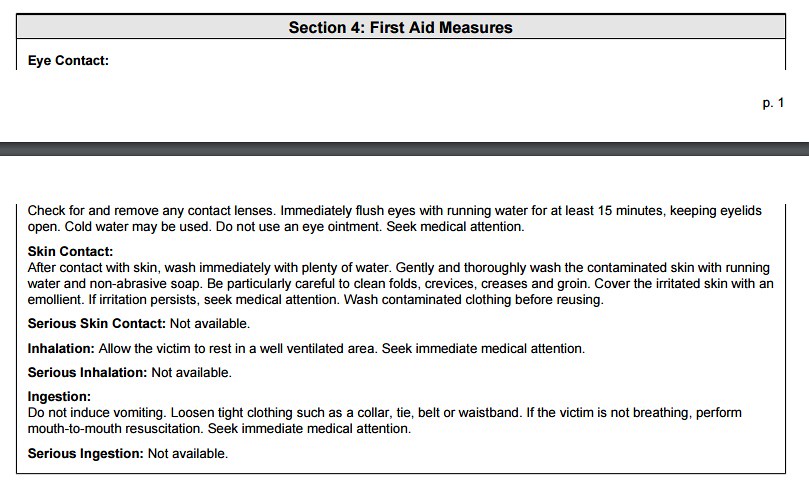
Again, the above information might be useful for consumers who develop a rash or adverse reaction toward this particular ingredient.  The information contain in the section below pertains toward working with the chemical at a manufacturing level.  Although, if you find an adverse reaction toward a product, you should report that product to the FDA.


The section above and below are rather redundant to the consumer, but necessary to the chemist working with the ingredient at the manufacturing scale level.


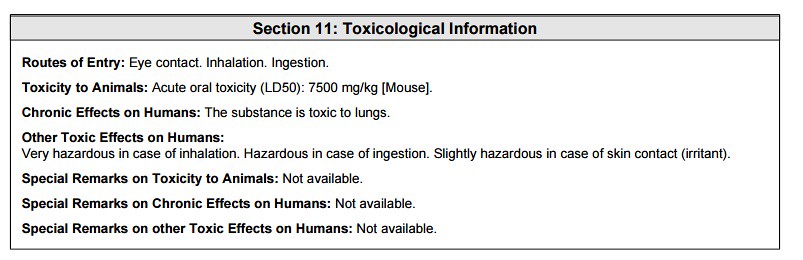
In the section above, the toxicological data was stated as being tested on a 'mouse model'.  The stated LD50 was 7500 mg/kg of bodyweight.  Which means that at a concentration of 7.5 grams per kilogram of bodyweight, the chemical would be toxic to an animal or person as shown below:


How would that lethal dose translate to a person who weighs 150 pounds?


How would a person figure that out given the toxicological data above?


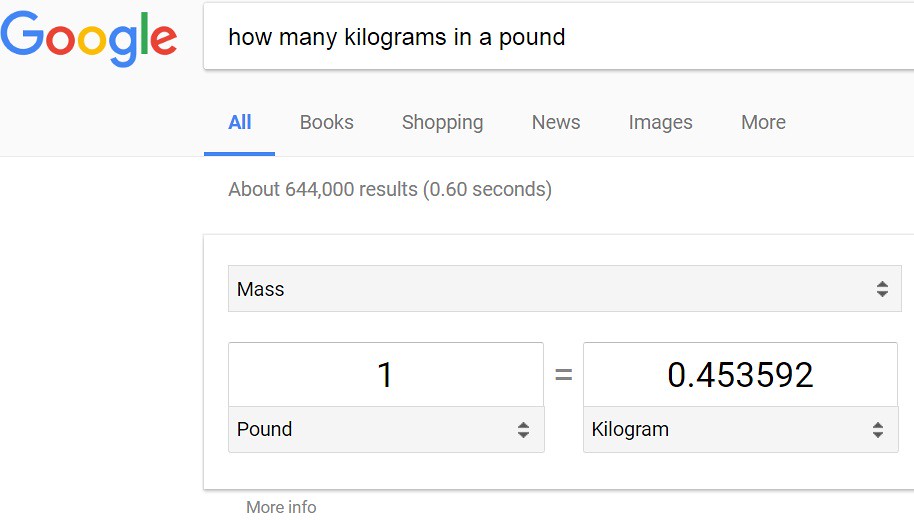
To start with, type into a search engine the following: how many kilograms in a pound?  The answer below is given:


Next, the conversion of units from 'pound' to 'kilogram' is necessary as shown below:


With the proper units expressed uniformly across all values, the determination of the lethal dose is straightforward as shown below:


The result above indicates that in order for the chemical - Propyl Paraben to be lethal in the product - Jergen's Skin Firming Moisturizing lotion, the amount of Propyl Paraben contained in the bottle would have to be 510 grams. How many pounds is that?  See below:


The result indicates that the bottle of lotion would have to contain 1.12 pounds of Propyl Paraben to be lethal to a human being.  Obviously the bottle of lotion only has a total weight of 16.8 fluid ounces which is equal to 1.06 pounds.  Meaning the entire bottle would have to be Propyl Paraben to be lethal to your body!!!!!


That was a useful exercise for the novice chemist.


What about the average consumer who does not want to mine through the confusing paperwork above -- the 'Materials Safety Data Sheet'?  


Where else can a consumer find the equivalent information shown above stated more clearly to the consumer?


In the next section, a website will be given where you the consumer can easily find the equivalent information above stated in a more simple manner.


Toxic Ingredients


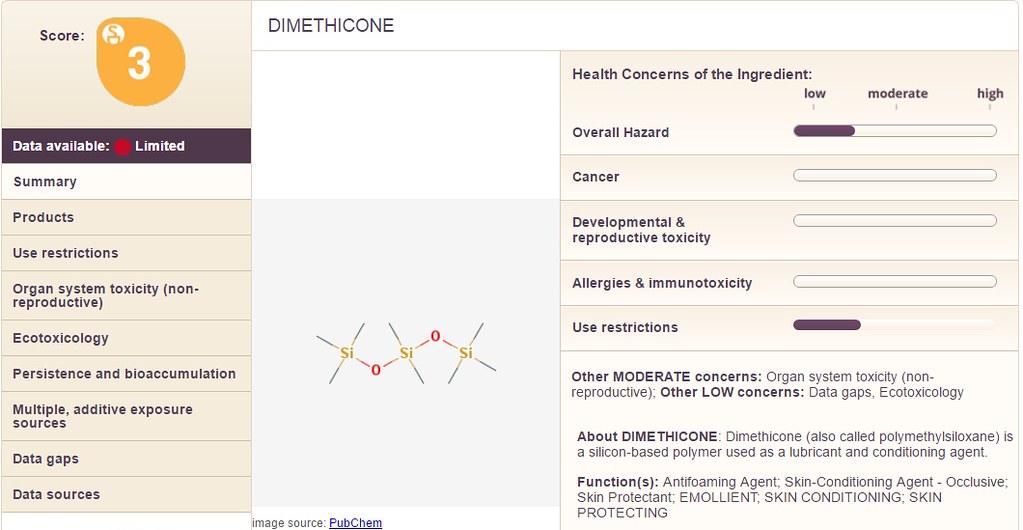
As a basic starting point, the site 'EWG' is great.  The 'SkinDeep' database has some information.  Take for example the ingredient 'Dimethicone'.  Enter that ingredient into the database and look at the profile listed below:


Notice on the upper left hand corner, there is a 'score' which states the overall danger associated with the product (in this case Dimethicone).  Inspecting the 'right hand column' there are the following categories:

1) Overall Hazard

2) Cancer

3) Development & Reproductive Toxicity

4) Allergies & Immunotoxicity

5) Use Restrictions


Note: Each of the above categories is measured along a scale with a range of "low" to "moderate" to "high".


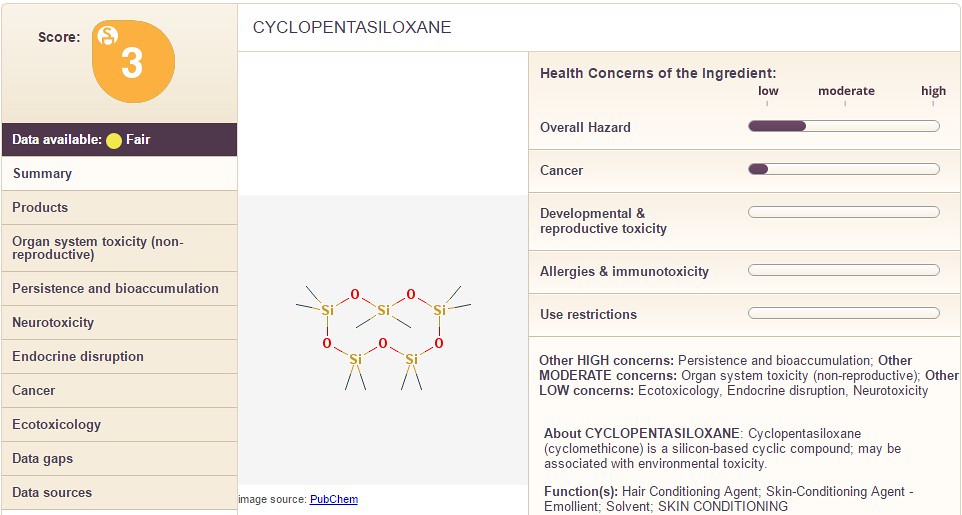
In the example of 'dimethicone' which is contained in the Jergen's lotion, the "overall hazard" is between "low" and "moderate".  Additionally, the category "Use Restrictions" is also between "low" and "moderate".  Whereas, the next chemical shown below is "cyclopentasiloxane" with a similar overall score of "3" but different values on the right hand side:


According to the sheet above, the chemical "cyclopentasiloxane" has a small amount of "cancer" risk.  The scale is ambiguous and the 'msds' data would need to be consulted or the website 'EWG' for more information.  Additionally, a consumer could choose to weigh the chemical above in comparison to another chemical like cetearyl alcohol as shown below:


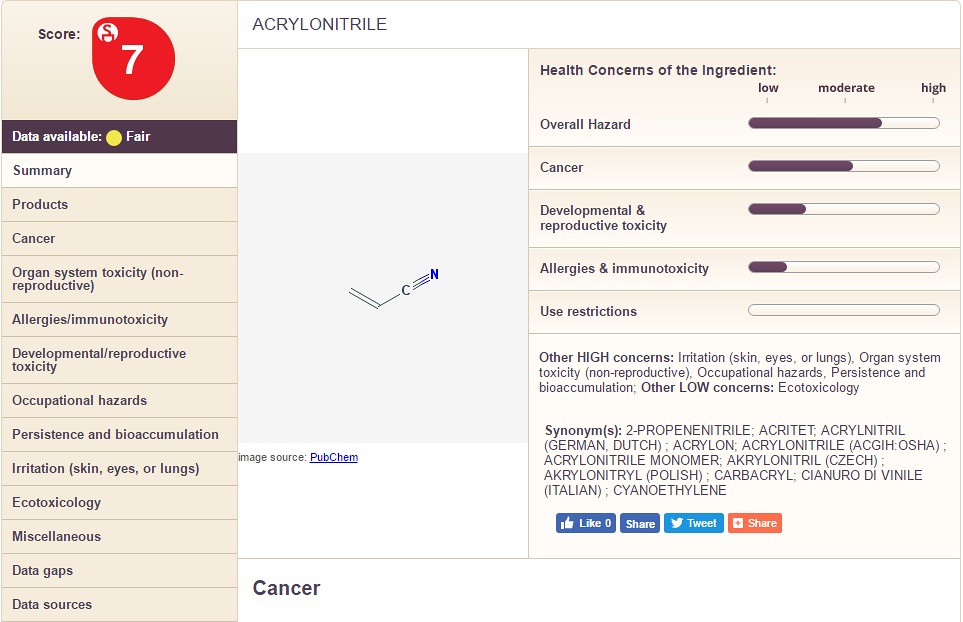
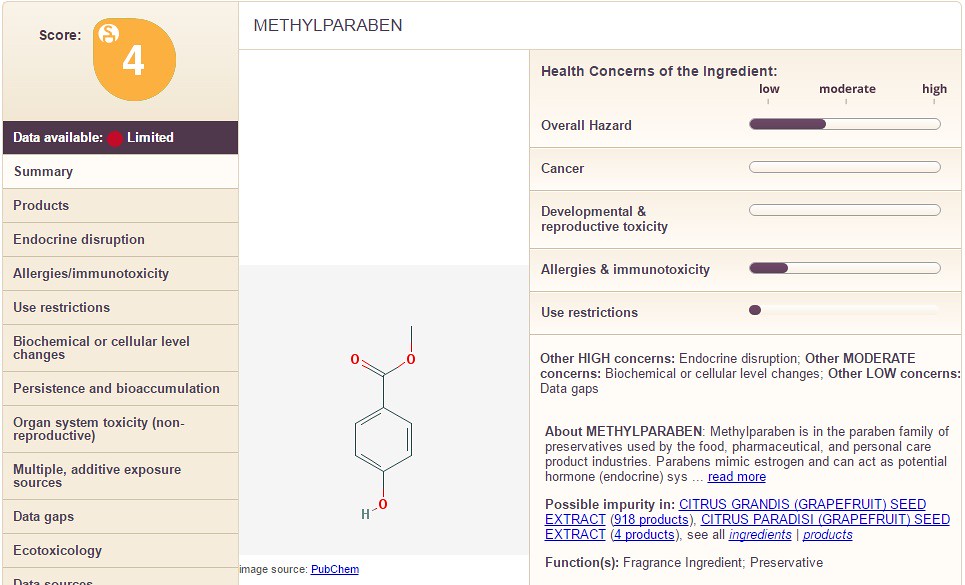
The only conclusion that can be drawn from the information is that cetearyl alcohol is less dangerous than "cyclopentasiloxane".  Below I show a three more chemicals with different information for you to see: Acrylonitrile, Methyl Paraben, and Propyl Paraben.  See if you can spot major differences between the three.


Methyl Paraben is shown below:


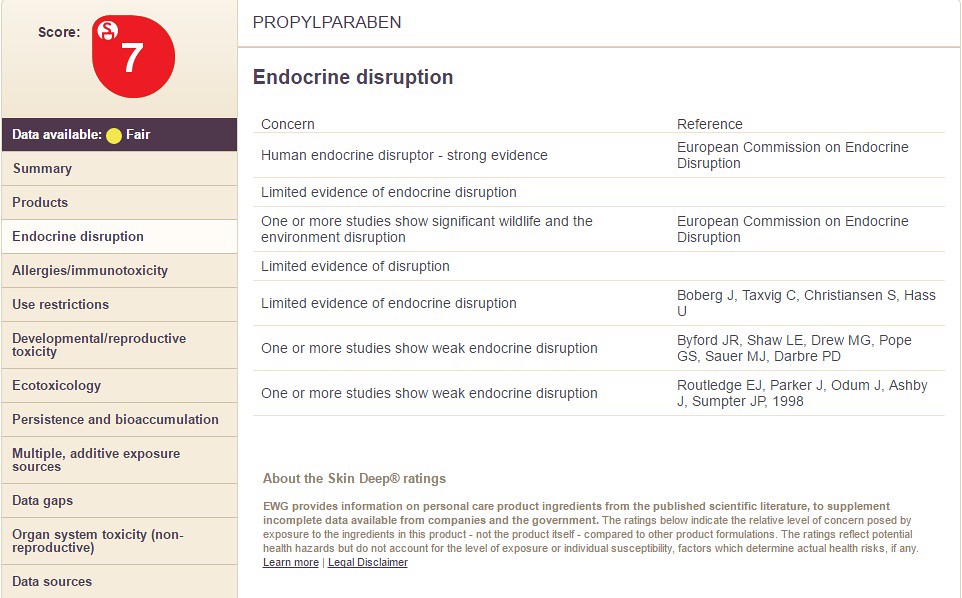
Propyl Paraben is shown below:


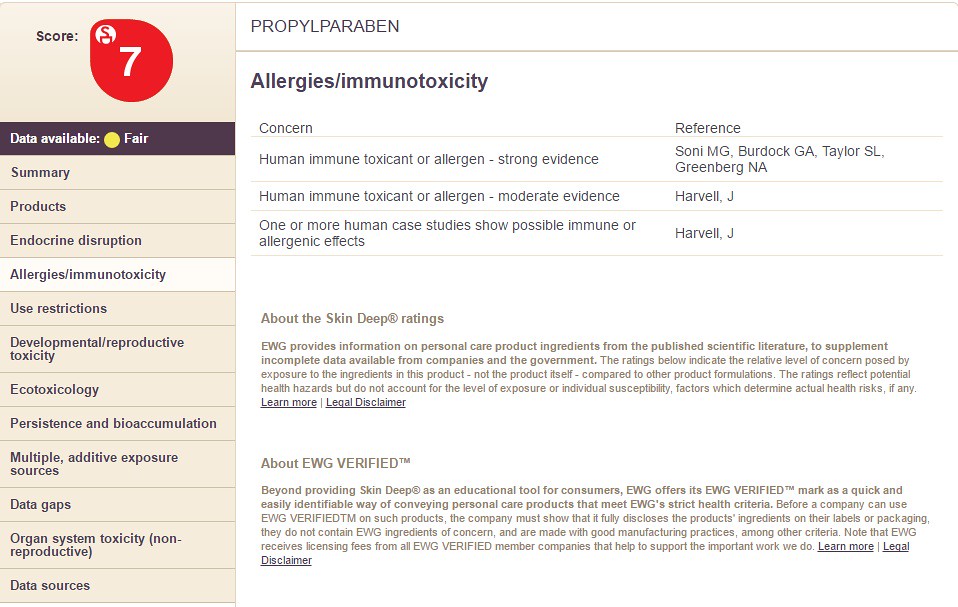
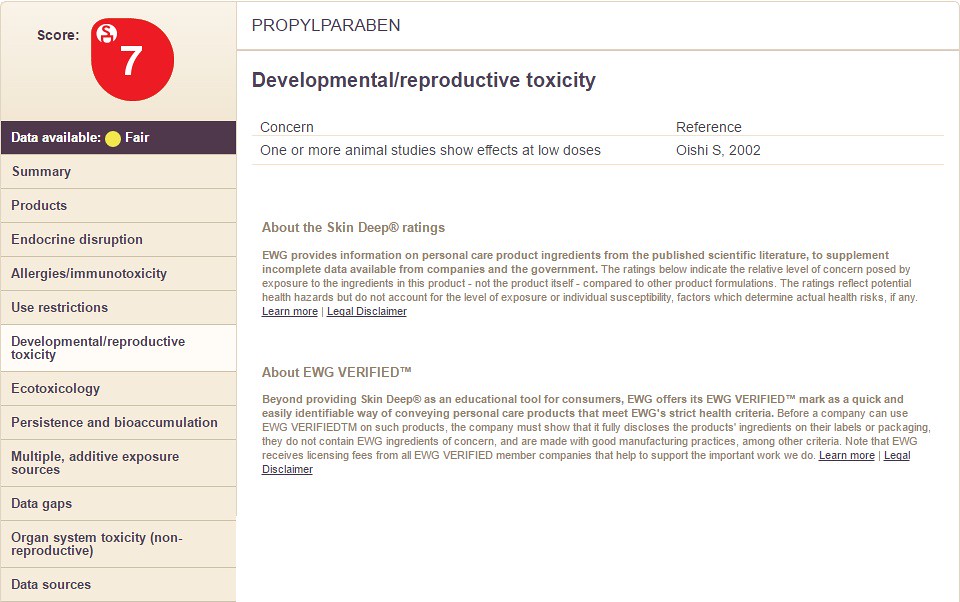
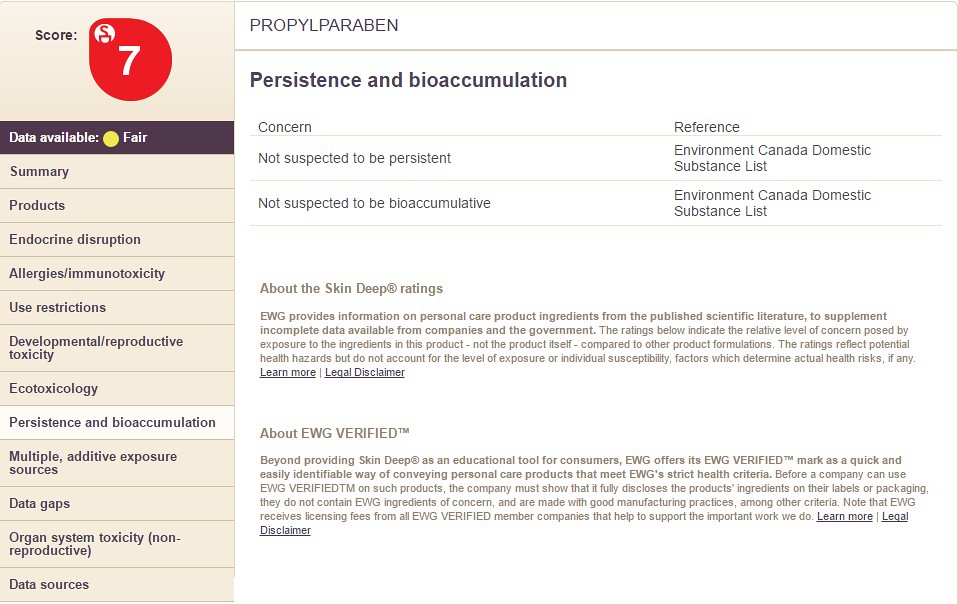
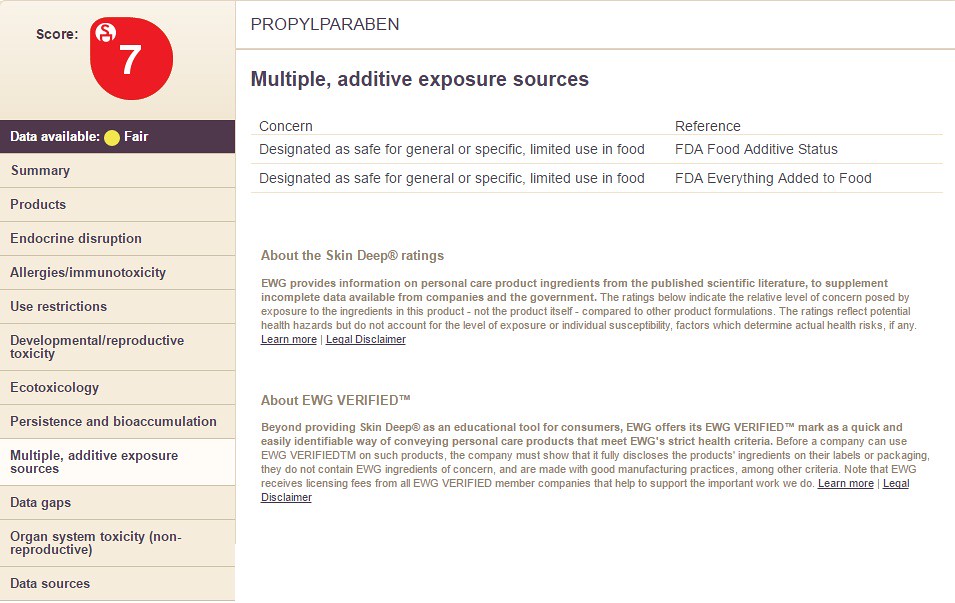
Notice how the chemicals differ in the categories on the right hand side along with the overall chemical score.  In the images below, I take you through the columns on the left hand side (using Propyl Paraben as an example).  The following sections filled with information are:

1) Products 

2) Endocrine Disruption 

3) Allergies/immunotoxicity 

4) Use Restrictions

5) Developmental/Reproductive Toxicity 

6) Ecotoxicity

7) Persistence/Bioaccumulation

8) Multiple, additive exposure sources

9) Data Gaps

10) Organ System Toxicity 

11) Data Sources


Upon clicking on the left hand column any of the categories listed above, a detailed page appears.  For instance, click on the category for "products" and a list of over 3600 products will appear with the chemical Propyl Paraben in them as shown below:


For "Endocrine Disruption" information, click and see the following below:


Choosing the option "Allergies/Immunotoxicity" will display the following information:


Choosing the option "Use Restrictions" will display the following information:


Choosing the option "Developmental/Reproductive Toxicity" will display the following information:


Choosing the option "Ecotoxicology" will display the following information:


Choosing the option "Persistence and Bioaccumulation" will display the following information:


Choosing the option "Multiple, Additive Exposure Sources" will display the following information:


Choosing the option "Data Gaps" will display the following information:


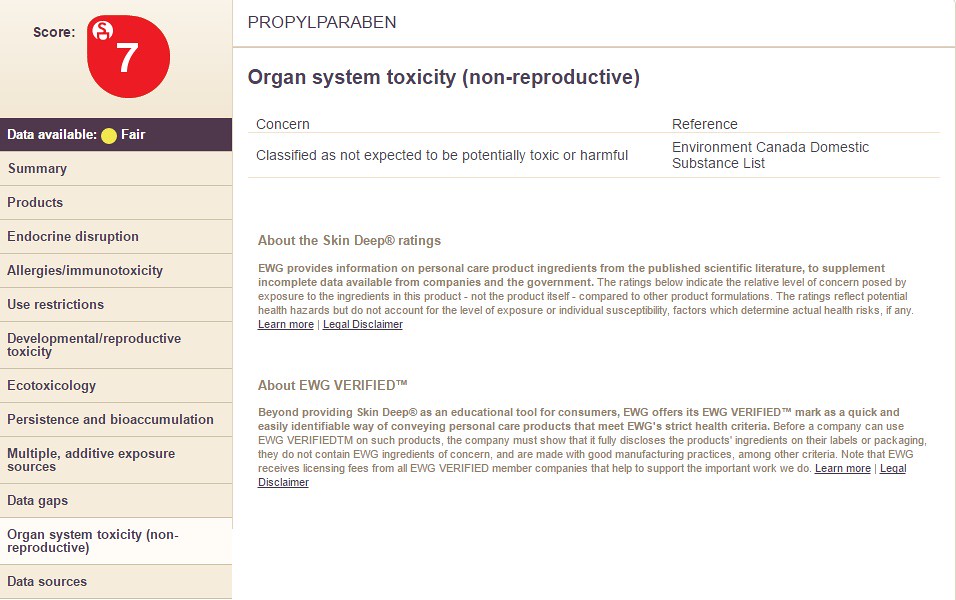
Choosing the option "Organ System Toxicity" will display the following information:


As you can see from the above information, the amount of toxicity data available on the internet regarding a chemical ingredient is quite extensive and might be overwhelming at first sight.  Keep in mind though that there are other parameters that need to be considered when viewing any of the sections listed above.


For instance, the chemical Propyl Paraben is considered toxic and should not be inhaled according to the "Materials Safety Data Sheet" -- then why would that ingredient be in a cosmetic product.  Well, as part of a skin lotion formulation, the concentration (at 5% or less) is very low toxicity to begin with.  Additionally, the matrix (formulation) in which the ingredient is in will not allow the chemical to diffuse into your skin very easily or be breathed nonetheless.


Conclusion...


The ingredients listed on the first part of the series for Jergen's Skin Firming Moisturizing Lotion all carry a degree of toxicity associated with them.  In the examples shown above, some of the chemicals like cetearyl alcohol have a lower "overall hazard" associated with them compared to the "overall hazard" associated with Propyl Paraben.


Although, if you find yourself concerned, the information is available to greater investigate the chemical properties and toxicities associated with them as I have shown above.  I provided a few examples from the ingredient list on the backside of Jergen's Skin Firming Moisturizing Lotion.  Now, you can search the "EWG" database for the toxicity of the remaining ingredients.  Additionally, I provided only one example of a site with the toxicity data displayed.  Upon further inspection, many more sources will be revealed.


In the next post on the "Anti-Aging Skin Series", we will explore a different product with claims of 'anti-aging' properties.  After exploring a few products with claims surrounding 'anti-aging' you will begin to see 'common ingredients' which must be present to support claims.


Until next time, have a great day!


Tuesday, December 6, 2016

Anti-Aging Skin Series Post 6: Short Glossary Of Functions For Skin Care Ingredients

In my last post on the the ingredients in Jergen's Skin Firming Lotion, I listed the ingredients (of which there were 29 in total) in the formulation.  Included in the listing was the primary and secondary function of each ingredient.  My intention with part II was to discuss the function of the ingredients and add insight into the toxicities associated with certain compounds.  As a reminder, this post is number 6 in a series called "Anti-Aging Skin Series" -- which was originally meant to deconstruct an original post located here.


Since the current series was my first attempt at deconstructing the chemicals inside skin care products, I have been oscillating (going back and forth) with a given layout of the series.  No, this is not your fault (the reader).  I am just trying to find a way to simplify the series to illustrate the science behind such products and furthermore the ingredients within.  The ultimate goal is to demystify the scams and myths behind 'anti-aging products' which seems to be growing toward an annual multi-billion dollar industry.


With that being said, to continue with the last post, I got caught up with a few of the ingredients having multiple functionalities listed like "Skin-conditioning agent" or "Absorbent".  This led me to form the glossary below -- which I hope will shed light on the purpose of listing the functions of each chemical ingredients on websites like the "Environmental Working Group" which provide great (and detailed) information to the public.


Glossary Terms:


To start with, I will proceed alphabetically.  I will cover the terms listed as functions in the last post which can be found here.


1) Absorbent:


From "The Free Dictionary.com" -- Absorbent: a substance that is capable of absorbing.


2) Adhesive:


From "wikipedia" for 'Adhesive':


Adhesive may be used interchangeably with glue, cement, mucilage, or paste,[1] and is any substance applied to one surface, or both surfaces, of two separate items that binds them together and resists their separation.[2] Adjectives may be used in conjunction with the word "adhesive" to describe properties based on the substance's physical or chemical form, the type of materials joined, or conditions under which it is applied.[3]
The use of adhesives offers many advantages over binding techniques such as sewing, mechanical fastening, thermal bonding, etc. These include the ability to bind different materials together, to distribute stress more efficiently across the joint, the cost effectiveness of an easily mechanized process, an improvement in aesthetic design, and increased design flexibility. Disadvantages of adhesive use include decreased stability at high temperatures, relative weakness in bonding large objects with a small bonding surface area, and greater difficulty in separating objects during testing.[4] Adhesives are typically organized by the method of adhesion. These are then organized into reactive and non-reactive adhesives, which refers to whether the adhesive chemically reacts in order to harden. Alternatively they can be organized by whether the raw stock is of natural or synthetic origin, or by their starting physical phase.


3) Anti-caking Agent:


From 'wikipedia' for 'Anti-caking Agent':


An anticaking agent is an additive placed in powdered or granulated materials, such as table salt or confectionaries to prevent the formation of lumps (caking) and for easing packaging, transport, and consumption.


Ex: a list of common 'anti-caking agents' (and articles) can be found here.


4)Anti-foaming Agent:


From 'wikipedia' for 'anti-foaming agent':


A defoamer or an anti-foaming agent is a chemical additive that reduces and hinders the formation of foam in industrial process liquids. The terms anti-foam agent and defoamer are often used interchangeably. Commonly used agents are insoluble oils, polydimethylsiloxanes and other silicones, certain alcohols, stearates and glycols. The additive is used to prevent formation of foam or is added to break a foam already formed.


5)Binding Agents:


From the website "Cosmetics and Skin.com" -- Binding Agents: binding agents such as gums, fats, or waxes which hold the product together.


6)Buffering Agent:


From 'wikipedia' for 'buffering agent':


A buffering agent is a weak acid or base used to maintain the acidity (pH) of a solution near a chosen value after the addition of another acid or base. That is, the function of a buffering agent is to prevent a rapid change in pH when acids or bases are added to the solution. Buffering agents have variable properties—some are more soluble than others; some are acidic while others are basic. As pH managers, they are important in many chemical applications, including agriculture, food processing, biochemistry, medicine and photography.


7)Denaturant:


From the website 'Cosmeticsinfo.org' -- Denaturant:

The process adds a small amount of a denaturant to the alcohol to make it taste bad, thus creating  alcohol  that is not suitable for drinking, but is otherwise similar for other purposes.


8)Emollient:


The definition of an 'Emollient' comes from 'wikipedia' for "Moisturizer":


Moisturizers or emollients are complex mixtures of chemical agents specially designed to make the external layers of the skin (epidermis) softer and more pliable. They increase the skin's hydration (water content) by reducing evaporation. Naturally occurring skin lipids and sterols, as well as artificial or natural oils, humectants, emollients, lubricants, etc., may be part of the composition of commercial skin moisturizers. They usually are available as commercial products for cosmetic and therapeutic uses, but can also be made at home using common pharmacy ingredients.


 The range of properties causes formulation chemists to break down the definition further.  Below is the list of definitions from the website "Chemists Corner" - taken directly from here:


Traditionally, emollients are considered ingredients which have smoothing or softening properties. They are put into formulas to provide moisturizing benefits and support a variety of conditioning claims. There are a number of types which we’ll list below.

Hydrophilic emollients

The term emollient is rather broad so things that are humectants can also be considered emollients. Water soluble ingredients like glycerin, sorbitol, and propylene glycol are all technically emollients. When you need conditioning, this are good ones for your water phase.

Lipophilic emollients

These are ingredients that are not soluble in water and make up the bulk of the available varieties of emollients. The one that you use depends on properties such as polarity, emolliency scores, spreading behavior, compatability with other ingredients, rheological behavior, and hydrolytic stability. This group can further be broken down by grouping them by their polairity.

Non-polar: These are mostly derived from petroleum and include ingredients like mineral oil, Isoparaffin, and Isohexadecane.

Polar: This includes a range of ingredients including materials such as natural oils (Jojoba oil, Olive oil, coconut oil), esters (Octyl Palmitate, Isopropyl stearate, Isopropyl palmitate) and alcohols (Octyl dodecanol).

Silicone fluid emollients

The final group is silicone fluids. They provide incredible levels of slickness and also feel light compared to lipophilic emollients. The most common ones used include Cyclomethicone and dimethicone. There are a number of varieties to choose from and each have different characteristics when it comes to viscosity, volatility, and ease of formulation.


9) Emulsifying Agent:


From the "UNC School of Pharmacy" -- Emulsifying Agent:


Emulsions are stabilized by adding an emulsifier or emulsifying agents. These agents have both a hydrophilic and a lipophilic part in their chemical structure. All emulsifying agents concentrate at and are adsorbed onto the oil:water interface to provide a protective barrier around the dispersed droplets. In addition to this protective barrier, emulsifiers stabilize the emulsion by reducing the interfacial tension of the system. Some agents enhance stability by imparting a charge on the droplet surface thus reducing the physical contact between the droplets and decreasing the potential for coalescence. Some commonly used emulsifying agents include tragacanth, sodium lauryl sulfate, sodium dioctyl sulfosuccinate, and polymers known as the Spans® and Tweens®.

Emulsifying agents can be classified according to: 1) chemical structure; or 2) mechanism of action. Classes according to chemical structure are synthetic, natural, finely dispersed solids, and auxiliary agents. Classes according to mechanism of action are monomolecular, multimolecular, and solid particle films. Regardless of their classification, all emulsifying agents must be chemically stable in the system, inert and chemically non-reactive with other emulsion components, and nontoxic and nonirritant. They should also be reasonably odorless and not cost prohibitive.


10) Emulsion Stabilizing Agent:


From 'wikipedia' for 'emulsion stabilization using polyelectrolytes':


Polyelectrolytes are charged polymers capable of stabilizing (or destabilizing) colloidal emulsions through electrostatic interactions. Their effectiveness can be dependent on molecular weight, pH, solvent polarity, ionic strength, and the hydrophilic-lipophilic balance (HLB). Stabilized emulsions are useful in many industrial processes, including deflocculation, drug delivery, petroleum waste treatment, and food technology.


11) Foam Boosting Agent:


From 'wikipedia' for 'foam boosting agent':


A foaming agent is a material that facilitates formation of foam such as a surfactant or a blowing agent. A surfactant, when present in small amounts, reduces surface tension of a liquid (reduces the work needed to create the foam) or increases its colloidal stability by inhibiting coalescence of bubbles.[1] A blowing agent is a gas that forms the gaseous part of the foam.


12) Film Forming Agent:


From 'Paula's Choice Skincare' for 'film-forming agents':


Large group of ingredients typically found in haircare products, but that also are widely used in skincare products, particularly moisturizers. Film-forming agents include PVP, acrylates, acrylamides, methacrylates, and various copolymers. When applied they leave a pliable, cohesive, and continuous covering over the hair or skin. The film has water-binding properties and leaves a smooth feel on skin. Film-forming agents can be weak skin sensitizers, but this almost always depends on the amount used; lower amounts generally are not problematic.


Additional definition -- 'wikipedia'


13) Humectant:


From 'Wikipedia' for 'humectant':


A humectant /hjuːˈmɛktənt/ is a hygroscopic substance used to keep things moist; it is the opposite of a desiccant. It is often a molecule with several hydrophilic groups, most often hydroxyl groups; however, amines and carboxyl groups, sometimes esterified, can be encountered as well (its affinity to form hydrogen bonds with molecules of water is the crucial trait). They are used in many products, including food, cosmetics, medicines and pesticides.
A humectant attracts and retains the moisture in the air nearby via absorption, drawing the water vapor into or beneath the organism's or object's surface.[1][2] By contrast, desiccants also attract ambient moisture, but adsorb—not absorb—it, by condensing the water vapor onto the surface, as a layer of film.[3]
When used as a food additive, a humectant has the effect of keeping the foodstuff moist.[4]
Humectants are sometimes used as a component of antistatic coatings for plastics.
In pharmaceuticals and cosmetics, humectants can be used in topical dosage forms to increase the solubility of a chemical compound's active ingredients, increasing the active ingredients' ability to penetrate skin, or its activity time. This hydrating property can also be needed to counteract a dehydrating active ingredient (e.g., soaps, corticoids, and some alcohols), which is why humectants are common ingredients in a wide range of cosmetic and personal care products that make moisturization claims (e.g., hair conditioners, body lotions, face or body cleansers, lip balms, and eye creams).


14) Masking Agent:


From 'wikipedia' for 'masking agent':


A masking agent is a reagent used in chemical analysis which reacts with chemical species that may interfere in the analysis. In sports a masking agent is used to hide or prevent detection of a banned substance or illegal drug like anabolic steroids or stimulants.


Additional:

--FDA : labeling cosmetics

--List of masking agents - 'thegoodscentscompany'

--Warnings: 'naturalcosmeticsnews'


15) Occlusive Agent:


From the website "ChemistsCorner" - Occlusive Agent:


Occlusive agents increase moisture levels by providing a physical barrier to epidermal water loss. Ingredients with occlusive properties include petrolatum, waxes, oils, and silicones. Some occlusive agents like petrolatum can leave a heavy feel so they are often combined with other ingredients, like emollients, to improve consumer appeal.


Additional resources: here and here


16) Opacifying Agent:


From 'wikipedia' for Opacifier:


An opacifier is a substance added to a material in order to make the ensuing system opaque. An example of a chemical opacifier is titanium dioxide (TiO2), which is used to opacify ceramic glazes and milk glass; bone ash is also used. Opacifiers must have a refractive index (RI) substantially different from the system.


17) Refatting Agent:


From the website 'wiktionary' - Refatting Agent: The replenishment of lipids to the skin.


18) Skin-conditioning Agent:


From the website "MiMi beauty" - Skin Conditioning Agent:


A skin conditioning agent and an essential fatty acid that helps maintain optimal skin health and function.  Lipid Organic products found in living systems that are insoluble in water, like fats. Cell membranes are made of lipids.


Additional resources: ChemistsCorner


19) Skin Protecting Agent (skin protectant):


From the website 'Walgreens' for Skin Protectants:


Remedy Dimethicone Skin Protectant provides a breathable barrier that protects against moisture. Also protects and helps relieve chapped or cracked skin. Protects against moisture loss. This product is equally intended for use as a long-lasting moisturizer.


20) Surfactant:


From 'wikipedia' for Surfactant:


Surfactants are compounds that lower the surface tension (or interfacial tension) between two liquids or between a liquid and a solid. Surfactants may act as detergents, wetting agents, emulsifiers, foaming agents, and dispersants.


21) Surfactant-Solubilizing Agent:


See 'wikipedia' page for 'Surfactant'.


Conclusion...


As you can see above, the functions are clarified by listing the definition of each.  Although, there are some glossary terms that refer to multiple terms in the glossary itself.  One example is a 'skin conditioning agent' -- an emollient, etc.  We need to think critically about the purpose of having the ingredient inside of the formulation.


Furthermore, listed above are the functions of the ingredients.  Lots of information have been left out.  One important piece is the relative concentration of each chemical.  Some companies do not list concentration to avoid duplication of their marketed project.  In the next post, we will return to the last post and look further into the lotion "Jergen's Skin firming" lotion in more detail.


Until then, Have a great day.