Hello Everyone,
This is Mike. Since the Holidays are upon us, I am going to take a short vacation. I know, you are going to miss all of the wonderful content. I know that a few of you are desperately waiting for an update on "Mike's Mental Awareness" webpage. Furthermore, those readers who are currently following my interest in demystifying the science behind aging and skin care products in the 'anti-aging' series are eager to move onto more products. But first, we have yet to discuss the ingredients and a note about their toxicities -- which is coming next.
With that being said, check back in just after the beginning of the new year. I hope that each and everyone of the visitors to this site have a great set of holidays. I look forward to writing soon.
Merry Christmas!!!!!!!
Happy New Year!!!!!!!
Write to you soon!
Thursday, December 22, 2016

Tuesday, December 20, 2016
Winter Garden Plan (Fall 2016, Spring 2017)
Thinking about the benefits of renting, I always ask myself, "why would I want a bigger yard when there's so much work to do in even a small yard?" We currently have 1/16th of an acre. Definitely not enough for subsistence farming. I used a website to map out our current garden layout. (http://www.smallblueprinter.com/garden/planner.html)
 |
| Front Rear |
To determine what would grow the best (and where in the yard to put it), I took a series of photographs each hour. This was in response to the new arbor and also to the City of Glendale who came by and chopped down so many branches of the Magnolia tree out in front of our house. I had lots more veggies out there that didn't survive without Momma Magnolia's dense shade.
Another great thing that happened this year is that I started composting again. One of my neighbor's plants started spreading a powdery mildew that attacked my garden. I treated the leaves with dormant oil and baking soda (via spray bottle) then started composting near the original host plant. It seems like it's coming back healthier than before. I hope she flowers this spring.
 |
| Front Yard Only |
Sunday, December 11, 2016
2017 Garden Plans
I shared my 2012-2014 gardens here. In 2015 my garden plans were listed here. This year, I made some great plans for 2016. We had a really hot summer, and lots of things sprouted but never bloomed. Maybe I got too busy, teaching two summer classes simultaneously, and didn't water the garden regularly. The drought limited our outdoor watering, and the Zika virus scare made water collection impossible.

I can't say the drought is over, but at least Gov. Brown's water restrictions have been partially lifted. We can now water between 6pm and 9am for 10 minutes on Tuesday, Thursday, and Saturday. There is no time limit for watering by hand, but the three-days-per-week rule still applies.

I don't have automatic sprinklers, and in the past I have used rain barrels as well as greywater reclamation. I got so depressed at the sight of my empty containers in July 2016 that I planted a bunch of colorful pinwheels to look like beautiful flowers, and thought about the best layout for companion planting. Instead of putting my energy into the outdoors, I did a bunch of online research that may someday be part of a grant proposal for a community garden space.
Then I got the idea to go for drought-tolerant plants. It would beautify the space, although not produce edible leaves. I researched cacti. Then we got a variety of new plants at the Cactus and Succulent Society of America (CSSA) Inter-City Show at the LA County Arboretum. Some of the recent planting calendars for LA that I've made, together with a "care guide" for the succulents, cacti, and bromeliads I bought are here.

So I bought some new seeds and rearranged the garden layout to start some of them this month. I don't totally care if things don't work out. I'll let you know how it goes.


I don't have automatic sprinklers, and in the past I have used rain barrels as well as greywater reclamation. I got so depressed at the sight of my empty containers in July 2016 that I planted a bunch of colorful pinwheels to look like beautiful flowers, and thought about the best layout for companion planting. Instead of putting my energy into the outdoors, I did a bunch of online research that may someday be part of a grant proposal for a community garden space.
Then I got the idea to go for drought-tolerant plants. It would beautify the space, although not produce edible leaves. I researched cacti. Then we got a variety of new plants at the Cactus and Succulent Society of America (CSSA) Inter-City Show at the LA County Arboretum. Some of the recent planting calendars for LA that I've made, together with a "care guide" for the succulents, cacti, and bromeliads I bought are here.

So I bought some new seeds and rearranged the garden layout to start some of them this month. I don't totally care if things don't work out. I'll let you know how it goes.
"There are no gardening mistakes, only experiments," ~ J. K. Philips
Tuesday, December 6, 2016
Anti-Aging Skin Series Post 6: Short Glossary Of Functions For Skin Care Ingredients
In my last post on the the ingredients in Jergen's Skin Firming Lotion, I listed the ingredients (of which there were 29 in total) in the formulation. Included in the listing was the primary and secondary function of each ingredient. My intention with part II was to discuss the function of the ingredients and add insight into the toxicities associated with certain compounds. As a reminder, this post is number 6 in a series called "Anti-Aging Skin Series" -- which was originally meant to deconstruct an original post located here.
Since the current series was my first attempt at deconstructing the chemicals inside skin care products, I have been oscillating (going back and forth) with a given layout of the series. No, this is not your fault (the reader). I am just trying to find a way to simplify the series to illustrate the science behind such products and furthermore the ingredients within. The ultimate goal is to demystify the scams and myths behind 'anti-aging products' which seems to be growing toward an annual multi-billion dollar industry.
With that being said, to continue with the last post, I got caught up with a few of the ingredients having multiple functionalities listed like "Skin-conditioning agent" or "Absorbent". This led me to form the glossary below -- which I hope will shed light on the purpose of listing the functions of each chemical ingredients on websites like the "Environmental Working Group" which provide great (and detailed) information to the public.
To start with, I will proceed alphabetically. I will cover the terms listed as functions in the last post which can be found here.
1) Absorbent:
From "The Free Dictionary.com" -- Absorbent: a substance that is capable of absorbing.
2) Adhesive:
From "wikipedia" for 'Adhesive':
3) Anti-caking Agent:
From 'wikipedia' for 'Anti-caking Agent':
Ex: a list of common 'anti-caking agents' (and articles) can be found here.
4)Anti-foaming Agent:
From 'wikipedia' for 'anti-foaming agent':
5)Binding Agents:
From the website "Cosmetics and Skin.com" -- Binding Agents: binding agents such as gums, fats, or waxes which hold the product together.
6)Buffering Agent:
From 'wikipedia' for 'buffering agent':
7)Denaturant:
From the website 'Cosmeticsinfo.org' -- Denaturant:
8)Emollient:
The definition of an 'Emollient' comes from 'wikipedia' for "Moisturizer":
The range of properties causes formulation chemists to break down the definition further. Below is the list of definitions from the website "Chemists Corner" - taken directly from here:
9) Emulsifying Agent:
From the "UNC School of Pharmacy" -- Emulsifying Agent:
10) Emulsion Stabilizing Agent:
From 'wikipedia' for 'emulsion stabilization using polyelectrolytes':
11) Foam Boosting Agent:
From 'wikipedia' for 'foam boosting agent':
12) Film Forming Agent:
From 'Paula's Choice Skincare' for 'film-forming agents':
Additional definition -- 'wikipedia'
13) Humectant:
From 'Wikipedia' for 'humectant':
14) Masking Agent:
From 'wikipedia' for 'masking agent':
Additional:
--FDA : labeling cosmetics
--List of masking agents - 'thegoodscentscompany'
--Warnings: 'naturalcosmeticsnews'
15) Occlusive Agent:
From the website "ChemistsCorner" - Occlusive Agent:
Additional resources: here and here
16) Opacifying Agent:
From 'wikipedia' for Opacifier:
17) Refatting Agent:
From the website 'wiktionary' - Refatting Agent: The replenishment of lipids to the skin.
18) Skin-conditioning Agent:
From the website "MiMi beauty" - Skin Conditioning Agent:
Additional resources: ChemistsCorner
19) Skin Protecting Agent (skin protectant):
From the website 'Walgreens' for Skin Protectants:
20) Surfactant:
From 'wikipedia' for Surfactant:
21) Surfactant-Solubilizing Agent:
See 'wikipedia' page for 'Surfactant'.
As you can see above, the functions are clarified by listing the definition of each. Although, there are some glossary terms that refer to multiple terms in the glossary itself. One example is a 'skin conditioning agent' -- an emollient, etc. We need to think critically about the purpose of having the ingredient inside of the formulation.
Furthermore, listed above are the functions of the ingredients. Lots of information have been left out. One important piece is the relative concentration of each chemical. Some companies do not list concentration to avoid duplication of their marketed project. In the next post, we will return to the last post and look further into the lotion "Jergen's Skin firming" lotion in more detail.
Until then, Have a great day.
Since the current series was my first attempt at deconstructing the chemicals inside skin care products, I have been oscillating (going back and forth) with a given layout of the series. No, this is not your fault (the reader). I am just trying to find a way to simplify the series to illustrate the science behind such products and furthermore the ingredients within. The ultimate goal is to demystify the scams and myths behind 'anti-aging products' which seems to be growing toward an annual multi-billion dollar industry.
With that being said, to continue with the last post, I got caught up with a few of the ingredients having multiple functionalities listed like "Skin-conditioning agent" or "Absorbent". This led me to form the glossary below -- which I hope will shed light on the purpose of listing the functions of each chemical ingredients on websites like the "Environmental Working Group" which provide great (and detailed) information to the public.
Glossary Terms:
To start with, I will proceed alphabetically. I will cover the terms listed as functions in the last post which can be found here.
1) Absorbent:
From "The Free Dictionary.com" -- Absorbent: a substance that is capable of absorbing.
2) Adhesive:
From "wikipedia" for 'Adhesive':
Adhesive may be used interchangeably with glue, cement, mucilage, or paste,[1] and is any substance applied to one surface, or both surfaces, of two separate items that binds them together and resists their separation.[2] Adjectives may be used in conjunction with the word "adhesive" to describe properties based on the substance's physical or chemical form, the type of materials joined, or conditions under which it is applied.[3]The use of adhesives offers many advantages over binding techniques such as sewing, mechanical fastening, thermal bonding, etc. These include the ability to bind different materials together, to distribute stress more efficiently across the joint, the cost effectiveness of an easily mechanized process, an improvement in aesthetic design, and increased design flexibility. Disadvantages of adhesive use include decreased stability at high temperatures, relative weakness in bonding large objects with a small bonding surface area, and greater difficulty in separating objects during testing.[4] Adhesives are typically organized by the method of adhesion. These are then organized into reactive and non-reactive adhesives, which refers to whether the adhesive chemically reacts in order to harden. Alternatively they can be organized by whether the raw stock is of natural or synthetic origin, or by their starting physical phase.
3) Anti-caking Agent:
From 'wikipedia' for 'Anti-caking Agent':
An anticaking agent is an additive placed in powdered or granulated materials, such as table salt or confectionaries to prevent the formation of lumps (caking) and for easing packaging, transport, and consumption.
Ex: a list of common 'anti-caking agents' (and articles) can be found here.
4)Anti-foaming Agent:
From 'wikipedia' for 'anti-foaming agent':
A defoamer or an anti-foaming agent is a chemical additive that reduces and hinders the formation of foam in industrial process liquids. The terms anti-foam agent and defoamer are often used interchangeably. Commonly used agents are insoluble oils, polydimethylsiloxanes and other silicones, certain alcohols, stearates and glycols. The additive is used to prevent formation of foam or is added to break a foam already formed.
5)Binding Agents:
From the website "Cosmetics and Skin.com" -- Binding Agents: binding agents such as gums, fats, or waxes which hold the product together.
6)Buffering Agent:
From 'wikipedia' for 'buffering agent':
A buffering agent is a weak acid or base used to maintain the acidity (pH) of a solution near a chosen value after the addition of another acid or base. That is, the function of a buffering agent is to prevent a rapid change in pH when acids or bases are added to the solution. Buffering agents have variable properties—some are more soluble than others; some are acidic while others are basic. As pH managers, they are important in many chemical applications, including agriculture, food processing, biochemistry, medicine and photography.
7)Denaturant:
From the website 'Cosmeticsinfo.org' -- Denaturant:
The process adds a small amount of a denaturant to the alcohol to make it taste bad, thus creating alcohol that is not suitable for drinking, but is otherwise similar for other purposes.
8)Emollient:
The definition of an 'Emollient' comes from 'wikipedia' for "Moisturizer":
Moisturizers or emollients are complex mixtures of chemical agents specially designed to make the external layers of the skin (epidermis) softer and more pliable. They increase the skin's hydration (water content) by reducing evaporation. Naturally occurring skin lipids and sterols, as well as artificial or natural oils, humectants, emollients, lubricants, etc., may be part of the composition of commercial skin moisturizers. They usually are available as commercial products for cosmetic and therapeutic uses, but can also be made at home using common pharmacy ingredients.
The range of properties causes formulation chemists to break down the definition further. Below is the list of definitions from the website "Chemists Corner" - taken directly from here:
Traditionally, emollients are considered ingredients which have smoothing or softening properties. They are put into formulas to provide moisturizing benefits and support a variety of conditioning claims. There are a number of types which we’ll list below.Hydrophilic emollientsThe term emollient is rather broad so things that are humectants can also be considered emollients. Water soluble ingredients like glycerin, sorbitol, and propylene glycol are all technically emollients. When you need conditioning, this are good ones for your water phase.Lipophilic emollientsThese are ingredients that are not soluble in water and make up the bulk of the available varieties of emollients. The one that you use depends on properties such as polarity, emolliency scores, spreading behavior, compatability with other ingredients, rheological behavior, and hydrolytic stability. This group can further be broken down by grouping them by their polairity.Non-polar: These are mostly derived from petroleum and include ingredients like mineral oil, Isoparaffin, and Isohexadecane.Polar: This includes a range of ingredients including materials such as natural oils (Jojoba oil, Olive oil, coconut oil), esters (Octyl Palmitate, Isopropyl stearate, Isopropyl palmitate) and alcohols (Octyl dodecanol).Silicone fluid emollientsThe final group is silicone fluids. They provide incredible levels of slickness and also feel light compared to lipophilic emollients. The most common ones used include Cyclomethicone and dimethicone. There are a number of varieties to choose from and each have different characteristics when it comes to viscosity, volatility, and ease of formulation.
9) Emulsifying Agent:
From the "UNC School of Pharmacy" -- Emulsifying Agent:
Emulsions are stabilized by adding an emulsifier or emulsifying agents. These agents have both a hydrophilic and a lipophilic part in their chemical structure. All emulsifying agents concentrate at and are adsorbed onto the oil:water interface to provide a protective barrier around the dispersed droplets. In addition to this protective barrier, emulsifiers stabilize the emulsion by reducing the interfacial tension of the system. Some agents enhance stability by imparting a charge on the droplet surface thus reducing the physical contact between the droplets and decreasing the potential for coalescence. Some commonly used emulsifying agents include tragacanth, sodium lauryl sulfate, sodium dioctyl sulfosuccinate, and polymers known as the Spans® and Tweens®.Emulsifying agents can be classified according to: 1) chemical structure; or 2) mechanism of action. Classes according to chemical structure are synthetic, natural, finely dispersed solids, and auxiliary agents. Classes according to mechanism of action are monomolecular, multimolecular, and solid particle films. Regardless of their classification, all emulsifying agents must be chemically stable in the system, inert and chemically non-reactive with other emulsion components, and nontoxic and nonirritant. They should also be reasonably odorless and not cost prohibitive.
10) Emulsion Stabilizing Agent:
From 'wikipedia' for 'emulsion stabilization using polyelectrolytes':
Polyelectrolytes are charged polymers capable of stabilizing (or destabilizing) colloidal emulsions through electrostatic interactions. Their effectiveness can be dependent on molecular weight, pH, solvent polarity, ionic strength, and the hydrophilic-lipophilic balance (HLB). Stabilized emulsions are useful in many industrial processes, including deflocculation, drug delivery, petroleum waste treatment, and food technology.
11) Foam Boosting Agent:
From 'wikipedia' for 'foam boosting agent':
A foaming agent is a material that facilitates formation of foam such as a surfactant or a blowing agent. A surfactant, when present in small amounts, reduces surface tension of a liquid (reduces the work needed to create the foam) or increases its colloidal stability by inhibiting coalescence of bubbles.[1] A blowing agent is a gas that forms the gaseous part of the foam.
12) Film Forming Agent:
From 'Paula's Choice Skincare' for 'film-forming agents':
Large group of ingredients typically found in haircare products, but that also are widely used in skincare products, particularly moisturizers. Film-forming agents include PVP, acrylates, acrylamides, methacrylates, and various copolymers. When applied they leave a pliable, cohesive, and continuous covering over the hair or skin. The film has water-binding properties and leaves a smooth feel on skin. Film-forming agents can be weak skin sensitizers, but this almost always depends on the amount used; lower amounts generally are not problematic.
Additional definition -- 'wikipedia'
13) Humectant:
From 'Wikipedia' for 'humectant':
A humectant /hjuːˈmɛktənt/ is a hygroscopic substance used to keep things moist; it is the opposite of a desiccant. It is often a molecule with several hydrophilic groups, most often hydroxyl groups; however, amines and carboxyl groups, sometimes esterified, can be encountered as well (its affinity to form hydrogen bonds with molecules of water is the crucial trait). They are used in many products, including food, cosmetics, medicines and pesticides.A humectant attracts and retains the moisture in the air nearby via absorption, drawing the water vapor into or beneath the organism's or object's surface.[1][2] By contrast, desiccants also attract ambient moisture, but adsorb—not absorb—it, by condensing the water vapor onto the surface, as a layer of film.[3]When used as a food additive, a humectant has the effect of keeping the foodstuff moist.[4]Humectants are sometimes used as a component of antistatic coatings for plastics.In pharmaceuticals and cosmetics, humectants can be used in topical dosage forms to increase the solubility of a chemical compound's active ingredients, increasing the active ingredients' ability to penetrate skin, or its activity time. This hydrating property can also be needed to counteract a dehydrating active ingredient (e.g., soaps, corticoids, and some alcohols), which is why humectants are common ingredients in a wide range of cosmetic and personal care products that make moisturization claims (e.g., hair conditioners, body lotions, face or body cleansers, lip balms, and eye creams).
14) Masking Agent:
From 'wikipedia' for 'masking agent':
A masking agent is a reagent used in chemical analysis which reacts with chemical species that may interfere in the analysis. In sports a masking agent is used to hide or prevent detection of a banned substance or illegal drug like anabolic steroids or stimulants.
Additional:
--FDA : labeling cosmetics
--List of masking agents - 'thegoodscentscompany'
--Warnings: 'naturalcosmeticsnews'
15) Occlusive Agent:
From the website "ChemistsCorner" - Occlusive Agent:
Occlusive agents increase moisture levels by providing a physical barrier to epidermal water loss. Ingredients with occlusive properties include petrolatum, waxes, oils, and silicones. Some occlusive agents like petrolatum can leave a heavy feel so they are often combined with other ingredients, like emollients, to improve consumer appeal.
Additional resources: here and here
16) Opacifying Agent:
From 'wikipedia' for Opacifier:
An opacifier is a substance added to a material in order to make the ensuing system opaque. An example of a chemical opacifier is titanium dioxide (TiO2), which is used to opacify ceramic glazes and milk glass; bone ash is also used. Opacifiers must have a refractive index (RI) substantially different from the system.
17) Refatting Agent:
From the website 'wiktionary' - Refatting Agent: The replenishment of lipids to the skin.
18) Skin-conditioning Agent:
From the website "MiMi beauty" - Skin Conditioning Agent:
A skin conditioning agent and an essential fatty acid that helps maintain optimal skin health and function. Lipid Organic products found in living systems that are insoluble in water, like fats. Cell membranes are made of lipids.
Additional resources: ChemistsCorner
19) Skin Protecting Agent (skin protectant):
From the website 'Walgreens' for Skin Protectants:
Remedy Dimethicone Skin Protectant provides a breathable barrier that protects against moisture. Also protects and helps relieve chapped or cracked skin. Protects against moisture loss. This product is equally intended for use as a long-lasting moisturizer.
20) Surfactant:
From 'wikipedia' for Surfactant:
Surfactants are compounds that lower the surface tension (or interfacial tension) between two liquids or between a liquid and a solid. Surfactants may act as detergents, wetting agents, emulsifiers, foaming agents, and dispersants.
21) Surfactant-Solubilizing Agent:
See 'wikipedia' page for 'Surfactant'.
Conclusion...
As you can see above, the functions are clarified by listing the definition of each. Although, there are some glossary terms that refer to multiple terms in the glossary itself. One example is a 'skin conditioning agent' -- an emollient, etc. We need to think critically about the purpose of having the ingredient inside of the formulation.
Furthermore, listed above are the functions of the ingredients. Lots of information have been left out. One important piece is the relative concentration of each chemical. Some companies do not list concentration to avoid duplication of their marketed project. In the next post, we will return to the last post and look further into the lotion "Jergen's Skin firming" lotion in more detail.
Until then, Have a great day.
Saturday, November 19, 2016
What's Next In The "Anti-aging Skin Series"?
After exploring (by listing) all of the ingredients in the last blog post for the skin care product made by Jergens -- "Jergens Skin Firming Lotion," I promised to address the ingredients more "in detail" and provide a greater insight into the toxicity associated with them. The task has proven to more difficult than I initially thought to it would be. No Worries -- Not to say insurmountable.
In the last post, I listed all 29 ingredients of the lotion. As I look over the list of functions which I listed from the website "EWG" -- I see many terms which can be further defined under the category "Function" of the ingredient. Therefore, I will start by composing a small glossary of terms like "Skin Conditioning Agent" or "Emollient" in the next post. This will assist us in future posts on "anti-aging" skin care products. Additionally, this glossary will help with other skin care products by providing better insight into the actual function. After I publish the glossary, we will pick back up with the previous blog post on "Jergens Skin Firming Lotion."
For those readers just joining us, the blog post is part of the ongoing skin series on anti-aging stemming from the initial blog post which can be found here. The series is titled "Anti-aging Skin Series." By clicking on the hyperlinked text, past blog posts can be found.
With that in mind, I will return to composing the glossary from which we can explore other products in the future in greater detail. If you (the reader) have any preferences on the layout of the information which would clarify the subject matter in any light, please leave a comment below. I am always open to suggestion. Part of the issue at hand currently, is that I am approaching the subject from a chemist's standpoint and want to deconstruct the ingredients in the easiest way possible for everyone to understand.
Anyways, until next time, have a great weekend!
In the last post, I listed all 29 ingredients of the lotion. As I look over the list of functions which I listed from the website "EWG" -- I see many terms which can be further defined under the category "Function" of the ingredient. Therefore, I will start by composing a small glossary of terms like "Skin Conditioning Agent" or "Emollient" in the next post. This will assist us in future posts on "anti-aging" skin care products. Additionally, this glossary will help with other skin care products by providing better insight into the actual function. After I publish the glossary, we will pick back up with the previous blog post on "Jergens Skin Firming Lotion."
For those readers just joining us, the blog post is part of the ongoing skin series on anti-aging stemming from the initial blog post which can be found here. The series is titled "Anti-aging Skin Series." By clicking on the hyperlinked text, past blog posts can be found.
With that in mind, I will return to composing the glossary from which we can explore other products in the future in greater detail. If you (the reader) have any preferences on the layout of the information which would clarify the subject matter in any light, please leave a comment below. I am always open to suggestion. Part of the issue at hand currently, is that I am approaching the subject from a chemist's standpoint and want to deconstruct the ingredients in the easiest way possible for everyone to understand.
Anyways, until next time, have a great weekend!
Friday, November 11, 2016
Happy Veterans Day Everyone!!!!
Happy Veterans Day Everyone!
This week has been a crazy week with the election. I have been promoting science issues over on my other blog post. Recently, I felt compelled to write about the science issues that face the nation from here forward.
First, here is a post regarding the top 20 questions regarding current science issues.
Second, here is a post discussing why those issues and others matter moving forward.
Finally, in honor of Veterans Day, I just posted a blog post about the election results and the implications for veterans moving forward. Read about those implications and think hard for those who have served, continue to serve, and given the ultimate sacrifice.
Last but not least, I will return next week with the 'Anti-aging Skin Series'. Until then, Have a great weekend. Cheers!
This week has been a crazy week with the election. I have been promoting science issues over on my other blog post. Recently, I felt compelled to write about the science issues that face the nation from here forward.
First, here is a post regarding the top 20 questions regarding current science issues.
Second, here is a post discussing why those issues and others matter moving forward.
Finally, in honor of Veterans Day, I just posted a blog post about the election results and the implications for veterans moving forward. Read about those implications and think hard for those who have served, continue to serve, and given the ultimate sacrifice.
Last but not least, I will return next week with the 'Anti-aging Skin Series'. Until then, Have a great weekend. Cheers!
Tuesday, November 1, 2016
Anti-Aging Skin Series Post 5: Part 1 - Jergens Skin Firming Moisturizer Lotion
Continuing on with our journey through the scientific claims (in products) of "Anti-Aging" skin care products, the time has come to tackle a chosen product. For those readers just joining the educational series, the series is called "Anti-Aging Skin Series" and by clicking on the title, previous posts can be accessed. The series came out of an original post which was lengthy and addressed a couple of popular technologies. One was artificial skin while the other was that reversing aging skin with the use of 'skin creams' which have claims of restoration of crucial ingredients in the human skin like 'collagen' or 'glycans' (on the surface of cells - which promote collagen growth).
In the paragraphs below, we will look at a skin care product that is supposedly aimed at "skin firming" by 'tightening' or 'toning' the consumer's skin to appear young and healthy skin. Specifically, we will break the blog post into two parts: 1) An Ingredient List and 2) a discussion about the ingredients and functionality of each. Below is part 1 of the first product -- a Skin Firming Moisturizer product.
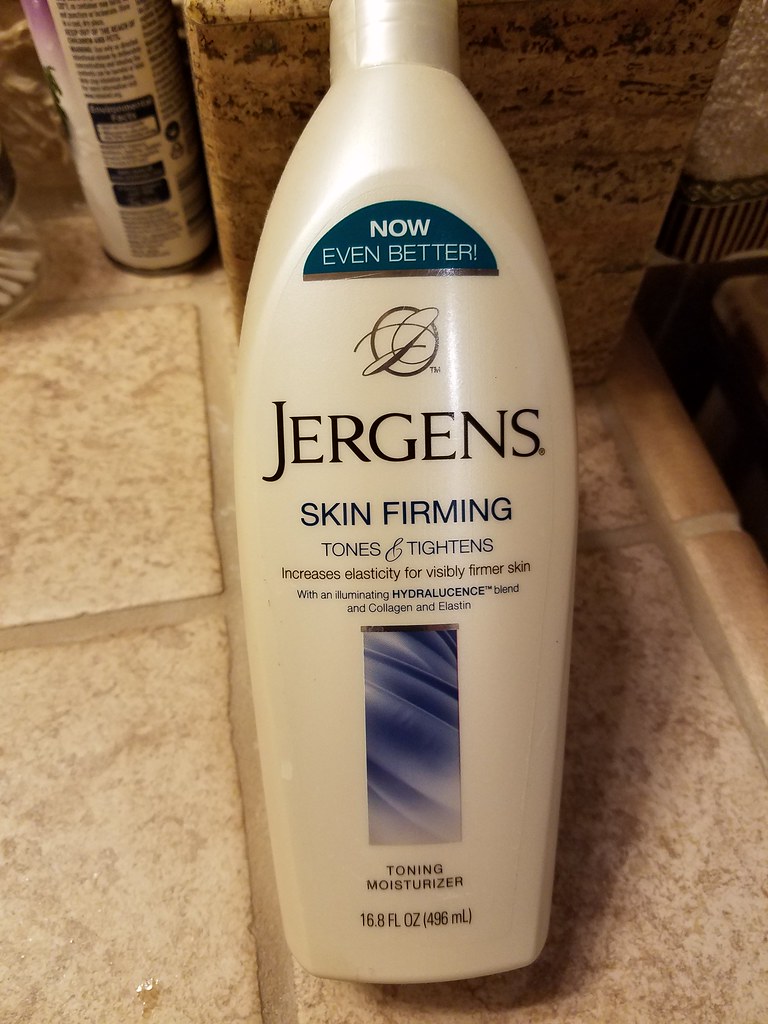
Here is a picture of the skin care product named 'Jergens Skin FirmingMoisturizer' below:
Without further ado, lets start exploring the skin firming moisturizer in greater detail.
As I just mentioned, the product that we are exploring today is named 'Jergens Skin Firming Moisturizer' and is specifically for tightening and toning older skin to appear younger. If we look at the product description from the website 'Amazon' -- here is what the site states as a selling point:
The marketing teams behind these products are amazing -- the teams can really sell a product. I have to give credit where credit is due. Of course, this credit is only from a 'selling standpoint' and not from a 'scientific standpoint' -- which we shall explore shortly.
According to the product manufacturer's claim, the skin firming moisturizer is a 'unique formula' that will increase "elasticity of cellulite prone skin for visibly firmer results." Remember this claim along with other mystifying statements like "features a unique illuminating HYDRALUCENCE blend, Collagen, and Elastin." From my read, the last statement is the most true statement: "Relieves dryness and replenishes moisture to improve skin's tone, texture, and luminosity." After going through the ingredient list, these claims will be either proven true or false!
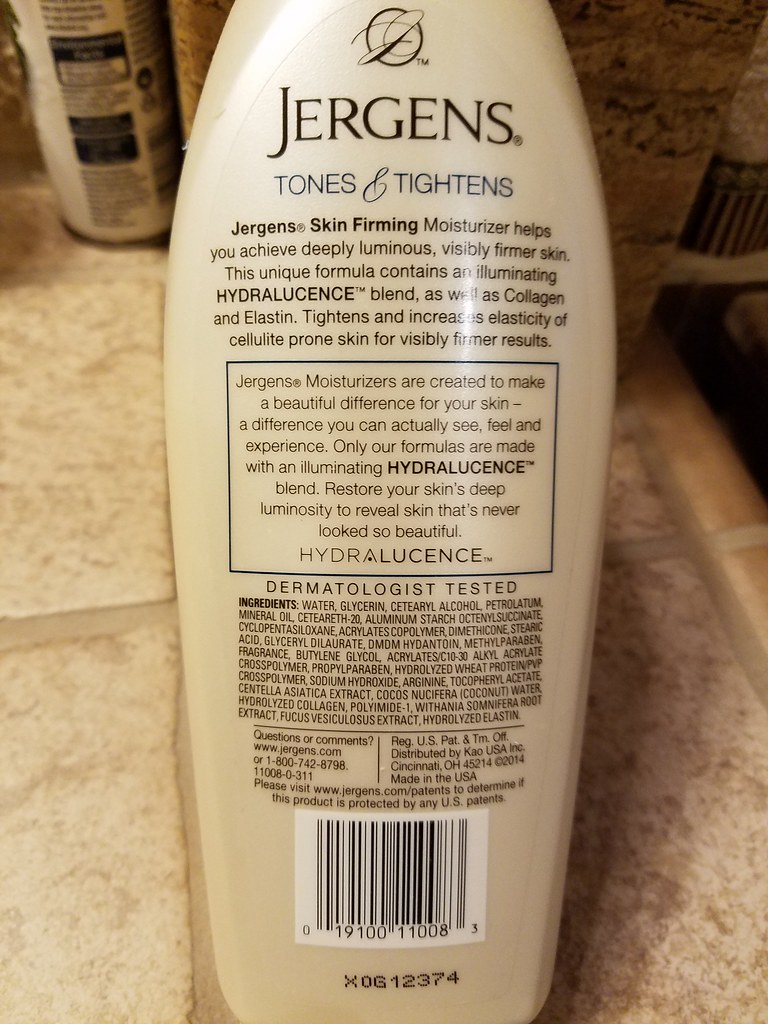
If the container is turned around to reveal the backside of the product container, the statement and ingredients are shown as follows:
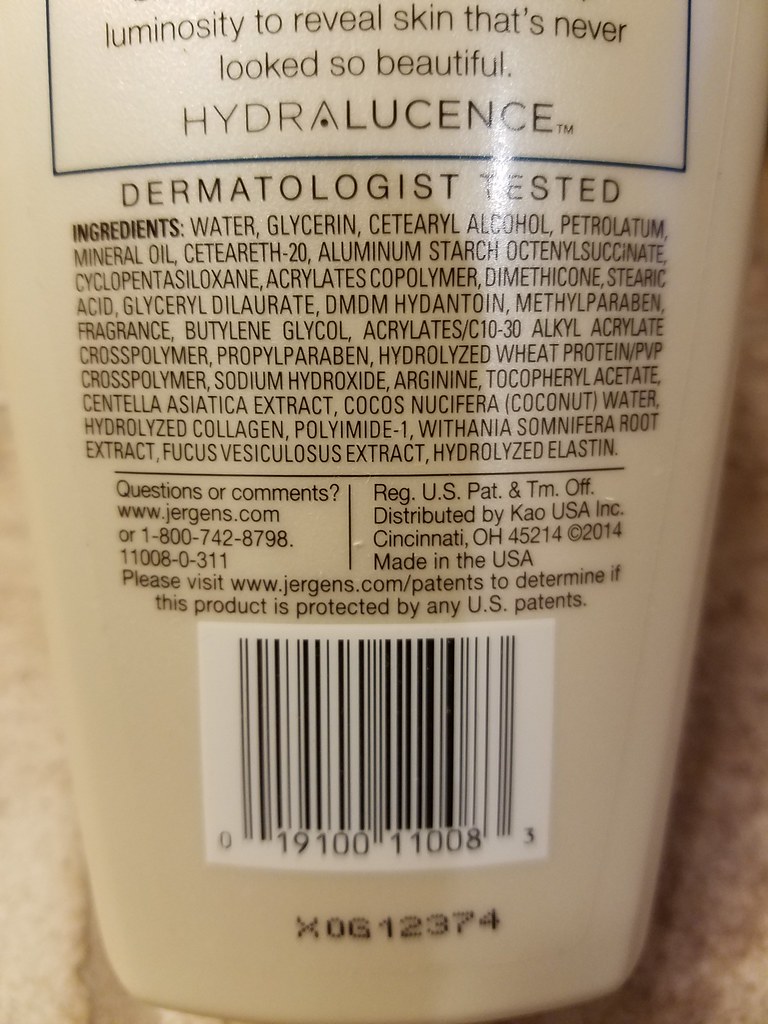
and zooming in on the ingredients, the list is shown below:
Remember in the original post that aging skin appears dry, flaky, and saggy due to the loss of 'collagen'. Additionally, the 'saggy' skin is often referred to as 'crepey' skin too. If a product was advertised to 'tighten' and 'tone' skin to make the skin appear to be more youthful skin, then obviously, the product would sell well and appeal to a large audience. I imagine that is the case with the following product under review in this post.
How do the ingredients function to make skin appear 'tightened' and 'toned'?
If the ingredient list is explored into greater detail, a better understanding of the function of each ingredient will become apparent. In the next section, a list will be formed using data collected on a very resource rich website 'Environmental Working Group'. The EWG is a nonprofit organization whose mission is to demystify the harmful ingredients that are contained in consumer products and lobby in Washington D.C. toward safer use of chemicals in consumer products. Their website is dense in information.
One of the overarching goals on the KaiserWellnessCenter blog is to provide you (the reader) with the correct resources that you can use for yourself in your journey toward wellness and a better understanding of the surrounding environment. Below, I will list information 'about' the chemical in question and the 'function' of the chemical in question. You might ask:
Where does this information come from?
One of the chemicals off of the ingredient list is "Aluminum Starch Octenyl Succinate" with an ingredient profile from the EWG that is shown below:

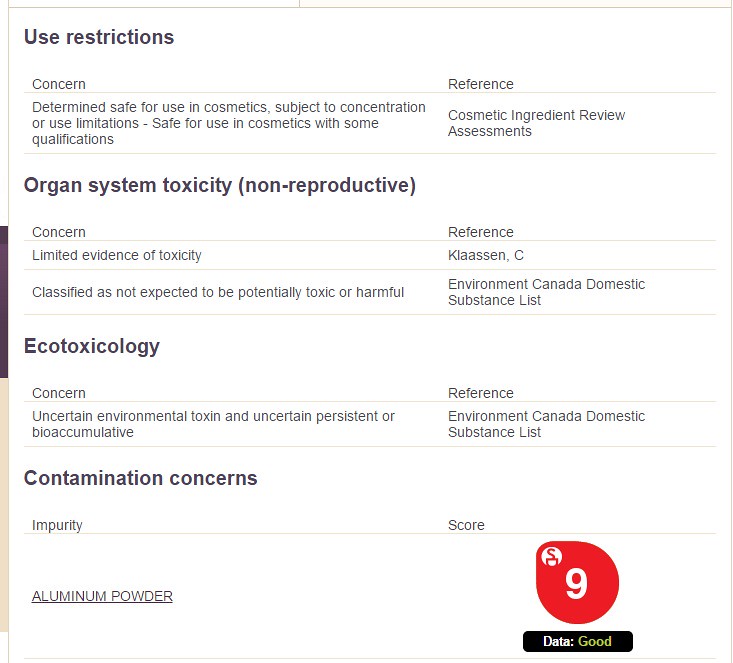
As you can see, the two pieces of information needed to understand the importance of the ingredient are the "about" and "function" of the chemical. Also, the various names would be useful as different manufacturers of different products might choose to use different names. The EWG provides a fair amount of information in the frame shown above. Although, if you type in the chemical name like I did, there is more data on the chemical not shown in the image above. I broke the webpage for "Aluminum Starch OctenylSuccinate" up into three images. Here are the remaining two with additional toxicity data and resources on the references of the information above:
And ...
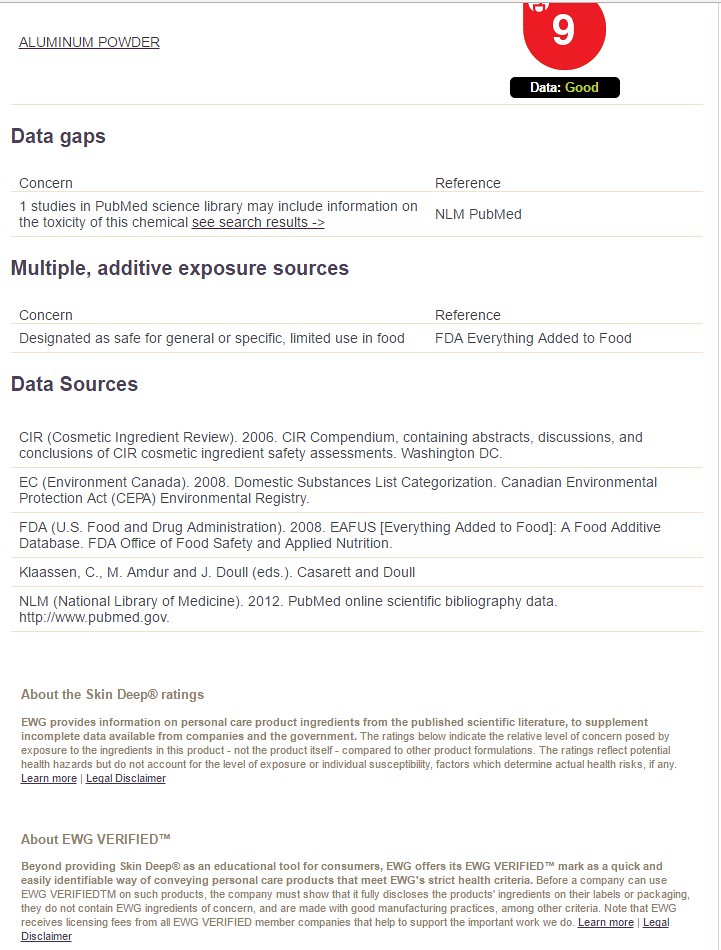
The EWG is one great resource to find information on chemicals in consumer products that are sold on the market. Additional sites do exist along with reference books (like "A Consumer's Dictionary Of Cosmetic Ingredients") which will be mentioned as we explore different products. For the purpose of the introductory post on a "skin firming moisturizer," the EWG will be the sole source of the ingredient list. In the future, you will be able to type in a variation of a name and search for yourself.
I just mentioned that a list of the two types of information would be made about each ingredient. Each ingredient will be underlined and then followed by two sentences. The first sentence will contain the "about" information. Whereas the second sentence will contain the "function" of the chemical in the product.
Note: the information on the ingredient list is taken directly from the website - EWG. This is to illustrate the first pass at deconstructing any ingredient list. In future posts, only relevant functions will be extracted for the product under review.
Remember, click on any of the 30 chemicals listed and you will be directed to the original source -- the EWG website page for the chemical in question.
1) Water:
About: n/a
Function: Solvent
2) Glycerin:
About: Glycerin (also called glycerol) is a naturally occurring alcohol compound and a component of many lipids.
Function(s): Denaturant; Fragrance Ingredient; Hair Conditioning Agent; Humectant; Oral Care Agent;Oral Health Care Drug; Skin-Conditioning Agent - Humectant; Skin Protectant; Viscosity Decreasing Agent; PERFUMING; SOLVENT
3) Cetearyl Alcohol:
About: Cetearyl Alcohol is a mixture of cetyl and stearyl alcohols that can come from vegetable or synthetic sources.
Function(s): Emulsion Stabilizer; Opacifying Agent; Surfactant - Foam Booster; Viscosity IncreasingAgent - Aqueous; Viscosity Increasing Agent - Nonaqueous; EMOLLIENT; EMULSIFYING; EMULSION STABILISING; FOAM BOOSTING; VISCOSITY CONTROLLING
4) Petrolatum:
About: Petrolatum is a semisolid mixture of hydrocarbons obtained from petroleum.
Function(s): Hair Conditioning Agent; Skin-Conditioning Agent - Occlusive; Skin Protectant; EMOLLIENT; MOISTURISING; UV ABSORBER
5) Mineral oil:
About: Mineral Oil is a liquid mixture of hydrocarbons obtained from petroleum.
Function(s): Fragrance Ingredient; Hair Conditioning Agent; Skin-Conditioning Agent - Emollient;Skin-Conditioning Agent - Occlusive; Skin Protectant; Solvent; ANTISTATIC; PERFUMING; SKIN PROTECTING
6) Ceteareth-20:
About: Ceteareth-20 is the polyethylene glycol ether of cetearyl alcohol; may contain potentially toxic impurities such as 1,4-dioxane.
Function(s): Surfactant - Cleansing Agent; Surfactant - Solubilizing Agent.
7) Aluminum Starch Octenyl Succinate:
About: This ingredient is an aluminum salt of chemically modified starch.
Function(s): Absorbent; Anticaking Agent; Viscosity Increasing Agent - Nonaqueous; VISCOSITY CONTROLLING.
8) Cyclopentasiloxane:
About: Cyclopentasiloxane (cyclomethicone) is a silicon-based cyclic compound; may be associated with environmental toxicity.
Function(s): Hair Conditioning Agent; Skin-Conditioning Agent - Emollient; Solvent; SKIN CONDITIONING
9) Acrylates Copolymer:
About: Acrylates copolymer is composed of acrylic acid and methacrylic acid building blocks.
Function(s): Adhesive; Artificial Nail Builder; Binder; Film Former; Hair Fixative; Suspending Agent -Nonsurfactant; ANTISTATIC; BINDING; FILM FORMING
10) Dimethicone:
About: Dimethicone (also called polymethylsiloxane) is a silicon-based polymer used as a lubricant and conditioning agent.
Function(s): Antifoaming Agent; Skin-Conditioning Agent - Occlusive; Skin Protectant; EMOLLIENT; SKIN CONDITIONING; SKIN PROTECTING.
11) Stearic Acid:
About: Stearic acid is a naturally occurring fatty acid.
Function(s): Fragrance Ingredient; Surfactant - Cleansing Agent; Surfactant - Emulsifying AgentSurfactant-Cleansing Agent is included as a function for the soap form of Stearic Acid.; EMULSION STABILISING; MASKING; REFATTING.
12) Glyceryl Dilaurate:
About: Glyceryl Dilaurate is a diester of glycerin and lauric acid.
Function(s): Skin-Conditioning Agent - Emollient; EMULSIFYING.
13) DMDM hydantoin:
About (FORMALDEHYDE RELEASER): DMDM hydantoin is an antimicrobial formaldehyde releaser preservative.
Function(s): Preservative.
14) MethylParaben:
About: Methylparaben is in the paraben family of preservatives used by the food, pharmaceutical, and personal care product industries.
Function(s): Fragrance Ingredient; Preservative.
15) Fragrance:
About: The word "fragrance" or "parfum" on the product label represents an undisclosed mixture of various scent chemicals and ingredients used as fragrance dispersants such as diethyl phthalate.
Function(s): DEODORANT; MASKING; PERFUMING.
16) Butylene Glycol:
About: Butylene glycol (1.3-Butanediol) is a small organic alcohol used as solvent and conditioning agent.
Function(s): Fragrance Ingredient; Skin-Conditioning Agent - Miscellaneous; Solvent; ViscosityDecreasing Agent; HUMECTANT; MASKING; SKIN CONDITIONING; VISCOSITY CONTROLLING.
17) Acrylates/C10-30 Alkylacrylate Crosspolymer:
About: This ingredient is a polymer of actylic acid and related chemicals.
Function(s): Emulsion Stabilizer; Viscosity Increasing Agent - Aqueous; Viscosity Increasing Agent -Nonaqueous; EMULSION STABILISING; FILM FORMING; VISCOSITY CONTROLLING.
18) PropylParaben:
About: Propylparaben is in the paraben family of preservatives used by the food, pharmaceutical, and personal care product industries.
Function(s): Fragrance Ingredient; Preservative; PERFUMING.
19) Hydrolyzed Wheat Protein/PNP Crosspolymer:
About: Hydrolyzed Wheat Protein/PVP Crosspolymer is a crosslinked copolymer of HydrolyzedWheat Protein (q.v.) and PVP (q.v.).
Function(s): Film Former; Hair Conditioning Agent; Hair Fixative; FILM FORMING; HAIR FIXING.
20) Sodium Hydroxide:
About: Sodium Hydroxide is a highly caustic and reactive inorganic base.
Function(s): Denaturant; pH Adjuster; BUFFERING.
21) Arginine:
About: Arginine is a naturally occurring amino acid.
Function(s): Fragrance Ingredient; Hair Conditioning Agent; Skin-Conditioning Agent - Miscellaneous; ANTISTATIC; MASKING; SKIN CONDITIONING.
22) Tocopheryl Acetate:
About: Tocopheryl acetate is a chemical compound that consists of acetic acid and tocopherol (vitamin E)
Function(s): Antioxidant; Skin-Conditioning Agent - Miscellaneous; SKIN CONDITIONING.
23) Centella Asiatica Extract:
About: Extract of the leaves and roots of the medicinal plant Gotu Kola, Centella asiatica.
Function(s): Skin-Conditioning Agent - Miscellaneous; SKIN CONDITIONING.
24) Cocos Nucifera (Coconut) Water:
About: Cocos Nucifera (Coconut) Water is an aqueous solution of the steam distillate obtained fromCocos nucifera.
Function(s): Fragrance Ingredient; MASKING.
25) Hydrolyzed Collagen:
About: Hydrolyzed Collagen is a hydrolysate of animal or fish collagen derived by acid, enzyme orother method of hydrolysis. It is characterized by a significant level of hydroxyproline residues.
Function(s): Hair Conditioning Agent; Nail Conditioning Agent; Skin-Conditioning Agent - Miscellaneous; ANTISTATIC; EMOLLIENT; FILM FORMING; HUMECTANT; SKIN CONDITIONING.
26) Polyimide-1:
About: Polyimide-1 is a terpolymer that is made by reacting poly(isobutylene-alt-maleic anhydride)with dimethylaminopropylamine and methoxy-PEG/PPG-31/9-2-propylamine in a mixture of ethanol andWater.
Function(s): Film Former; Hair Fixative; FILM FORMING.
27) Withania Somnifera Root Extract:
About: Withania Somnifera Root Extract is an extract of the roots of Withania somnifera.
Function(s): Not Reported; SKIN CONDITIONING.
28) Fucus Vesiculosus Extract:
About: Fucus Vesiculosus Extract is an extract of the dried thallus of the bladderwrack alga, Fucusvesiculosus.
Function(s): Fragrance Ingredient; Skin-Conditioning Agent - Miscellaneous; PERFUMING.
29) Hydrolyzed Elastin:
Function(s): HAIR CONDITIONING; SKIN CONDITIONING.
That is all of the ingredients listed on the backside of the bottle of 'Jergens Skin Firming Moisturizer' with 'Hydralucence' technology. The chemical named 'Hydralucence' was not listed on the above list -- why? Because, the name is not of a chemical but of a technology. More specifically, the 'Hydralucence' technology is the propietary blend.
For the time being, the above information shall give you (the reader a start) into thinking about the functions of the ingredients. Notice the following questions remain unanswered regarding the "skin firming lotion" advertised above:
1) What are the toxicities associated with each chemical on the list above?
2) What are the concentrations of each chemical?
3) How do all of the above chemicals function together to provide the marketed claims?
4) What does 'emollient' mean?
5) What is an 'humectant'?
6) What are some of the definitions of the terms listed in the 'functions' section?
These questions along with others will be entertained in the next post. Remember, since the "Anti-Aging Skin Series" is about breaking down the initial post into digestible parts, we must stick with the tradition of doing so. In the meantime, the above list along with the claims in the marketing listing provide you with a few terms and questions to think about until we tackle the functionality and myths associated with the ingredients and claims in the next post -- post 6.
Until next time, Have a great day!
In the paragraphs below, we will look at a skin care product that is supposedly aimed at "skin firming" by 'tightening' or 'toning' the consumer's skin to appear young and healthy skin. Specifically, we will break the blog post into two parts: 1) An Ingredient List and 2) a discussion about the ingredients and functionality of each. Below is part 1 of the first product -- a Skin Firming Moisturizer product.
Here is a picture of the skin care product named 'Jergens Skin FirmingMoisturizer' below:
Without further ado, lets start exploring the skin firming moisturizer in greater detail.
Skin Firming Moisturizer
As I just mentioned, the product that we are exploring today is named 'Jergens Skin Firming Moisturizer' and is specifically for tightening and toning older skin to appear younger. If we look at the product description from the website 'Amazon' -- here is what the site states as a selling point:
About the Product
JERGENS Skin Firming Moisturizer helps you achieve deeply luminous, visibly firmer skin. This unique formula tightens and increases elasticity of celllulite prone skin for visibly firmer results.
Reduces the appearance of cellulite and features a unique illuminating HYDRALUCENCE blend, Collagen, and Elastin.
Improves skin‘s resiliency, elasticity, and firmness. With an exclusive anti-cellulite Firm Perfecting Complex.
Relieves dryness and replenishes moisture to improve skin‘s tone, texture, and luminosity.
The marketing teams behind these products are amazing -- the teams can really sell a product. I have to give credit where credit is due. Of course, this credit is only from a 'selling standpoint' and not from a 'scientific standpoint' -- which we shall explore shortly.
According to the product manufacturer's claim, the skin firming moisturizer is a 'unique formula' that will increase "elasticity of cellulite prone skin for visibly firmer results." Remember this claim along with other mystifying statements like "features a unique illuminating HYDRALUCENCE blend, Collagen, and Elastin." From my read, the last statement is the most true statement: "Relieves dryness and replenishes moisture to improve skin's tone, texture, and luminosity." After going through the ingredient list, these claims will be either proven true or false!
If the container is turned around to reveal the backside of the product container, the statement and ingredients are shown as follows:
and zooming in on the ingredients, the list is shown below:
Remember in the original post that aging skin appears dry, flaky, and saggy due to the loss of 'collagen'. Additionally, the 'saggy' skin is often referred to as 'crepey' skin too. If a product was advertised to 'tighten' and 'tone' skin to make the skin appear to be more youthful skin, then obviously, the product would sell well and appeal to a large audience. I imagine that is the case with the following product under review in this post.
How do the ingredients function to make skin appear 'tightened' and 'toned'?
If the ingredient list is explored into greater detail, a better understanding of the function of each ingredient will become apparent. In the next section, a list will be formed using data collected on a very resource rich website 'Environmental Working Group'. The EWG is a nonprofit organization whose mission is to demystify the harmful ingredients that are contained in consumer products and lobby in Washington D.C. toward safer use of chemicals in consumer products. Their website is dense in information.
One of the overarching goals on the KaiserWellnessCenter blog is to provide you (the reader) with the correct resources that you can use for yourself in your journey toward wellness and a better understanding of the surrounding environment. Below, I will list information 'about' the chemical in question and the 'function' of the chemical in question. You might ask:
Where does this information come from?
One of the chemicals off of the ingredient list is "Aluminum Starch Octenyl Succinate" with an ingredient profile from the EWG that is shown below:
As you can see, the two pieces of information needed to understand the importance of the ingredient are the "about" and "function" of the chemical. Also, the various names would be useful as different manufacturers of different products might choose to use different names. The EWG provides a fair amount of information in the frame shown above. Although, if you type in the chemical name like I did, there is more data on the chemical not shown in the image above. I broke the webpage for "Aluminum Starch OctenylSuccinate" up into three images. Here are the remaining two with additional toxicity data and resources on the references of the information above:
And ...
The EWG is one great resource to find information on chemicals in consumer products that are sold on the market. Additional sites do exist along with reference books (like "A Consumer's Dictionary Of Cosmetic Ingredients") which will be mentioned as we explore different products. For the purpose of the introductory post on a "skin firming moisturizer," the EWG will be the sole source of the ingredient list. In the future, you will be able to type in a variation of a name and search for yourself.
Ingredient List
I just mentioned that a list of the two types of information would be made about each ingredient. Each ingredient will be underlined and then followed by two sentences. The first sentence will contain the "about" information. Whereas the second sentence will contain the "function" of the chemical in the product.
Note: the information on the ingredient list is taken directly from the website - EWG. This is to illustrate the first pass at deconstructing any ingredient list. In future posts, only relevant functions will be extracted for the product under review.
Remember, click on any of the 30 chemicals listed and you will be directed to the original source -- the EWG website page for the chemical in question.
1) Water:
About: n/a
Function: Solvent
2) Glycerin:
About: Glycerin (also called glycerol) is a naturally occurring alcohol compound and a component of many lipids.
Function(s): Denaturant; Fragrance Ingredient; Hair Conditioning Agent; Humectant; Oral Care Agent;Oral Health Care Drug; Skin-Conditioning Agent - Humectant; Skin Protectant; Viscosity Decreasing Agent; PERFUMING; SOLVENT
3) Cetearyl Alcohol:
About: Cetearyl Alcohol is a mixture of cetyl and stearyl alcohols that can come from vegetable or synthetic sources.
Function(s): Emulsion Stabilizer; Opacifying Agent; Surfactant - Foam Booster; Viscosity IncreasingAgent - Aqueous; Viscosity Increasing Agent - Nonaqueous; EMOLLIENT; EMULSIFYING; EMULSION STABILISING; FOAM BOOSTING; VISCOSITY CONTROLLING
4) Petrolatum:
About: Petrolatum is a semisolid mixture of hydrocarbons obtained from petroleum.
Function(s): Hair Conditioning Agent; Skin-Conditioning Agent - Occlusive; Skin Protectant; EMOLLIENT; MOISTURISING; UV ABSORBER
5) Mineral oil:
About: Mineral Oil is a liquid mixture of hydrocarbons obtained from petroleum.
Function(s): Fragrance Ingredient; Hair Conditioning Agent; Skin-Conditioning Agent - Emollient;Skin-Conditioning Agent - Occlusive; Skin Protectant; Solvent; ANTISTATIC; PERFUMING; SKIN PROTECTING
6) Ceteareth-20:
About: Ceteareth-20 is the polyethylene glycol ether of cetearyl alcohol; may contain potentially toxic impurities such as 1,4-dioxane.
Function(s): Surfactant - Cleansing Agent; Surfactant - Solubilizing Agent.
7) Aluminum Starch Octenyl Succinate:
About: This ingredient is an aluminum salt of chemically modified starch.
Function(s): Absorbent; Anticaking Agent; Viscosity Increasing Agent - Nonaqueous; VISCOSITY CONTROLLING.
8) Cyclopentasiloxane:
About: Cyclopentasiloxane (cyclomethicone) is a silicon-based cyclic compound; may be associated with environmental toxicity.
Function(s): Hair Conditioning Agent; Skin-Conditioning Agent - Emollient; Solvent; SKIN CONDITIONING
9) Acrylates Copolymer:
About: Acrylates copolymer is composed of acrylic acid and methacrylic acid building blocks.
Function(s): Adhesive; Artificial Nail Builder; Binder; Film Former; Hair Fixative; Suspending Agent -Nonsurfactant; ANTISTATIC; BINDING; FILM FORMING
10) Dimethicone:
About: Dimethicone (also called polymethylsiloxane) is a silicon-based polymer used as a lubricant and conditioning agent.
Function(s): Antifoaming Agent; Skin-Conditioning Agent - Occlusive; Skin Protectant; EMOLLIENT; SKIN CONDITIONING; SKIN PROTECTING.
11) Stearic Acid:
About: Stearic acid is a naturally occurring fatty acid.
Function(s): Fragrance Ingredient; Surfactant - Cleansing Agent; Surfactant - Emulsifying AgentSurfactant-Cleansing Agent is included as a function for the soap form of Stearic Acid.; EMULSION STABILISING; MASKING; REFATTING.
12) Glyceryl Dilaurate:
About: Glyceryl Dilaurate is a diester of glycerin and lauric acid.
Function(s): Skin-Conditioning Agent - Emollient; EMULSIFYING.
13) DMDM hydantoin:
About (FORMALDEHYDE RELEASER): DMDM hydantoin is an antimicrobial formaldehyde releaser preservative.
Function(s): Preservative.
14) MethylParaben:
About: Methylparaben is in the paraben family of preservatives used by the food, pharmaceutical, and personal care product industries.
Function(s): Fragrance Ingredient; Preservative.
15) Fragrance:
About: The word "fragrance" or "parfum" on the product label represents an undisclosed mixture of various scent chemicals and ingredients used as fragrance dispersants such as diethyl phthalate.
Function(s): DEODORANT; MASKING; PERFUMING.
16) Butylene Glycol:
About: Butylene glycol (1.3-Butanediol) is a small organic alcohol used as solvent and conditioning agent.
Function(s): Fragrance Ingredient; Skin-Conditioning Agent - Miscellaneous; Solvent; ViscosityDecreasing Agent; HUMECTANT; MASKING; SKIN CONDITIONING; VISCOSITY CONTROLLING.
17) Acrylates/C10-30 Alkylacrylate Crosspolymer:
About: This ingredient is a polymer of actylic acid and related chemicals.
Function(s): Emulsion Stabilizer; Viscosity Increasing Agent - Aqueous; Viscosity Increasing Agent -Nonaqueous; EMULSION STABILISING; FILM FORMING; VISCOSITY CONTROLLING.
18) PropylParaben:
About: Propylparaben is in the paraben family of preservatives used by the food, pharmaceutical, and personal care product industries.
Function(s): Fragrance Ingredient; Preservative; PERFUMING.
19) Hydrolyzed Wheat Protein/PNP Crosspolymer:
About: Hydrolyzed Wheat Protein/PVP Crosspolymer is a crosslinked copolymer of HydrolyzedWheat Protein (q.v.) and PVP (q.v.).
Function(s): Film Former; Hair Conditioning Agent; Hair Fixative; FILM FORMING; HAIR FIXING.
20) Sodium Hydroxide:
About: Sodium Hydroxide is a highly caustic and reactive inorganic base.
Function(s): Denaturant; pH Adjuster; BUFFERING.
21) Arginine:
About: Arginine is a naturally occurring amino acid.
Function(s): Fragrance Ingredient; Hair Conditioning Agent; Skin-Conditioning Agent - Miscellaneous; ANTISTATIC; MASKING; SKIN CONDITIONING.
22) Tocopheryl Acetate:
About: Tocopheryl acetate is a chemical compound that consists of acetic acid and tocopherol (vitamin E)
Function(s): Antioxidant; Skin-Conditioning Agent - Miscellaneous; SKIN CONDITIONING.
23) Centella Asiatica Extract:
About: Extract of the leaves and roots of the medicinal plant Gotu Kola, Centella asiatica.
Function(s): Skin-Conditioning Agent - Miscellaneous; SKIN CONDITIONING.
24) Cocos Nucifera (Coconut) Water:
About: Cocos Nucifera (Coconut) Water is an aqueous solution of the steam distillate obtained fromCocos nucifera.
Function(s): Fragrance Ingredient; MASKING.
25) Hydrolyzed Collagen:
About: Hydrolyzed Collagen is a hydrolysate of animal or fish collagen derived by acid, enzyme orother method of hydrolysis. It is characterized by a significant level of hydroxyproline residues.
Function(s): Hair Conditioning Agent; Nail Conditioning Agent; Skin-Conditioning Agent - Miscellaneous; ANTISTATIC; EMOLLIENT; FILM FORMING; HUMECTANT; SKIN CONDITIONING.
26) Polyimide-1:
About: Polyimide-1 is a terpolymer that is made by reacting poly(isobutylene-alt-maleic anhydride)with dimethylaminopropylamine and methoxy-PEG/PPG-31/9-2-propylamine in a mixture of ethanol andWater.
Function(s): Film Former; Hair Fixative; FILM FORMING.
27) Withania Somnifera Root Extract:
About: Withania Somnifera Root Extract is an extract of the roots of Withania somnifera.
Function(s): Not Reported; SKIN CONDITIONING.
28) Fucus Vesiculosus Extract:
About: Fucus Vesiculosus Extract is an extract of the dried thallus of the bladderwrack alga, Fucusvesiculosus.
Function(s): Fragrance Ingredient; Skin-Conditioning Agent - Miscellaneous; PERFUMING.
29) Hydrolyzed Elastin:
Function(s): HAIR CONDITIONING; SKIN CONDITIONING.
That is all of the ingredients listed on the backside of the bottle of 'Jergens Skin Firming Moisturizer' with 'Hydralucence' technology. The chemical named 'Hydralucence' was not listed on the above list -- why? Because, the name is not of a chemical but of a technology. More specifically, the 'Hydralucence' technology is the propietary blend.
Conclusion . . .
For the time being, the above information shall give you (the reader a start) into thinking about the functions of the ingredients. Notice the following questions remain unanswered regarding the "skin firming lotion" advertised above:
1) What are the toxicities associated with each chemical on the list above?
2) What are the concentrations of each chemical?
3) How do all of the above chemicals function together to provide the marketed claims?
4) What does 'emollient' mean?
5) What is an 'humectant'?
6) What are some of the definitions of the terms listed in the 'functions' section?
These questions along with others will be entertained in the next post. Remember, since the "Anti-Aging Skin Series" is about breaking down the initial post into digestible parts, we must stick with the tradition of doing so. In the meantime, the above list along with the claims in the marketing listing provide you with a few terms and questions to think about until we tackle the functionality and myths associated with the ingredients and claims in the next post -- post 6.
Until next time, Have a great day!
Subscribe to:
Posts (Atom)