Showing posts with label plants and food. Show all posts

Sunday, June 9, 2019

Fresh Produce and Healthy Fats

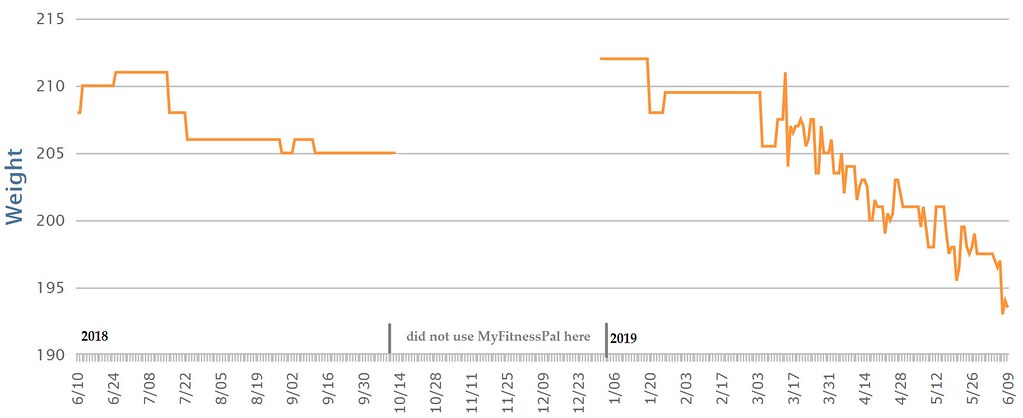
In 2018 I was obsessed with cooking whole grains and beans. Unfortunately this low-cost, high-carbohydrate diet did not help me escape obesity. In 2019 I have been following The IVF Diet, which I also refer to as a Garden of Eden diet. I have lost about 15 pounds so far, but I would have to lose 50 pounds more to reach a "normal" BMI. Now that I have found a method that is working, I will be sticking to it until it does not work anymore.

Farmer's Market haul from May 19, 2019
Living in California has been great, since we can go to the Farmer's Market and get most of what we need. If I had the discipline, I would write down the prices we pay for these items at the Farmer's Market, but to be honest I do not enjoy tracking cash transactions. Many people have an idea that the Farmer's Market will be more expensive, but I doubt that. When you consider that you are eliminating carbon cost associated with supply chain, and you are getting fresher produce (less wasting rotted fruit and vegetables), then you might be getting more than what you pay for.

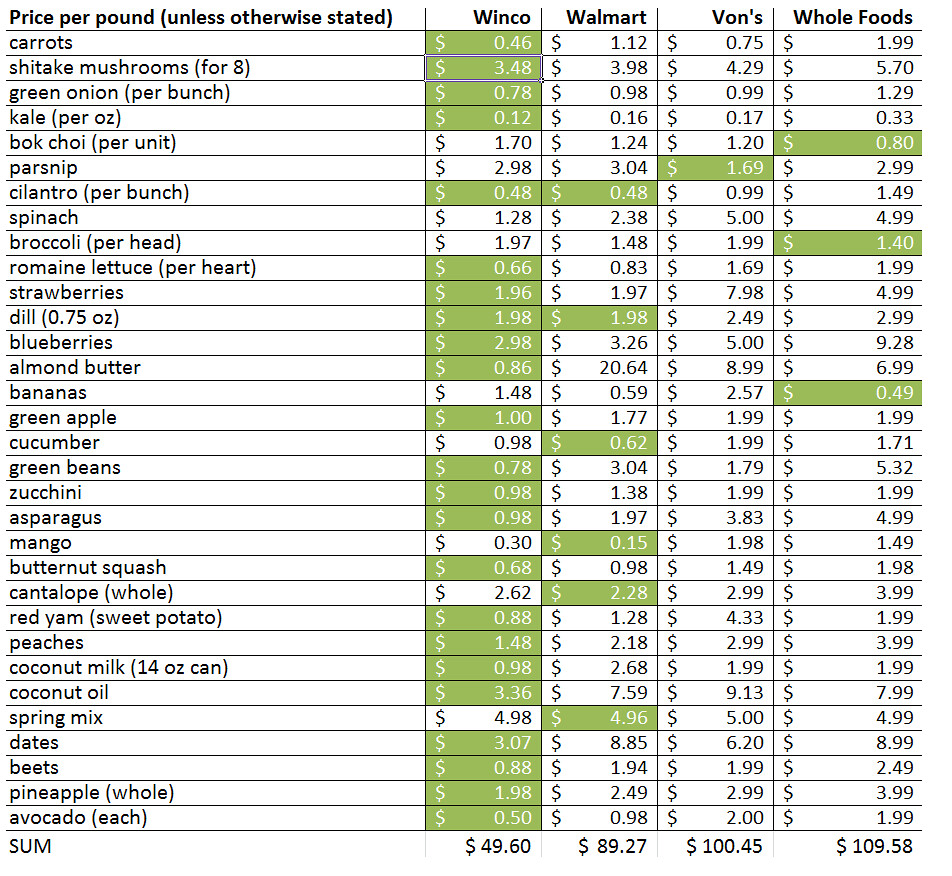
What I can share with you is saved receipts from the grocery stores for the past few weeks. We have been eating according to a Two Week Cleanse that eliminates most dairy and gluten. Here are my results. The items are in no particular order.

Cheapest source is highlighted in green
Similarly to what I found in a previous analysis, Winco is the cheapest place to get the items we need for the diet. It is not as dramatic since the items above are fresh and not found in bulk bins, but there are a few notable exceptions. The almond butter machine inside the store at Winco is amazing! I also discovered that Winco has pitted dates in the bulk section.

Side note: I was almost forcibly removed from Walmart when they noticed that I was writing down prices in my notebook. Their argument was that I could have checked all the prices from home using their shopping app, but I preferred to check them in person at the store. I explained that the information was "just for me" since I am on a new diet and eating the same items every two weeks. I believe I have a right to comparison shop to get the best prices in my local area (Los Angeles).

Unfortunately, we live 40 miles from the nearest Winco. We have a car that gets 25 mpg highway. With gas prices around $4 per gallon, it costs $13 to drive to Winco and back. Compared to our local store (Von's) and the organic retailer (Whole Foods), the savings are worth the drive. You can find the shopping list for week 1 of the diet in the previous post. Happy shopping!

Why am I not losing weight while working out?

I asked myself this question exactly 6 months ago. I started using MyFitnessPal (a free app for tracking what you eat, drink and do). I did not have an answer to that question at the time, because I was not experiencing success. But since I am having success now, I want to tell you what I am doing that is working.

Full disclosure, I am a 38-year old woman with a BMI between 35 and 40. Although I was intaking 1700 calories per day, working out, and taking vitamins (micronutrients), I was not considering macronutrients. I did not imagine that balancing protein, carbs and fat would have any impact. After taking a break from MyFitnessPal tracking due to a software issue that did not allow me to log in, I restarted using it in the new year.

https://www.myfitnesspal.com/reports
We got Fitbit watches about 10 months ago, which initially I thought was a great way of tracking steps without having to carry my phone everywhere. Previously I was using Google Fit, but after they changed their interface to this weird circle thing that I can't seem to understand, I kind of quit paying attention to it. The good thing is that you can sync these apps so that the data is shared among them. That way, you can visualize it in any of the apps.

https://www.google.com/fit/
I find it interesting seeing how Fitbit (Alta HR) tracks heart rate and sleep. What I really wanted was just a rechargeable watch. The battery life is really good, I only recharge it maybe once a week. Yet with MyFitnessPal, Fitbit and Google Fit together, I was not able to lose weight like I needed to.

https://www.fitbit.com/activities
We are on a project now to get pregnant. One of the pieces of advice given was to adjust the macronutrient intake to greater than 25% protein and less than 40% carbohydrates. I had never paid that much attention to "macros" but it seems to have helped my body shed fat. The way it was explained to me is that you log everything you are eating into the MyFitnessPal app and then, click on the diary. Add your foods, then click on the pie chart icon.

MyFitnessPal: Nutrition, Macros, Day View
If you have not had enough protein before dinner, be sure to have a protein-heavy meal as your last meal of the day. But definitely consider adding protein to EVERY meal otherwise it will be impossible to achieve this result. I was relying on my own inspiration and creativity for a brief time in mid-March. It was getting disgusting trying to eat a chicken breast and 5 hard-boiled eggs every day.

Then we got a book in the mail called The IVF Diet, but I also refer to it as the "Garden of Eden" diet. You are taking lots of nuts and berries. At first glance, it seemed too complicated. There were too many ingredients. But I think that is why it is working. It is a diverse array of foods, with an emphasis on lean protein, medium-chain triglycerides (MCTs), omega-3 fatty acids, and colorful fruits and vegetables.

The IVF Diet: Week 1 Shopping List
The first week, we went to Whole Foods and filled up 2 shopping carts. It cost $350 which we thought would be too expensive to continue. What we found is that each subsequent week got easier. Many of those items last for a month or longer. We actually lowered our monthly food spending since we are eating at home and not getting takeout.

I would say that this could be a diet for anyone. When my doctor told me to "eat healthy," I did not know what that meant. I was so frustrated and disappointed with my unsuccessful attempts to lose weight by caloric restriction and exercise alone. So if you are stuck at a weight that is unsatisfactory for you, maybe it is time to consider tracking your macros.

Monday, July 16, 2018

20 Tasks to Simplify your Life

I aim to keep this post simple, but also to reflect on what I've done with my "summer off." I had a fear that if I turned down work, I would never be offered work again. This all-or-nothing type of thinking is not healthy. I also had a stigma associated with collecting unemployment. But this financial safety net has allowed me the freedom to buy and do things to make our lives better. This in turn makes us happier and better members of our community.

1) old mail = shred


I have a bad habit of letting mail pile up on our dining room table and then putting it in a bag and then putting that bag in the garage. I did this for years. Then I watched "hoarders" on netflix and got in gear. I started shredding this stuff by hand and then remembered that I could just as well take it to school. Plus side, I found some unused gift cards!

2) old papers = shred


I have a habit of keeping all student work and fearing throwing it out either because I thought I would forget what I've done in the classroom and also for reasons of confidentiality. Our mail services at CSUN has a program where you can request a trashcan for shredding and they do it for you. So I purged out so many old papers.

3) craft supplies = organized


I think it's every crafting diva's dream to have a 'craft room' where all the supplies are organized and accessible and projects can be started and stopped with ease. I can't say I have a 'craft room' but I do have a 'craft closet' and an oversized guest bedroom where I can do my papercrafts. Husband says no needles on carpeted floors, which I get, so the sewing machine is still in the garage.

4) bike supplies = organized


I'm sure it's also every gearhead's dream to have an organized garage where they can do maintenance and cleaning, to keep their equipment in tip top shape for the next adventure.

There's a funny store here in Northridge called "Mr. Stuff" and they have some really random inventory. One thing we bought there is this cart on wheels, which works really nicely for bike stuff. We've had it for 10 months now and I would say it is one of the best purchases I've made in the last year. It holds inner tubes, bike lights, helmets, locks, gloves, hats, bandannas, pumps, bags, all the things you need to grab and go. We built a bike rack to hold all our bikes and we have a bike stand to use when we need to clean or fix the bikes. These investments have lowered our stress and anxiety to make living a bikelife more enjoyable.

5) medicines = returned to pharmacy


I'm not sure if you have old prescription medications in you medicine cabinet, but I did. I had three bottles from 2008 and one from 2012. I knew that you can't flush them down the toilet because they can contaminate the municipal water supply or end up in the ocean, but I didn't know what was the best thing to do with them. Turns out Walgreen's pharmacies in California have a dropbox for this purpose. Not every location has one, so check online before you go.

6) electronics = recycled


We had two old cell phones, two old digital cameras, and a bunch of batteries that we dropped off at the Solvents/Automotive/Flammables/Electronics (S.A.F.E.) center. Now that I'm re-reading their flier, I should have also taken some old spray paint. Even though dear husband points out that landfills are sealed so that toxic wastes do not escape, I feel like this option may lead to reclaiming the trace amounts of rare earth elements that are present in our devices.

7) work office = organized, purged


This is an every semester thing, but it's important. I go through the stacks of chaos and rearrange important items into 3-ring binders. What paper can be recycled is put into a recycling bin. What paper must be shredded is sorted into the shredding bin. What supplies can be diverted into other chemical storage areas are moved from the office to the "Chem Club Room."

8) bedroom = new pillows & sheets


Not that this would bother everybody, but it bothered me. Our fitted sheets kept coming off the mattress. We had one set of cheap sheets, which didn't work at all. We went back to buy a more expensive set of sheets, which also didn't work but we tolerated them for over a year. Finally, I took those gift cards that I found going through the old mail and converted them into very expensive Martha Stewart sheets from Macy's. I also got new pillows. There are some things that you just can't buy used and I believe that pillows are one of those things.

9) home office = new bookshelf


There's a bookshelf that was in our garage when we moved in over a year ago. It's really nice and I always felt that it should be upstairs in the "library" a.k.a. guest bedroom a.k.a. craft room. But it was really heavy. Luckily, since we've been doing a new workout program, we're stronger. We finally carried that upstairs and it's just beckoning me to fill it with books.

10) computer = backed up


The cost of removable hard drives has come down so far. I got a new computer and used a removable hard drive to transfer files from the home computer to the new work computer. There's something satisfying about using a new, fast computer to search your old files.

11) bills = auto pay


It sounds so silly, but I've been paying bills each month manually over the phone. I finally got the monthly bills on autopay and it feels so great.

12) vitamins = restocked


I haven't been a big believer in vitamins, or maybe I should say that I go in phases. Anyhow, I threw all the expired vitamins out and bought new ones. Yeah, one could argue that calcium doesn't go bad like acetaminophen goes bad, but you never know what coatings and inert ingredients may do when left unattended or worse in hot storage units or in a hot garage. 

13) contact lenses = restocked


I am not sure why I'm so averse to doctor's offices, maybe it's the cost or the fear of finding out there's something seriously wrong with me. I also don't like to face the idea that I should get new glasses (for me a $600 investment). But I finally found a new optometrist in our new neighborhood and got the exam to get the new 1-year inventory of contact lenses.

I should say that part of simplifying your life involves adulting. Tasks such as sorting out what your insurance covers like ob-gyn, dental and vision. We've delved into doing this and although scary and intimidating, it's important to know what you don't know (known unknowns and unknown unknowns). That way when you really need it (in an emergency) it's already sorted.

14) seeds = harvested


Not everyone has a garden, and I get that, but I do. I feel so great now that my seeds are sorted. I use old cosmetic bags to sort them into families, that way when I want to share seeds or plant something I don't have to dig through the entire library.

15) car = washed, oil changed, registered, insured


Living a bikelife tends to lead to neglecting our car. We only have one car and it's very tiny. I swear I haven't taken it to a car wash in like 5 years until recently. Also, it was important to establish a new relationship with a service station for oil changes. The DMV has a kiosk where you can pay your car registration, and now there's even one of those kiosks at the grocery store!

16) junk email = unsubscribed


This may sound like a silly thing, but instead of spending idle time deleting junk emails, I spent a few hours (while waiting for the oil change and at the optometrist) unsubscribing from all the email lists that I am on. I got this idea from my students years ago (before I got a smartphone) and I finally spent the time doing it. Now when I check my inbox, it's all stuff I actually want to look at.

17) podcasts = subscribed


I spent time (and energy) looking for stuff to listen to on long drives (where there is not good radio reception) and now I'm on the podcast bandwagon. I downloaded an app called Castbox which automatically downloads podcasts I've subscribed to so that I can listen to them offline. I also want to say that Hoopla has changed my life. I listen to audiobooks there, which can also be downloaded.

18) laundry = washed


I love my laundry situation now. I finally got around to cleaning the washer and dryer (which used to live outside) and I bought more laundry soap. There's a luxury that I don't take for granted in having W/D hookups and the space for my drying racks. I have a fabulous clothing rack on wheels that is so easy to move around the garage. And hot days are perfect for drying laundry.

19) closet = sorted, purged, updated


What I have done in my closet is simplify, label and keep lean. Labeling all my drawers and bins helps dear husband contribute to putting away his and hers laundry.

20) bathroom = cleaned, purged, organized


Finally, cleaning the bathroom involved throwing away old lotions and cosmetics that are expired. See also 5, 12 and 13. It was fun going to the drugstore to get new contact lens solution and sunscreen and vitamins knowing there are empty spaces which they can go to. I read that one of the reasons people don't like dockless bikeshare in cities is because the bike seem like they are never "put away." Now I didn't grow up in a house where things got put away, we had quite a cluttered upbringing, and some say that clutter is a symptom of creativity, but also I've read that when things are put away it brings a sense of calm and peace. I like the sound of that.

Friday, July 6, 2018

Summer Garden in bloom

I am LOVING my summer garden and it's thanks to a wet March. We had two inches of rain over normal, which set up my soil and got my seedlings started perfectly. With a few hot days, we had a relatively normal spring temperature-wise with no late frost, so that also helped everything survive.

before
after
Unfortunately, today we have excessive heat. To mitigate the damage, I added burlap coverings to the new vertical garden shelf and to some of my growboxes. The "Garden Patch" growboxes have holes in the four corners, which are for the polypropylene (fiberglass) Staking Kit. 

For the vertical shelf (below) I drilled holes into the wood. I used a wire hanger and some of the leftover pieces from the Staking Kit to create supports. The burlap was purchased from Home Depot in a roll, which I cut in half. It's not a perfect system, but hopefully it's better than no shade.

I do need to buy "Mosquito Dunks" to prevent the standing water in the bottom of the growbox from becoming a breeding ground for pests. I had a mist cooling setup, but water was pooling in the trays and I saw bugs hatching in the excess water. So I dumped the water and let the trays bake in the sun for a few days.

I used the "Nutrient Patch" on a non-Garden Patch container. I planted every-other slot with salad greens and it worked out really well (no weeds). I wouldn't say that box was more productive than the boxes without a Nutrient Patch, but they were in a different locations so it's hard to compare.

before
after
I'm super excited to harvest seeds from my radish and arugula. The lettuce just started bolting. I got some new succulents and a friend said he'd be happy to share some clones with me. Something completely ate the two varieties of kale, which I'm sad about, but I'll replant for a fall/winter garden.

I have two 'Husky Cherry Red' tomato plants, one 'Jubilee' tomato plant, one 'Red Bull' pepper plant and one 'Jalapeno' pepper plant that are now 110 days old. Of the seeds I planted in March, it's good that some of them may grow to adulthood. I guess it's almost time to plan the winter garden.

There are some recent news articles about Californians going back to water usage at pre-drought levels. I am guilty of this. I had grown fewer and fewer vegetables and leafy greens in order to save water (growing cacti and succulents instead) but I'm going back to growing food since we had a wet enough winter to refill our reservoirs. 

Until water restrictions are reenacted I will continue attempting to produce home-grown veggies. Technically, we're still in a 'Severe Drought' so we'll see what happens between now and winter. There's a trade-off in sustainability between buying fruits and veggies that are trucked in versus home grown fruits and veggies. At least I can be sure my home-grown produce is organic. 

Wednesday, March 28, 2018

Summer Garden 2018

I may have started too late for a summer garden of my dreams. I'm still trying to get used to the weather here in the valley.

From the winter garden I started in August of last year there remains: chard, kale, radish, okra and marigold. The poor eggplant seemed great and then died suddenly. Maybe it was cold stress, drought stress, or light stress.

A post shared by Kayla Kaiser (@hamerk02) on

I don't remember when I started organizing my seed into plant families, I guess it was just starting to grow out of control and I couldn't find anything. Making a label on the outside of the bag was a great way to find exactly what type of plant I was looking for without digging through every single bag. The bags I get free during Clinique bonus week and since I'm not really a make-up-a-holic, I use the bags to sort and store my seeds. I put all these little bags into a camo backpack that I can sometimes take with me to the Seed Library of Los Angeles (SLOLA) meetings.

This past month we had a talk from David King the founder of SLOLA and he spoke about planning for our summer gardens. He specifically went over the considerations for seed-saving. He is a teacher through UCLA Extension and the garden master at the Venice High School Learning Garden.

David encouraged us to set a goal and be clear at the start of a project (or season). That way you know when you are approaching, meeting and exceeding your goal. He said that it's easy to give away seeds, but it's hard to be persistent. In other words, it's not always the first time around that you will be able to get a yield of seeds back from what you plant.

For us in the valley, a concern is that pollen is killed at temperatures above 85 degrees F so that you will have to get up early if you want to hand-pollinate your plants.

Beans - let them become very dry on the plant. Put them in a plastic bag and freeze for 3 days. You can get seeds from the grocery store bulk bins. They will germinate.

Peppers - can cross pollinate. To prevent unintended hybridization, put cloth bags around the flowers. They are "perfect flowers" because they can self-fertilize.

Tomatoes - can cross pollinate. Pollination is typically by wind. Cherry tomatoes cross pollinate by insects. They also can self-fertilize.

Squash - susceptible to powdery mildew. If you plant now, you can harvest in July. Then plant in July for a winter harvest. You need male and female flowers, so plant as many as you can.

Tomatillo - similar to tomato and pepper. It's not as common so there's low risk of cross-pollination. Unlikely that your neighbors will be growing it.

Amaranthaceae - includes spinach, sugar beet, chard, quinoa. These are wind pollinated. The pollen can travel up to 25 miles.

Corn - typically hand pollinated. Combine 3-5 tassles in a paper bag. Shake it. Dump the pollen on the silk. This yielded him 35 kernels per ear. Corn pollen can travel 250 miles under ideal conditions.


Here's what seeds I've planted. So far the lettuces have popped right up. A variety of the flowers have also sprouted but I mixed them up so I doubt I'll know which is which until they get larger. You can follow the progress of these plants in my facebook album.


Also, I only planned to plant the spinach and eggplant, but never did it (oops) will try to get those on (in) soil today or tomorrow. Happy Cesar Chavez day, California!


I feel as though the plants have entrusted me to be a steward of their progress. I am constantly humbled by some plants' ability to survive under my lack of care. And I am surprised when those plants reward me with their fruits. I made the most amazing salad of radish and chard for the SLOLA meeting! 🌱

Sunday, January 14, 2018

Grains, beans, nuts and seeds

This year, we are trying a regimen of whole-grain cooking. To this end, I am learning more about grains, beans, nuts and seeds. Actually each of these are the seed of a different plant, so they all contain nutrients needed to sustain life.
"Grains are the seeds of grasses. Examples include: wheat, corn, oats, and rice. Beans are the seeds of legumes. Examples include: peas, lentils, soybeans, and chickpeas. Nuts are the seeds of trees. Examples include walnuts, hazelnuts, and pecans. And seeds are…well…seeds. Examples include sesame seeds, poppy seeds, and sunflower seeds."

Food

Latin Name

Order
Glycemic Index
Barley* Hordeum vulgare Poales 25
Wheat berry*Triticum aestivum Poales 45
Bulgar wheat*Triticum aestivum Poales 47
Wheat bran* Triticum aestivum Poales 60
Couscous* Triticum aestivum Poales 65
Chickpea Cicer arietinum Fabales 10
Soybean Glycine max Fabales 18
Lentil Lens culinaris Fabales 28
Black bean Phaseolus vulgaris Fabales 30
Pinto bean Phaseolus vulgaris Fabales 30
Sunflower seed Helianthus annuusAsterales <20
Poppy seed Papaver somniferum Ranunculales <20
Chia Salvia hispanica  Lamiales <20
Sesame seed Sesamum indicum Lamiales <20
Flax Linum usitatissimum Malpighiales <20
Buckwheat Fagopyrum esculentum Caryophyllales 45
Quinoa Chenopodium quinoa Caryophyllales 53
Hominy Zea Mays Poales 40
Polenta Zea Mays Poales 68
Rice Oryza sativa Poales 50
Oats Avena sativa Poales 55
Millet Pennisetum glaucum Poales 67

* Contains Gluten

We've had a successful 2017 with our Kaiser Wellness Center tumblr recipe blog. With the addition of a George Foreman grill and a pressure cooker, I hope to continue adding successful healthy recipes throughout 2018. See previous post for a discussion of glycemic index.


If you're wondering where to find whole grains at a low price, look no further than WinCo Foods. Note: you must be comfortable buying from bulk bins.

Whole Foods, Porter Ranch
Removing the items not available at one or more stores, that leaves us with 15 items which can be purchased at all 4 stores. If you purchased one pound of each item, the total cost is shown below for comparison. For us, we would have to drive almost 40 miles to any of the nearest WinCo stores, but since we get 40 mpg that is just 2 gallons of gas (approximately $8), well worth the price difference. And we just have to remember to visit WinCo when we visit family, when we're making the trip already.

WinCo             $21.45
Walmart           $61.95
Whole Foods   $66.53
Von's                $65.23

Also, some of the items (e.g. couscous and polenta) must be ordered online for in-store pick-up at WalMart and delivery via Amazon for Whole Foods and is not routinely stocked at our nearest store location.  WinCo has all these items in stock, in the bulk section, with the exception of poppy seeds.


Brown rice, pearled barley, green lentils

Comparing the prices of some dry beans

Removing the items not available at one or more stores, that leaves us with 7 items which can be purchased at all 4 stores.

WinCo             $  7.27
Walmart           $10.52
Whole Foods   $21.23
Von's                $16.13

The beans below were purchased in Long Beach while Mike was attending the CSULB Student Sustainability Coalition meeting on Friday, April 20th.


References


Joseph Mercola and Kendra Degen Pearsall. Healthy Recipes for Your Nutritional Type (The Perfect Companion to Dr. Mercola's book Take Control of Your Health). 2007, Mercola.com, p 261.

Judith Finlayson. The complete whole grains cookbook. 2008, R. Robert, p 218.

Sheryl London and Mel London. The versatile grain and the elegant bean: a celebration of the world's most healthful foods. 1992, Simon & Schuster.

Thursday, January 11, 2018

Winter Garden Progress

As a teacher, I'm always optimistic at the start of the semester! It seems appropriate to start a batch of seeds and watch tangible growth as the academic year progresses. The image below shows the layout of my seed starting trays, filled with seed-starting soil. I don't know if it is actually critical to have this type of setup, but I usually have good results with it.


I also have indicated the year in which the seeds were harvested (or printed date if the seeds were not collected by myself). I did a bit of research on the optimum germination conditions and timing for the seeds I planted. Fall 2017 overall was unusually warm, so I don't know if that effected my plants in a good way or in a bad way.


I can say that I borrowed seed stocks from the Seed Library of Los Angeles (grey zucchini squash, Tondo di Piacenza squash, and Rosa Bianca eggplant). I arranged the trays in a window box (extremely sunny) inside our house (not too hot) and right near the sink (to not forget to water them).


I kept a tally of which seeds germinated, and roughly how long the seedlings took to emerge. In October, I transferred them outdoors in hopes that we would have cooler wetter weather on the way. However, cooler weather was not in the forecast (hindsight is 20/20).


It looks like the Tondo di Piacenza squash maybe needs warmer weather or longer days to encourage germination? Possibly same with lettuces? Or maybe the bean seeds need to be scarified. Or maybe I planted them too deep, lettuce seeds need light to signal germination. Or maybe the Red Lettuce is too old or didn't fill its seeds well when it was setting on seeds.


I killed that praying mantis by putting her outside on the blacktop, then did a bit of reading and found out that she would not have been harmful to the garden. Still feeling a bit guilty about doing that. I did have an aphid infestation, but left it for months untreated since it's only advised to apply dormant oil when the temperature is above 40 deg F but below 90 deg F. Thus I have only applied it this past weekend (Jan 7, 2018).

A post shared by Kayla Kaiser (@hamerk02) on


I made an idealized layout of where everything should end up, which is important because certain plants protect other plants from pests (for example marigold is an effective trap crop). And some plants engage in chemical warfare with each other, preventing one or the other from growing optimally (for example geranium is not good for solanales). Some plants bring out the best in other plants, so they should be nearby each other (basil is said to be beneficial for tomato).


You can see actual photos of the seedlings here: Winter Garden Album on Facebook

The Bad News: The geranium finally died, so it has been removed. The peppers also have been retired. I never found any zinnia. There's no basil. I have never had luck germinating beans, so there are none of those. The squash didn't survive, not sure why. I didn't plant any carrots or peas. The mustard didn't survive. The tomato is long gone by now. The lettuces didn't survive.

The Good News: Starting in the upper left corner of the map above, one okra plant is alive. A strong crop of chard is nearby. Everything on the upper right corner of the map above has been retired or relocated.  The lower left corner holds 2 Rosa Bianca eggplant, 2 French (dwarf) marigolds, 1 large radish and 7 smaller ones. We have 2 Lacinato kale plants and 1 Red Russian kale that survived.


I'm so happy we're past the winter solstice. I can feel each day being longer than the preceeding one and before we know it, we'll be back in summer! I am planning to plant some seeds soon, to get another round of lettuce, spinach, herbs, squash, tomatoes and peppers. I have posted some gardening guides on our Kaiser Wellness Center website, which I refer back to often when deciding what to plant and when. Since I don't have a public garden anymore, I really have given up tagging each plant with a QR code. Maybe I'll repurpose the QR codes for some other application.

Friday, April 28, 2017

Superbloom

Adapting to the drought was difficult, since I have a desire to grow edible fruits and vegetables in my (front and) backyard.  I picked up mainly succlents and cacti in 2016.  But then we got to the start of 2017, which turned out to be the sixteenth wettest stretch in Southern California since World War II.


Take for example, this container I planted several years in a row with California and New Mexico native wildflowers.  This year, a spray of Lasthenia californica (common name: goldfields) & Eschscholzia californica (common name: golden poppy) appeared.  The photo above was taken on March 31, two weeks after settling in our new location in Northridge, CA.


The container garden made the move with us, and all the plants have survived relocation.  Many of my succulents are flowering, Graptopetalum paraguayense (common name: Ghost plant) has pretty grey leaves with a pinkish cast and a delicate little flowers on an extended stem.  You can see a bit of Senecio mandraliscae (common name: Blue chalk sticks) below.


I love the chocolatey color of Echeveria compressicaulis leaves and it looks like it's putting out an impressive raceme.  I can't wait to see how the flowers look when they open. It is framed in this photo by Crassula tetragona (left), Crassula argentea (right), Sedum pachyphyllum (upper right), and Portulacaria afra (above).


I love how this photo makes it look like the perimeter of each leaf is hand-stitched.  This is Crassula pellucida subsp. marginalis 'Variegata' (nickname: Calico Kitten).  If that's not one of the sweetest things you've ever seen, I don't know what's wrong with you.  You get just a glimpse of Graptopetalum paraguayense to the left.

The beauty above started flowering before we moved.  Sedum clavatum is comprised of frosty blue-green rosettes named for 'clava' meaning "club" for the baseball shape of the sepals.  The complexity of these tiny flowers is mesmerizing. A compact inflorescence of many white star-shaped flowers appears in spring to early summer that take a pink hue with age.


I always know the end of the school year is near when I see my Echinopsis chamaecereus (common name: peanut cactus) flowering (see prev. post). You can also see a handy pollinator. I've already had good luck with harvesting seeds, so I know the winged creatures are doing good work. We've also seen many of the crane fly this season, but they are not attributed with much pollination work.


I love the more squat Rebutia krainziana and its bold orange flower.  I've been reading about the sacral chakra and the mantras associated with it: I am inspired.I am creative.I am joyful.I am in control.I am unique.I am special.I Feel. RIP to my Opuntia basilaris and Gymnocalycium mihanovichii. One got too much water and I'm not sure what happened to the other, but they're both shriveled up and dead now.


Last but not least, I will leave you with a flower of Capsicum annuum. Three out of the seven pepper plants I had last year survived the winter.  However, I won't really know which is which until they produce fruit!  The tomato (Solanum lycopersicum) 'Cosmic Eclipse' is still producing as well.  I don't know how they'll fare in the heat of the summer, but I'll enjoy them for as long as they live.


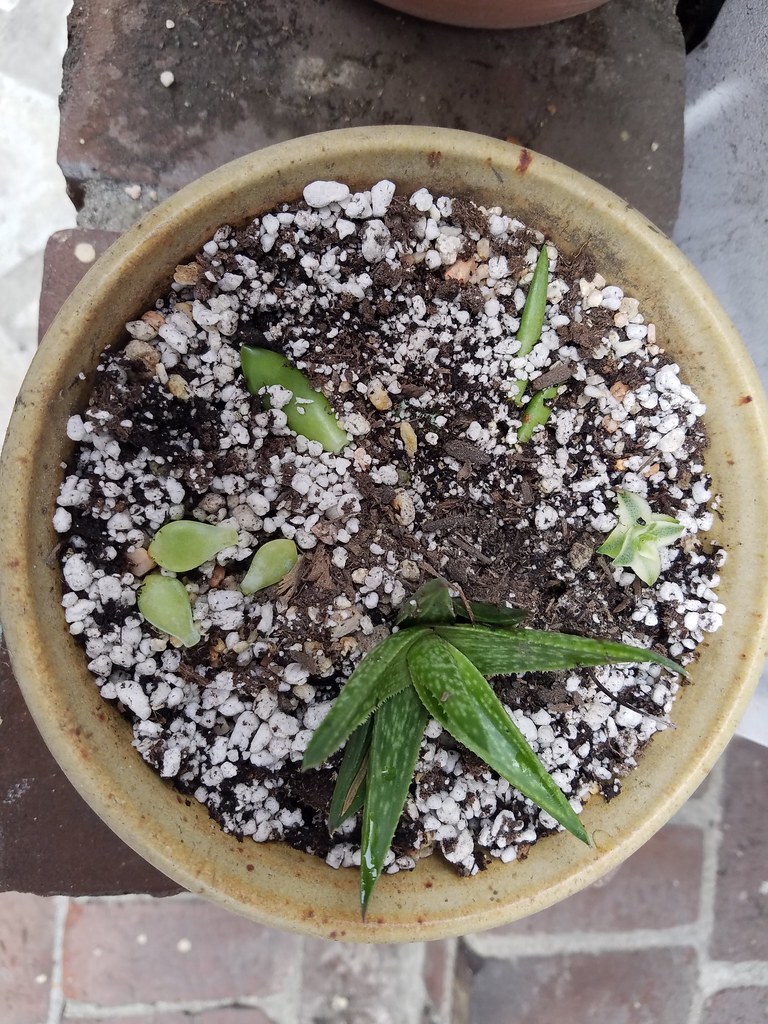
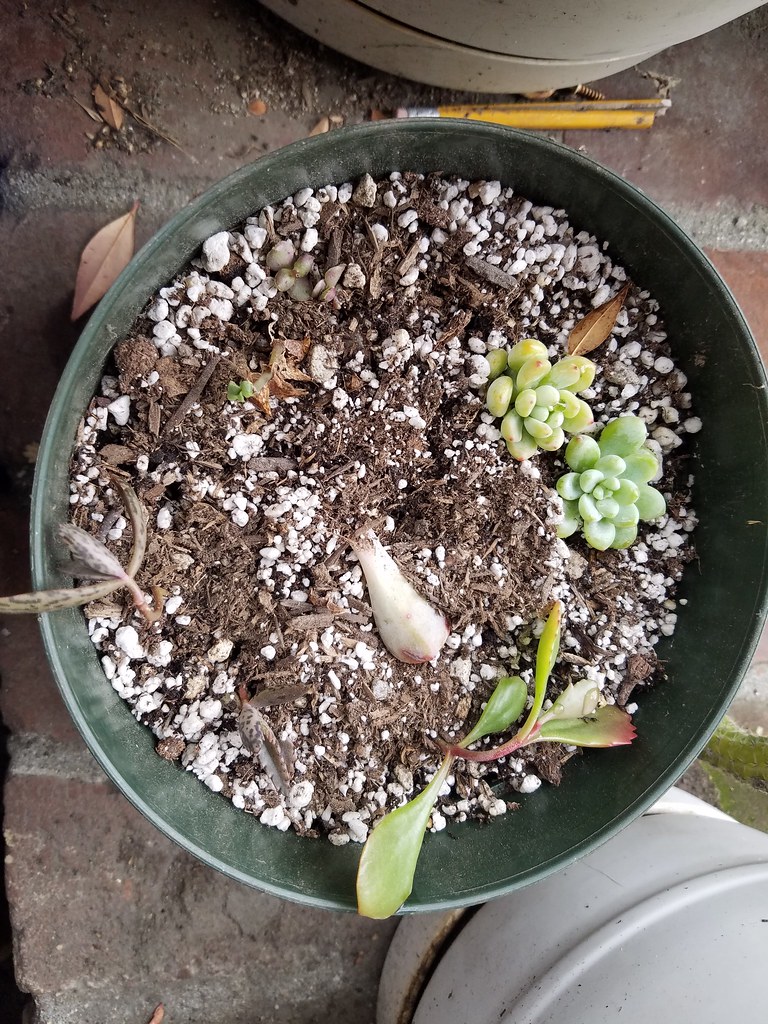
Sunday, January 29, 2017

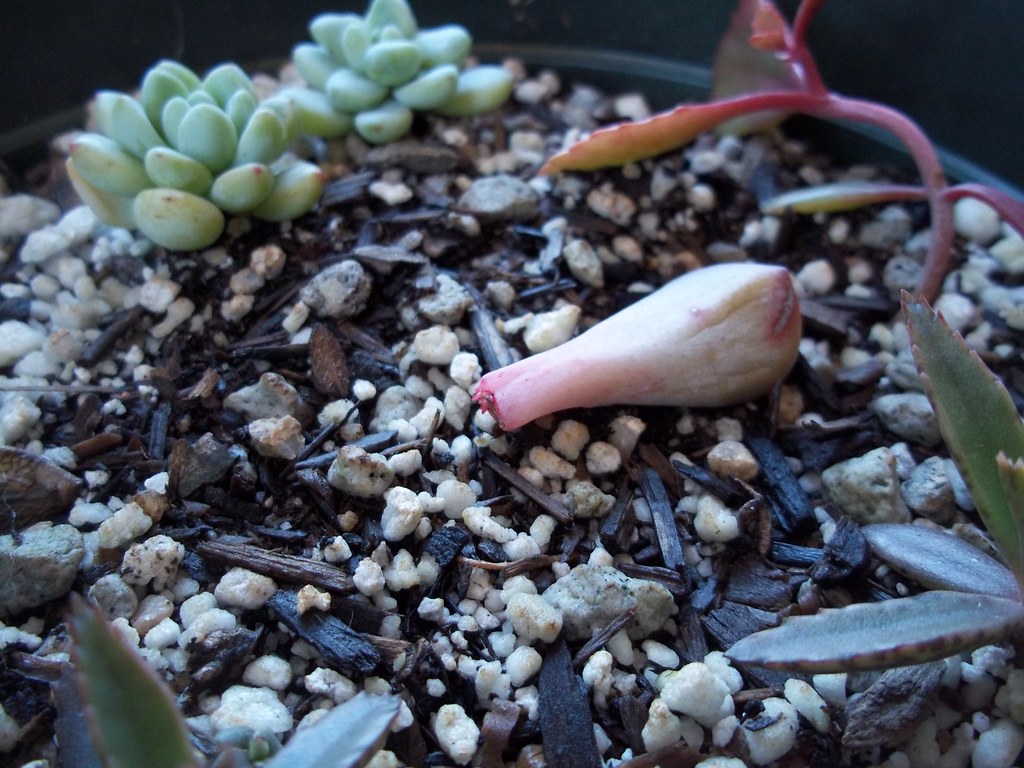
Succulent Clones

December 11, 2016
January 29, 2017 
(7 weeks = 49 days later)


December 11, 2016
January 29, 2017
(7 weeks = 49 days later)


December 11, 2016
January 29, 2017 
(7 weeks = 49 days later)


It's about progress not perfection.  And patience.

Tuesday, December 20, 2016

Winter Garden Plan (Fall 2016, Spring 2017)

Thinking about the benefits of renting, I always ask myself, "why would I want a bigger yard when there's so much work to do in even a small yard?"  We currently have 1/16th of an acre. Definitely not enough for subsistence farming.  I used a website to map out our current garden layout. (http://www.smallblueprinter.com/garden/planner.html)

Front                                                                       Rear

This year, around my birthday, I built an arbor in the backyard out of some scrap wood and a 4' x 8' reed fence.  I've been moving stuff around back there all year.  I thought it would be a good spot to grow some special plants.  A friend gave me some heirloom seeds and I tried growing them in the backyard because sometimes people steal my plants from the front yard. Due to the drought, it wasn't practical to water them as much as they would have needed, even though I did install a mister system along the arbor.  Maybe I'll use it next year.


To determine what would grow the best (and where in the yard to put it), I took a series of photographs each hour.  This was in response to the new arbor and also to the City of Glendale who came by and chopped down so many branches of the Magnolia tree out in front of our house.  I had lots more veggies out there that didn't survive without Momma Magnolia's dense shade.


Another great thing that happened this year is that I started composting again.  One of my neighbor's plants started spreading a powdery mildew that attacked my garden.  I treated the leaves with dormant oil and baking soda (via spray bottle) then started composting near the original host plant.  It seems like it's coming back healthier than before.  I hope she flowers this spring.

Front Yard Only
I'm not so sure the computer-generated garden plan is more appealing than the hand drawn plan. What do you think?

Sunday, December 11, 2016

2017 Garden Plans

I shared my 2012-2014 gardens here.  In 2015 my garden plans were listed here.  This year, I made some great plans for 2016.  We had a really hot summer, and lots of things sprouted but never bloomed.  Maybe I got too busy, teaching two summer classes simultaneously, and didn't water the garden regularly.  The drought limited our outdoor watering, and the Zika virus scare made water collection impossible.


I can't say the drought is over, but at least Gov. Brown's water restrictions have been partially lifted.  We can now water between 6pm and 9am for 10 minutes on Tuesday, Thursday, and Saturday. There is no time limit for watering by hand, but the three-days-per-week rule still applies.


I don't have automatic sprinklers, and in the past I have used rain barrels as well as greywater reclamation. I got so depressed at the sight of my empty containers in July 2016 that I planted a bunch of colorful pinwheels to look like beautiful flowers, and thought about the best layout for companion planting.  Instead of putting my energy into the outdoors, I did a bunch of online research that may someday be part of a grant proposal for a community garden space.

Then I got the idea to go for drought-tolerant plants.  It would beautify the space, although not produce edible leaves.  I researched cacti.  Then we got a variety of new plants at the Cactus and Succulent Society of America (CSSA) Inter-City Show at the LA County Arboretum.  Some of the recent planting calendars for LA that I've made, together with a "care guide" for the succulents, cacti, and bromeliads I bought are here.


So I bought some new seeds and rearranged the garden layout to start some of them this month.  I don't totally care if things don't work out.  I'll let you know how it goes.

"There are no gardening mistakes, only experiments," ~ J. K. Philips

Saturday, September 10, 2016

$100 Garden

We had a great time at the Cactus and Succulent Society of America (CSSA) Inter-City Show. Exhibitors from Los Angeles, Long Beach, and San Gabriel Valley showcased their potted plants. There were CSSA members from as far as Fresno (a 3.5 hour drive). They got together and chartered a bus!
These are the beauties we brought home
It took some time to investigate more about each of these plants.  I'm going to tell you about each of the 13 plants I bought, in an effort to better understand them myself.  We spent $100 at the CSSA show to bring these plants home.  I spent a bit more on larger clay pots and some cactus & succulent specific potting soil to create a home for each of them.  I'm interspersing this story with some of the blue-ribbon winning specimen from the CSSA show, which tangentially relate to the plants I bought.

The spikey green plant in the upper left corner of my box is a bromeliad (Dutericonia brevifolia), affectionaly called 'The Dude' due to its Latin name.  'The Dude' likes full sun, regular water in summer, no water in winter.

brevifolia
The next two members of the top row in my box from left to right are a cactus (Gymnocalycium mihanovichii) commonly called 'Moon Cactus' and a succulent (Pleisopilos nelii) 'Royal Flush.' These two are currently sitting in front of my computer screen.  The 'Moon Cactus' is actually orange due to a lack of chlorophyll (the green pigment in leaves) so it cannot tolerate direct sunlight especially in summer, also not frost-tolerant and detests humidity during winter.  'Royal Flush' needs a deeper pot to accommodate its taproot, full sun, and weekly watering in late summer to early fall, so I've got to find a place for it either at school or outdoors in the yard.

Gymnocalycium 
The cactus in the upper right corner is (Opuntia basilaris) 'Beaver Tail' which is blue in color and may be allergenic for some people.  It needs maximum light exposure in full sun. Below it is a succulent (Crassula perforata) called 'Giant Buttons on a String' or 'Pagoda Plant.'  This plant can be grown between windows, which is an interesting idea.  Bright light brings out red tones, adaquate water will ensure the leaves do not shrive unduly.  A relative is in the lower left corner, Crassula rupestris sometimes called 'Tom Thumb' or 'Jade Neckalace.'  Due to its compact leaves, this variety can be good in miniature gardens.  Thrives in a shallow pot for years.  Needs water year-round and full-sun to stay compact.

Echeveria 
The middle row has a purple-hued plant at the far left, between 'The Dude' and 'Tom Thumb.' This succulent is a variety of Echeveria called 'Cubic Frost' that forms fleshy, somewhat square, recurved leaves in frosty lilac-pink with blue-green centers. It may eventually produce bell-shaped flowers in orange, which would provide nectar for pollinators.  Echeverias need bright light to prevent "stretching," grows slowly, and tolerates thorough watering so long as soil is quick draining.

Echeveria 
The two cacti in the middle may look like they are related, but in fact they have little in common. The wavy one is called Echinocereus melanocentrus and is native to Texas.  It needs blasting sun and a wide pot, requiring more moisture than true desert cacti to grow and produce flowers.  It is a tiny cactus, most likely will not grow taller than 1 foot and wider than 4 inches.  The other cactus in the middle of the box is called Opuntia microdasys 'Bunny Ears' and is native to central Mexico.  It needs a good amount of light and is sensitive to overwatering.  It has a few other funny names including angel's-wings and polka-dot cactus.  Although slow growing, it may eventually form a dense shrub, under 2 feet in height.  
Fenestraria 
The last cactus in the box is perhaps the most fascinating. It has an unassuming spherical shape barely protruding from the ground, green, up to 2 inches in diameter. It is called Pygmeaocereus bieblii, a name which hints towards its diminutive size. In dry months, its stem retracts and dives under the ground. It is only in wet periods that these plants become visible as they absorb moisture and swell.  Its spines look more like warts or insects rather than spikes, and it is native to Peru.

Lithops 
The plant in the bottom right corner is a succulent (Sempervivum) sometimes referred to as 'Hen and Chicks.'  It needs full sun, although cannot tolerate heat, therefore tolerates shade.  It takes little water and could rot if watered too often.  The other two plants I have not yet discussed, unfortunately have perished.  In the course of one month, I let the plants sit indoors for 2 weeks, the moved some of them outside for 2 weeks.  I didn't water them for 2 weeks, watered them once, and then let them sit for two weeks.  Fenestraria aurantiaca 'Baby Toes' and Lithops karasmontan v. Summitatum 'Living Stones' pretty much shriveled up and I believe them to be dead now.  Maybe it was a lack of sun in the first 2 weeks.  Maybe they needed more water.  Now I know why the woman at the CSSA show was admiring her colleagues work so much.  You really appreciate the "green thumb" of another gardener after you've experienced a failure in your own garden.


One challenge I'm having now is that when I water some plants, the hose drips on others.  Some plants are intolerant of winter watering, so I have to make a water-free area for them.  Also, I put some plants in what I believed to be the sunniest part of the yard, only to come home and see that the shade-loving plants were in the sun and the sun-loving plants were in the shade.  I think the important lesson to learn is patience and forgiveness when things grow slowly and sometimes challenges arise that you've already missed the opportunity to solve.  In conclusion, that's what $100 buys you at the CSSA inter-city show.