Saturday, February 25, 2017

Anti-Aging Skin Series Post 7: Part 3 -- Toxicity Analysis Of Jergen's Skin Lotion

Have I lost you yet?  Are you bored with the series "Anti-Aging Skin Series"?  Would you like a greater depth of information on cosmetic products? Please feel free to leave comments in the section below.  I understand that the first product deconstruction has taken a long time.  But the essential features of a product are the chemicals incorporated within them.  And how those chemicals behave on your skin is critical to your trust in a given product.  Therefore, understanding the basics is important when purchasing future cosmetic products.


Continuing on with the "Anti-Aging Skin Series" -- the time has come to comment on the toxicity of the ingredients in the first product I analyzed -- Jergen's Skin Firming Moisturizer.  As you will recall, in the first part of the analysis of the skin firming lotion (Anti-Aging Skin Series Post 5), I introduced you to the sources (EWG, Paula's Choice, and David Suzuki are three examples) of chemical information on where to find the ingredients listed on the back of cosmetic products.   This post gave you an idea of the function of the ingredient.  In an intermediate post, I decided to compile a short list of a glossary of functions for you to refer to for greater information on each function.  Understanding the function of each ingredient gives you a better idea of why the ingredient was needed in the product in the first place.


The next logical post (Part 2) was an exploration of the ingredients in terms of function and also a categorization of the ingredients into the nature of their chemical structure.  Those chemicals that possess a greater amount of 'non-polar' character where categorized as 'non-polar'.  Whereas, on the other side of the spectrum are molecules which have a higher degree of charge difference in their structure and are therefore classified as 'polar'.  In order to bring these two different types of structure into a homogeneous mixture (a cosmetic product that does not separate), an 'emulsifier' is used.  As a result of the analysis, in the future products analyzed in this series, you will have a better understanding of the need to incorporate each into a given cosmetic product.  The next product I chose to breakdown and analyze is from a claimed "green" company with no harsh chemicals.  But before I get to that product, I wanted to speak a little on the toxicity of chemicals found in cosmetic products.  Below are a few thoughts and images to drive home the point -- toxicity lies on a spectrum (a range).


What Is Toxicity?


If the valuable resource "Wikipedia" were consulted for an understanding of the meaning 'Toxicity,' the following introduction would be seen below:


Toxicity is the degree to which a substance can damage an organism.[1] Toxicity can refer to the effect on a whole organism, such as an animal, bacterium, or plant, as well as the effect on a substructure of the organism, such as a cell (cytotoxicity) or an organ such as the liver (hepatotoxicity). By extension, the word may be metaphorically used to describe toxic effects on larger and more complex groups, such as the family unit or society at large. Sometimes the word is more or less synonymous with poisoning in everyday usage.
A central concept of toxicology is that the effects of a toxin are dose-dependent; even water can lead to water intoxication when taken in too high a dose, whereas for even a very toxic substance such as snake venom there is a dose below which there is no detectable toxic effect. Toxicity is species-specific, making cross-species analysis problematic. Newer paradigms and metrics are evolving to bypass animal testing, while maintaining the concept of toxicity endpoints.[2]


 The toxicity of a given substance is dependent on the damage done to a given organism or plant.  Damage can be broken down into substructures of organisms or plants -- specific parts (organs, metabolic pathways, etc.).   That is where the definition gets difficult.  Further, toxicity depends on dose -- i.e., how much of the substance was administered?  Routes of exposure are just as critical as the amount of substance given.  These are just a couple of the main considerations to think about when assessing the toxicity associated with a given chemical.


Next, the type of toxic entity is important to consider in a given assessment.  Below are the four types of toxic entities taken from "Wikipedia":


  • Chemical toxicants include inorganic substances such as, lead, mercury, hydrofluoric acid, and chlorine gas, and organic compounds such as methyl alcohol, most medications, and poisons from living things. While some weakly radioactive substances, such as uranium, are also chemical toxicants, more strongly radioactive materials like radium are not, their harmful effects (radiation poisoning) being caused by the ionizing radiation produced by the substance rather than chemical interactions with the substance itself. 
  • Disease-causing microorganisms and parasites are toxic in a broad sense, but are generally called pathogens rather than toxicants. The biological toxicity of pathogens can be difficult to measure because the "threshold dose" may be a single organism. Theoretically one virus, bacterium or worm can reproduce to cause a serious infection. However, in a host with an intact immune system the inherent toxicity of the organism is balanced by the host's ability to fight back; the effective toxicity is then a combination of both parts of the relationship. In some cases, e.g. cholera, the disease is chiefly caused by a nonliving substance secreted by the organism, rather than the organism itself. Such nonliving biological toxicants are generally called toxins if produced by a microorganism, plant, or fungus, and venoms if produced by an animal. 
  • Physical toxicants are substances that, due to their physical nature, interfere with biological processes. Examples include coal dust, asbestos fibers or finely divided silicon dioxide, all of which can ultimately be fatal if inhaled. Corrosive chemicals possess physical toxicity because they destroy tissues, but they're not directly poisonous unless they interfere directly with biological activity. Water can act as a physical toxicant if taken in extremely high doses because the concentration of vital ions decreases dramatically if there's too much water in the body. Asphyxiant gases can be considered physical toxicants because they act by displacing oxygen in the environment but they are inert, not chemically toxic gases. 
  • As already mentioned, radiation can have a toxic effect on organisms.[3]


I understand that the two excerpts above are lengthy and might be redundant.  Although, when the toxicity of an ingredient is taken into account, the mechanism by which the chemical or agent takes in damaging organs is crucial toward understanding the overall toxicity.  In the Jergen's Skin Firming Moisturizing Lotion, there were around 29 ingredients.  To break down the toxicity of each compound would be cumbersome.  The four elements of 'Risk-Assessment' are: Hazard Identification, Dose-Response Assessment, Exposure Assessment, and Risk Characterization.


The terms listed at the end of the last paragraph might sound dangerous.  The manufacturers are responsible for listing the information regarding the four elements listed above.  You might be wondering the following:


Where do I find toxicity information?


If you are a chemist, the first place you might look is at the "Materials Safety Data Sheet".  Right about now, you are probably wondering the following question:


How do I find the 'msds' sheet for a given chemical?


The process is easy.  Type into a search engine like "Google" the following:  Propyl Paraben msds .  The result is shown below for the 'msds' for Propyl Paraben:


If you click on the 3rd option that appears to be a 'pdf' then the entire (5 page) 'Material Safety Data Sheet' will be downloaded.  You will notice that there are 16 sections boxed out on the form as follows:


1) Chemical Product and Company Identification

2) Composition and Information on Ingredients

3) Hazards Identification

4) First Aid Measures

5) Fire and Explosion Data

6) Accidental Release Measures

7) Handling and Storage

8) Exposure Controls/Personal Protection

9) Physical and Chemical Properties

10) Stability and Reactivity Data

11) Toxicological Information

12) Ecological Information

13) Disposal Considerations

14) Transport Information

15) Other Regulatory Information

16) Other Information


Is that list comprehensive enough for you?


The purpose of the 'msds' information is to give the chemist or any other person working with a chemical the 'heads up' in terms of the properties and hazards associated with the chemical.  In this case, the chemical is Propyl Paraben -- which is a preservative in Jergen's Skin Firming Moisturizing Lotion.


In terms of toxicity of a given chemical, a toxicologist will look the four elements listed above.  From the 'msds' information, the most important factor will be the "LD50" value.  According to 'Wikipedia' the 'LD50' value is defined as:


In toxicology, the median lethal dose, LD50 (abbreviation for "lethal dose, 50%"), LC50 (lethal concentration, 50%) or LCt50 is a measure of the lethal dose of a toxin, radiation, or pathogen. The value of LD50 for a substance is the dose required to kill half the members of a tested population after a specified test duration. LD50 figures are frequently used as a general indicator of a substance's acute toxicity. A lower LD50 is indicative of increased toxicity.


With units of dose/body mass:


 The LD50 is usually expressed as the mass of substance administered per unit mass of test subject, typically as milligrams of substance per kilogram of body mass, sometimes also stated as nanograms (suitable for botulinum), micrograms, or grams (suitable for paracetamol) per kilogram. Stating it this way allows the relative toxicity of different substances to be compared, and normalizes for the variation in the size of the animals exposed (although toxicity does not always scale simply with body mass).


The above definition is worded in a complicated fashion.  But what if you are interested in the general data surrounding the ingredient.  Is the ingredient toxic in cosmetic products?  If you choose to look at the 'msds' for the ingredient Propyl Paraben, you will find the following sections useful as shown below taken as screenshots of the downloaded 'pdf':
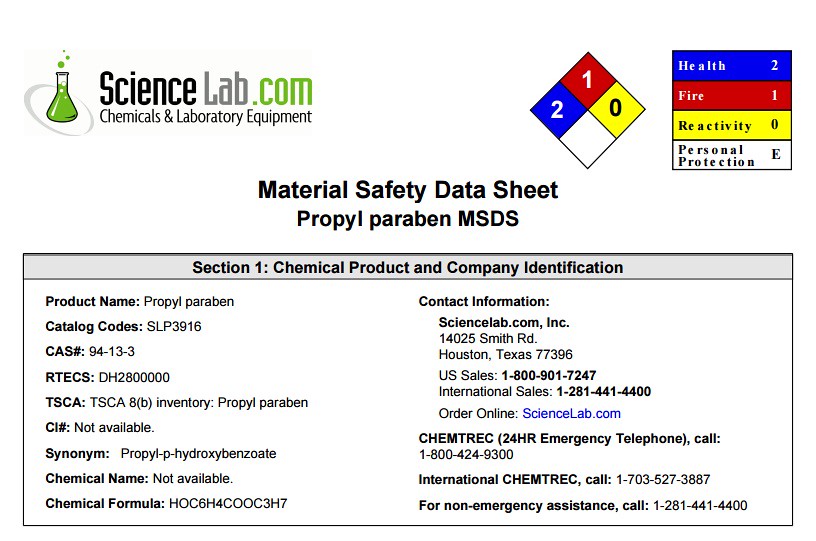


The first section shown above is the general information regarding the chemical Propyl Paraben.  Note that the information contained on the following parts of the 'msds' apply to the chemical's use in a variety of manufacturing situations.   Which is why the 'msds' sheet is not printed on the back or included with a cosmetic product.  The next section is useful (probably the most useful) to the consumer of a cosmetic product -- "Composition and Information on Ingredients":
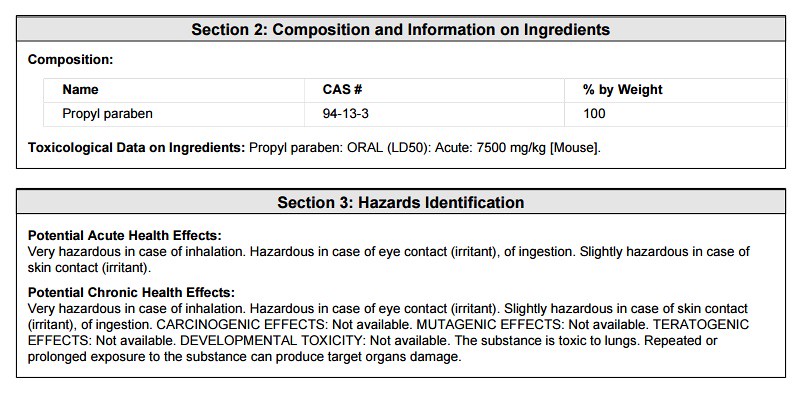


Upon first inspection of the ingredient information, you are probably wondering why this ingredient would ever be used in a cosmetic or food product.  The above information exemplifies why the parameter of "concentration" is so important.  In a typical cosmetic formulation, Propyl Paraben is probably around 5% of the total concentration.  Therefore, the toxicity information of the LD50 is negligible.  Below, I will show a calculation to prove such.  The information above and below might be useful though to those with sensitive skin toward the class of chemicals known as "parabens".  Below is the first aid measures as stated on the 'msds':
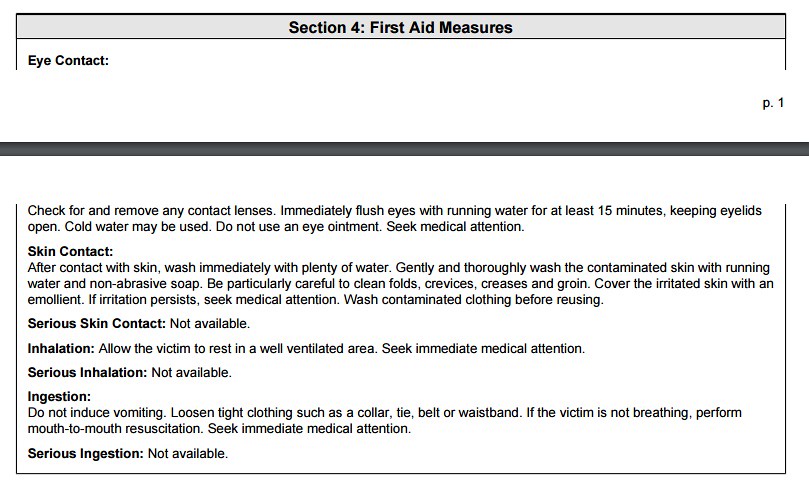


Again, the above information might be useful for consumers who develop a rash or adverse reaction toward this particular ingredient.  The information contain in the section below pertains toward working with the chemical at a manufacturing level.  Although, if you find an adverse reaction toward a product, you should report that product to the FDA.


The section above and below are rather redundant to the consumer, but necessary to the chemist working with the ingredient at the manufacturing scale level.
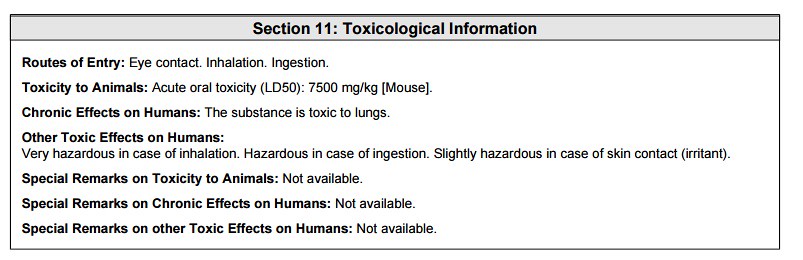


In the section above, the toxicological data was stated as being tested on a 'mouse model'.  The stated LD50 was 7500 mg/kg of bodyweight.  Which means that at a concentration of 7.5 grams per kilogram of bodyweight, the chemical would be toxic to an animal or person as shown below:



How would that lethal dose translate to a person who weighs 150 pounds?


How would a person figure that out given the toxicological data above?


To start with, type into a search engine the following: how many kilograms in a pound?  The answer below is given:
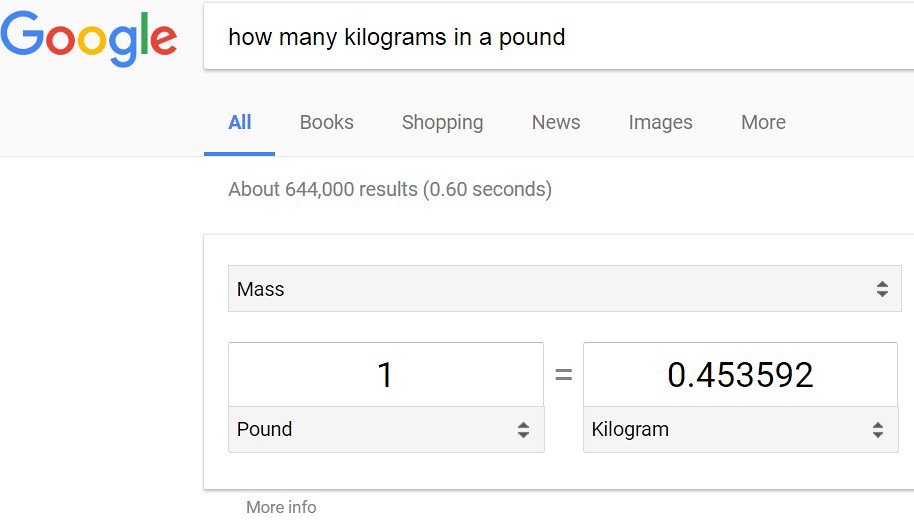


Next, the conversion of units from 'pound' to 'kilogram' is necessary as shown below:



With the proper units expressed uniformly across all values, the determination of the lethal dose is straightforward as shown below:



The result above indicates that in order for the chemical - Propyl Paraben to be lethal in the product - Jergen's Skin Firming Moisturizing lotion, the amount of Propyl Paraben contained in the bottle would have to be 510 grams. How many pounds is that?  See below:


The result indicates that the bottle of lotion would have to contain 1.12 pounds of Propyl Paraben to be lethal to a human being.  Obviously the bottle of lotion only has a total weight of 16.8 fluid ounces which is equal to 1.06 pounds.  Meaning the entire bottle would have to be Propyl Paraben to be lethal to your body!!!!!


That was a useful exercise for the novice chemist.


What about the average consumer who does not want to mine through the confusing paperwork above -- the 'Materials Safety Data Sheet'?  


Where else can a consumer find the equivalent information shown above stated more clearly to the consumer?


In the next section, a website will be given where you the consumer can easily find the equivalent information above stated in a more simple manner.


Toxic Ingredients


As a basic starting point, the site 'EWG' is great.  The 'SkinDeep' database has some information.  Take for example the ingredient 'Dimethicone'.  Enter that ingredient into the database and look at the profile listed below:
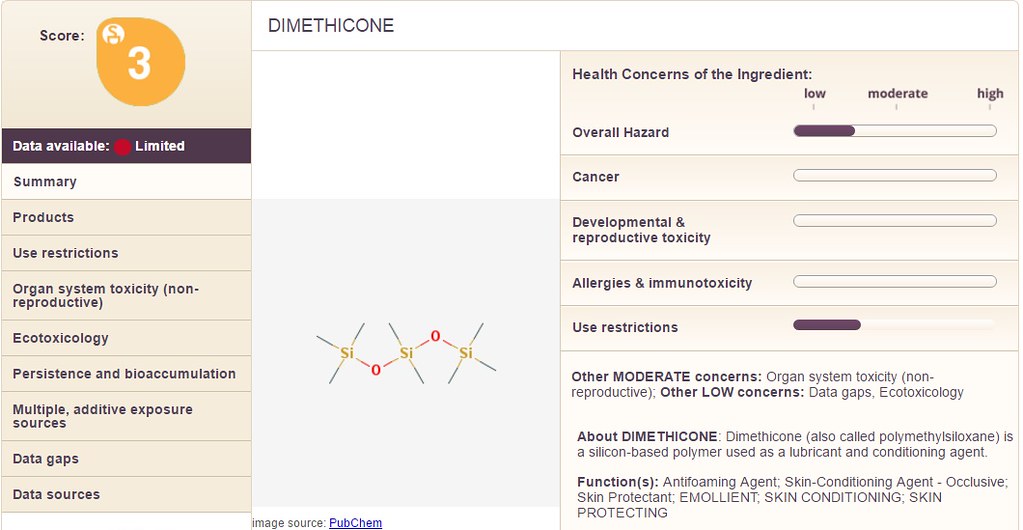


Notice on the upper left hand corner, there is a 'score' which states the overall danger associated with the product (in this case Dimethicone).  Inspecting the 'right hand column' there are the following categories:

1) Overall Hazard

2) Cancer

3) Development & Reproductive Toxicity

4) Allergies & Immunotoxicity

5) Use Restrictions


Note: Each of the above categories is measured along a scale with a range of "low" to "moderate" to "high".


In the example of 'dimethicone' which is contained in the Jergen's lotion, the "overall hazard" is between "low" and "moderate".  Additionally, the category "Use Restrictions" is also between "low" and "moderate".  Whereas, the next chemical shown below is "cyclopentasiloxane" with a similar overall score of "3" but different values on the right hand side:
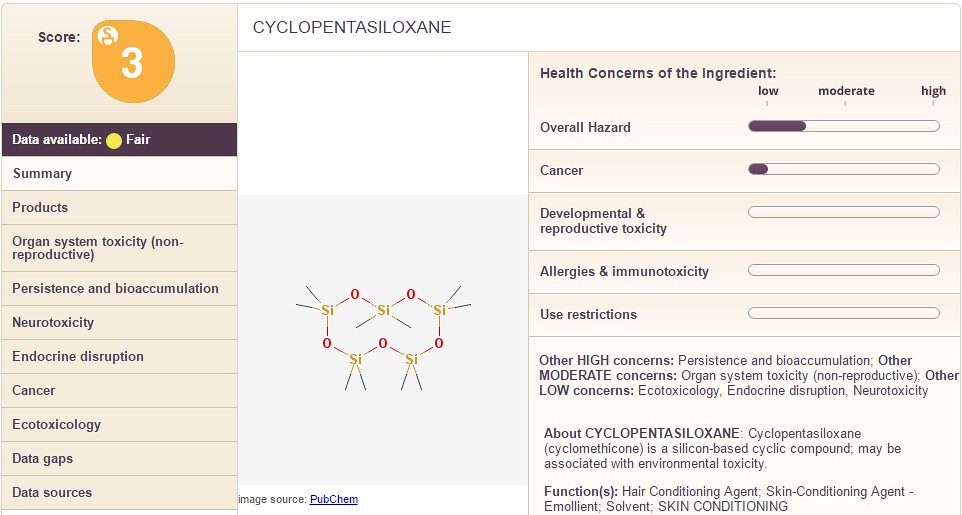


According to the sheet above, the chemical "cyclopentasiloxane" has a small amount of "cancer" risk.  The scale is ambiguous and the 'msds' data would need to be consulted or the website 'EWG' for more information.  Additionally, a consumer could choose to weigh the chemical above in comparison to another chemical like cetearyl alcohol as shown below:


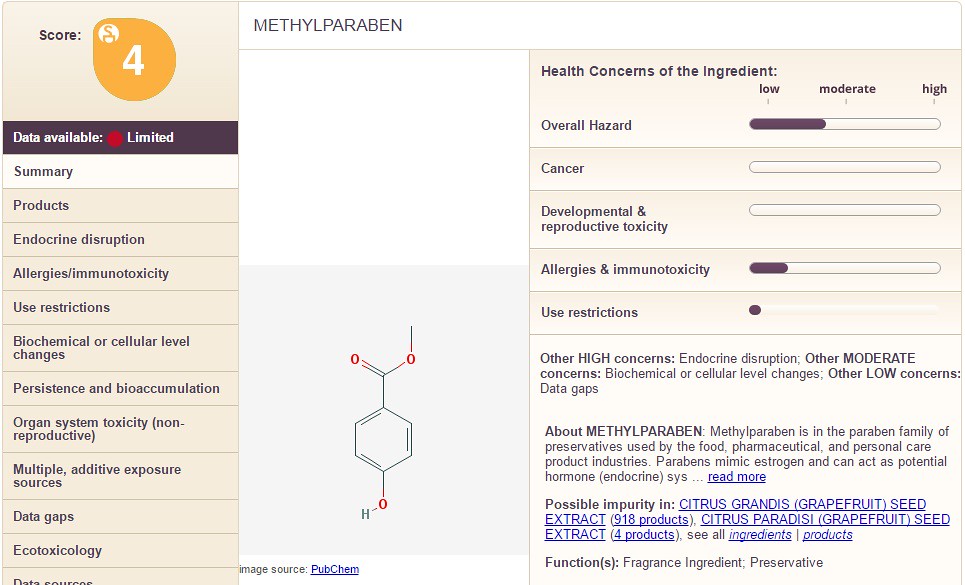
The only conclusion that can be drawn from the information is that cetearyl alcohol is less dangerous than "cyclopentasiloxane".  Below I show a three more chemicals with different information for you to see: Acrylonitrile, Methyl Paraben, and Propyl Paraben.  See if you can spot major differences between the three.
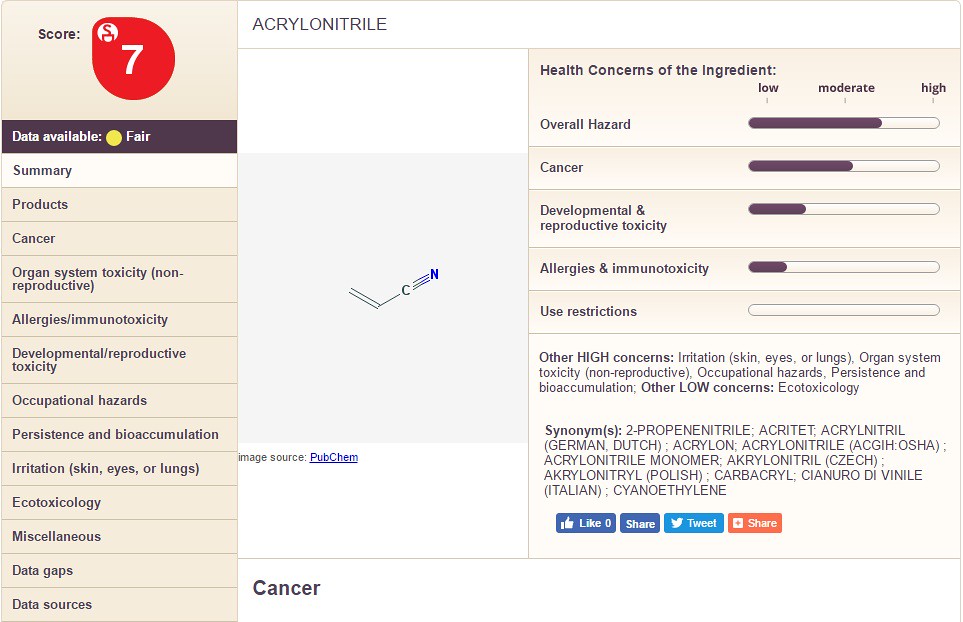


Methyl Paraben is shown below:


Propyl Paraben is shown below:


Notice how the chemicals differ in the categories on the right hand side along with the overall chemical score.  In the images below, I take you through the columns on the left hand side (using Propyl Paraben as an example).  The following sections filled with information are:

1) Products 

2) Endocrine Disruption 

3) Allergies/immunotoxicity 

4) Use Restrictions

5) Developmental/Reproductive Toxicity 

6) Ecotoxicity

7) Persistence/Bioaccumulation

8) Multiple, additive exposure sources

9) Data Gaps

10) Organ System Toxicity 

11) Data Sources


Upon clicking on the left hand column any of the categories listed above, a detailed page appears.  For instance, click on the category for "products" and a list of over 3600 products will appear with the chemical Propyl Paraben in them as shown below:


For "Endocrine Disruption" information, click and see the following below:
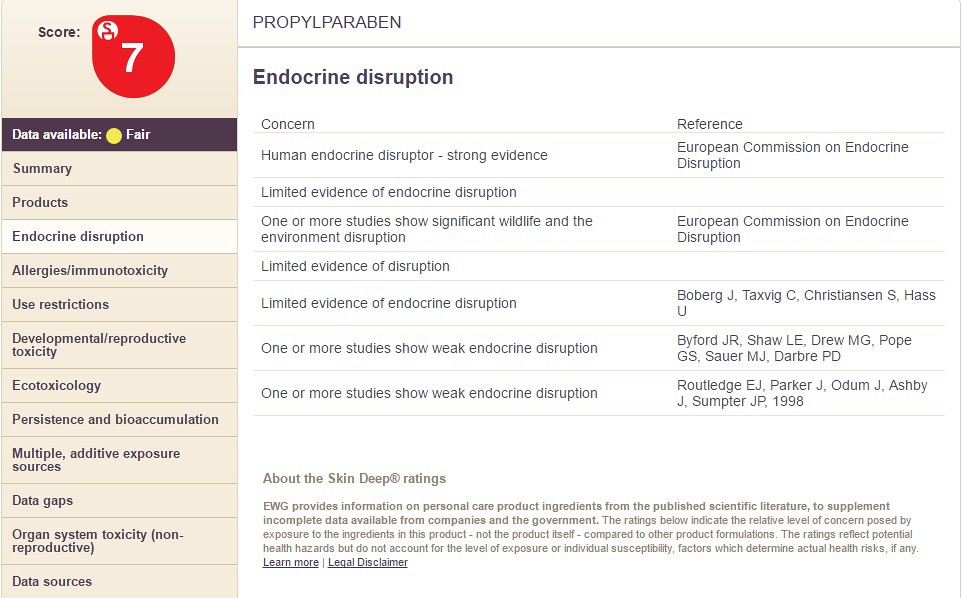


Choosing the option "Allergies/Immunotoxicity" will display the following information:
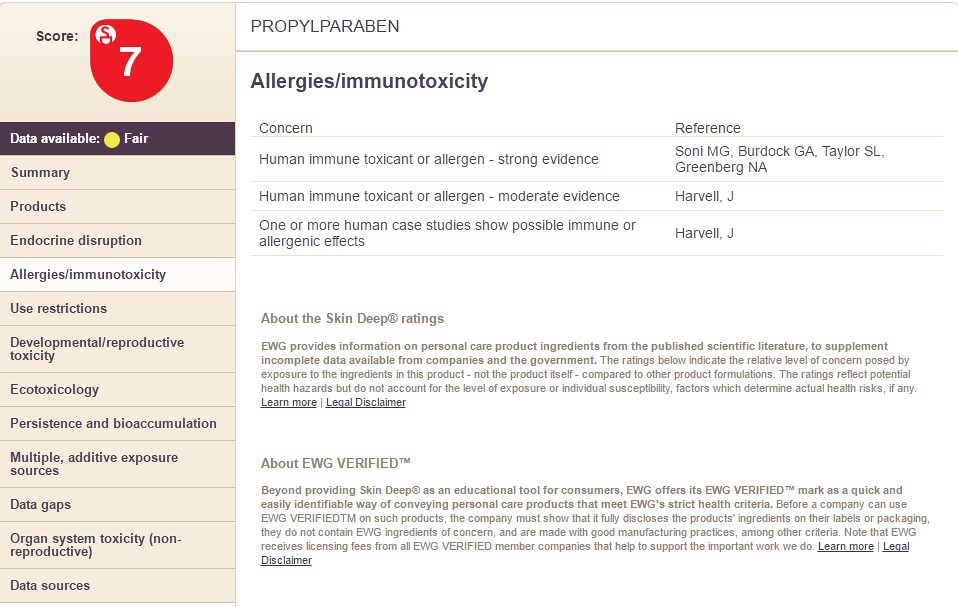


Choosing the option "Use Restrictions" will display the following information:


Choosing the option "Developmental/Reproductive Toxicity" will display the following information:
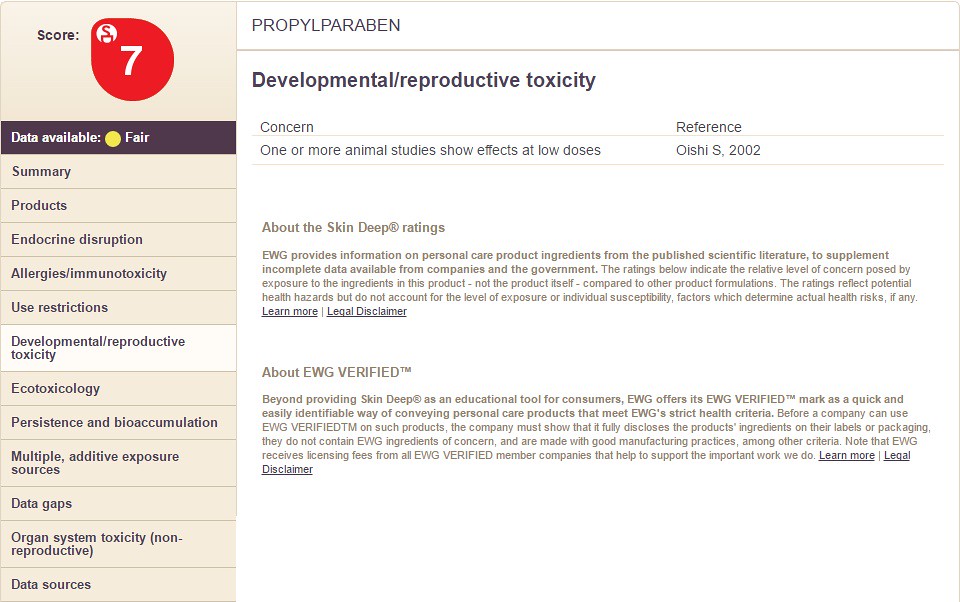


Choosing the option "Ecotoxicology" will display the following information:


Choosing the option "Persistence and Bioaccumulation" will display the following information:
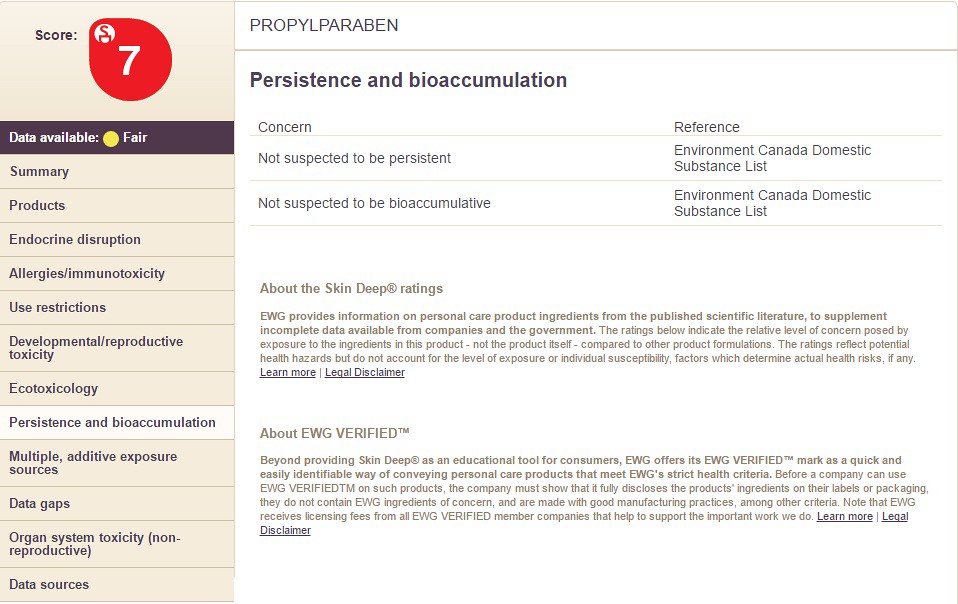


Choosing the option "Multiple, Additive Exposure Sources" will display the following information:
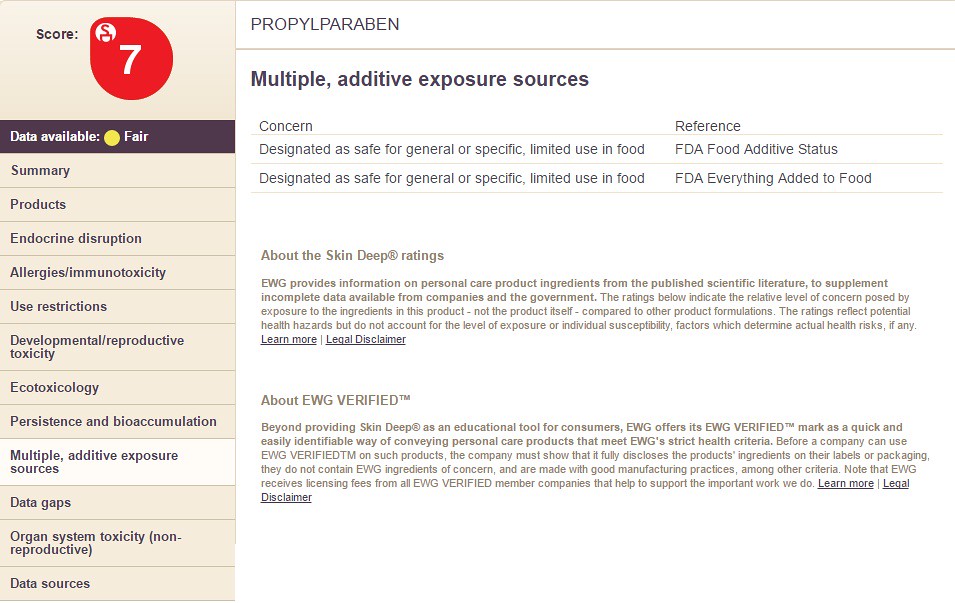


Choosing the option "Data Gaps" will display the following information:
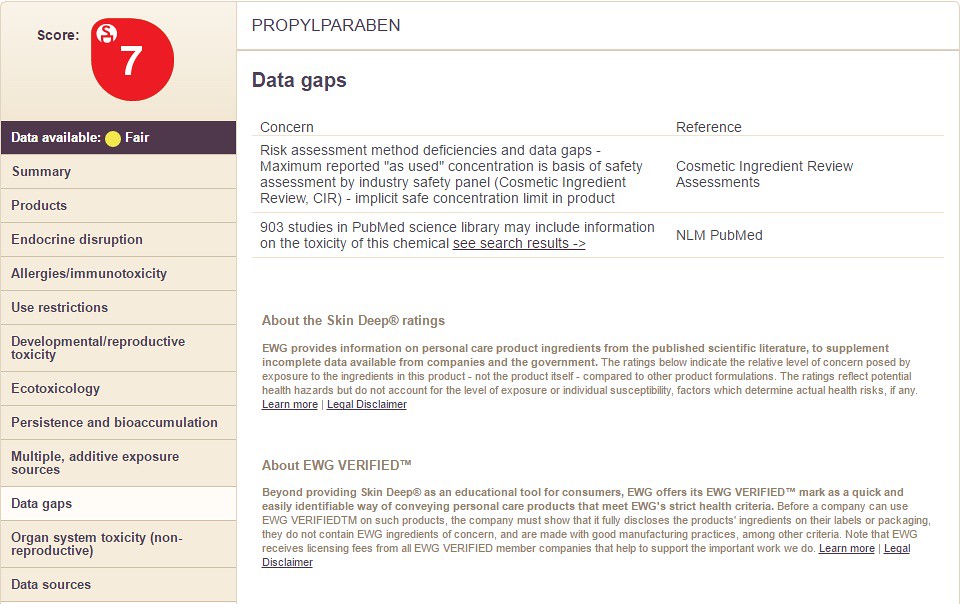


Choosing the option "Organ System Toxicity" will display the following information:
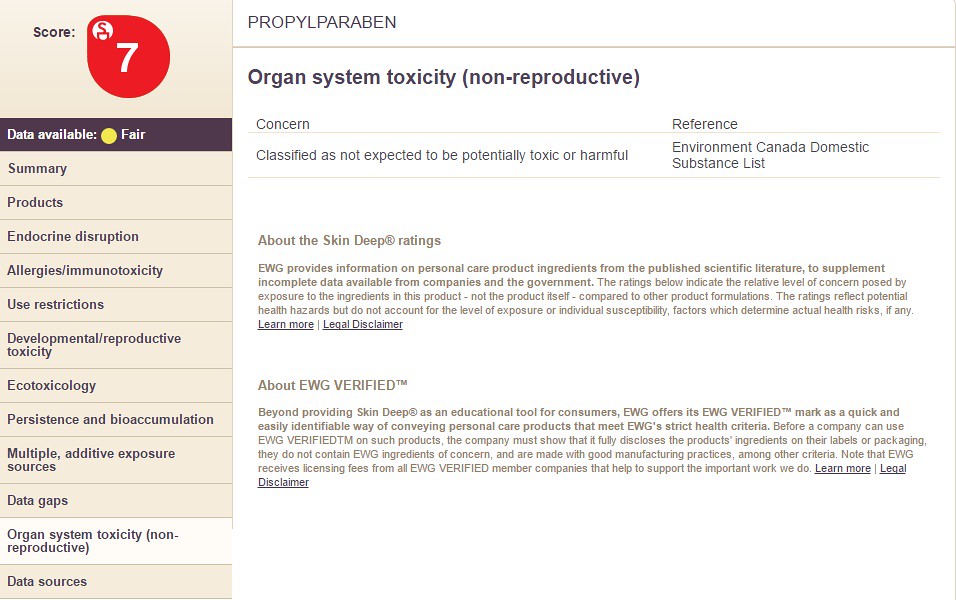


As you can see from the above information, the amount of toxicity data available on the internet regarding a chemical ingredient is quite extensive and might be overwhelming at first sight.  Keep in mind though that there are other parameters that need to be considered when viewing any of the sections listed above.


For instance, the chemical Propyl Paraben is considered toxic and should not be inhaled according to the "Materials Safety Data Sheet" -- then why would that ingredient be in a cosmetic product.  Well, as part of a skin lotion formulation, the concentration (at 5% or less) is very low toxicity to begin with.  Additionally, the matrix (formulation) in which the ingredient is in will not allow the chemical to diffuse into your skin very easily or be breathed nonetheless.


Conclusion...


The ingredients listed on the first part of the series for Jergen's Skin Firming Moisturizing Lotion all carry a degree of toxicity associated with them.  In the examples shown above, some of the chemicals like cetearyl alcohol have a lower "overall hazard" associated with them compared to the "overall hazard" associated with Propyl Paraben.


Although, if you find yourself concerned, the information is available to greater investigate the chemical properties and toxicities associated with them as I have shown above.  I provided a few examples from the ingredient list on the backside of Jergen's Skin Firming Moisturizing Lotion.  Now, you can search the "EWG" database for the toxicity of the remaining ingredients.  Additionally, I provided only one example of a site with the toxicity data displayed.  Upon further inspection, many more sources will be revealed.


In the next post on the "Anti-Aging Skin Series", we will explore a different product with claims of 'anti-aging' properties.  After exploring a few products with claims surrounding 'anti-aging' you will begin to see 'common ingredients' which must be present to support claims.


Until next time, have a great day!


Friday, February 10, 2017

Greatest Hits -- Molecules!

This post is for all the science teachers out there seeking a practical chemistry lesson.  We're constantly encouraging our students to apply critical thinking to real world problems.  We also want them to exercise public speaking skills.  Around this time of year students get bored no matter how exciting the lesson and it's good to get them actively involved in a dynamic lesson to keep them engaged in learning.


Periodically I will write about a molecule or a related group of molecules.  I always try to include the chemical name and structure of the molecule.  I printed out the text of each of the posts below and gave students about 20 minutes to read and analyze the content.  I asked them to answer the following 3 questions in an oral presentation using the board:


Tell us about your molecule:

What does it do?

How does it work?

Draw its structure!


I had the students complete this exercise in pairs.  It was one of the most engaging lessons of the entire semester.  After each group made their presentation to the class, we spent the remaining 15 minutes covering the Drug Free Campus Policy information for students.  We talked about how some of the molecular stories were about depressants, stimulants, and club drugs.  We talked about how just because a drug is available by prescription, doesn't mean it isn't dangerous.


If you're interested in receiving the text only of the following blog posts (without all the sidebar and URL information) send me an email and I can send you a .pdf.  It's so important to engage students in the fun and exciting (and practical) applications of chemistry to give them some incentive to learn all the basics we are trying to teach them.


Even though my class was populated with college freshmen (who have no Organic Chemistry experience) we were able to recognize common substructures in molecules with a common effect in vivo. The students can identify 5- or 6-membered rings, as well as noting heterocyclic rings and side-chain lengths, without formal training in functional groups.


In the future, a blog post will appear about the class of benzodiazapines including Lorazepam (Ativan) and Alprazolam (Xanax), which share a common substructure.  These molecules have a high potential for abuse.  Stay tuned!


We were able to talk about Kary Mullis in the following class period and how he enjoyed making analogues of LSD until that practice became illegal.  Maybe I can also write about ayahuasca.


1) DMT: http://www.newyorker.com/magazine/2016/09/12/the-ayahuasca-boom-in-the-u-s


2) Aromas: http://bitchonabike.blogspot.com/2017/02/another-chemistry-lesson.html


3) Antacids: http://bitchonabike.blogspot.com/2017/01/sour-stomach.html


4) Amphetamine: http://bitchonabike.blogspot.com/2016/09/a-bargain-is-not-always-bargain.html


5) Adderall: http://nyti.ms/2dWJvDY


6) Antioxidants: http://bitchonabike.blogspot.com/2014/04/nopal-antioxidant.html


7) NSAIDs: http://bitchonabike.blogspot.com/2009/08/i-dont-like-drugs-but-drugs-like-me.html


8) Celebrex: https://n.pr/2fhF6Jq


9) Cycloastragenol: http://bitchonabike.blogspot.com/2012/01/fountain-of-youth.html


10) Goldenseal: http://bitchonabike.blogspot.com/2011/08/goldenseal-friend-or-foe.html


11) Henna: http://bitchonabike.blogspot.com/2014/06/my-first-tattoo.html


12) Isoflavones (Part I): http://bitchonabike.blogspot.com/2011/02/to-soy-or-not-to-soy.html


13) Isoflavones (Part II): http://bitchonabike.blogspot.com/2011/02/to-soy-or-not-to-soy-part-ii.html


14)Lithium: http://bitchonabike.blogspot.com/2015/03/lithium-orotate.html


15) Opioids: http://bitchonabike.blogspot.com/2017/01/opioids.html


16) Retinoate: http://bitchonabike.blogspot.com/2012/02/advanced-maternal-age.html


17) Serotonin: http://bitchonabike.blogspot.com/2010/10/selective-serotonin-reuptake-inhibitors.html


18) Sumatriptan: http://bitchonabike.blogspot.com/2013/09/impatient-scientist.html


Tuesday, January 31, 2017

Anti-Aging Skin Series Post 7: Part 2 -- Ingredient Analysis Of Jergen's Skin Firming Lotion

Over the weekend, I was lazy.  Can you relate to this feeling?  I had planned to write and catch up on a few articles and ended up doing nothing of the sort.  What did I do?  I binge watched old seasons of the popular show "Grey's Anatomy".  Kayla is into the show.  I was reading while she was watching the show on Saturday.  I asked her to turn up the volume....she said "Mike, If I turn up the volume, you might get sucked into the show?"  I responded "probably not...."  From then on, for the remainder of the weekend, I was a couch potato watching the show.  Why am I admitting this to you?  Well...


There was a scene where two surgeons were talking small talk in the doctor's lounge on the show.  Who they were is not necessarily important.  At one point in the conversation, one holds up a bottle of lotion and says, "We are doctors and we don't even know what the chemicals are listed on the back of this lotion....What is dimethicone?"  At that point, I perked up and thought of the blog that I was in the process of writing for the "Anti-Aging Skin Series" which originated out of the long article that Kayla asked me to simplify titled "Can Science Really Reverse Aging Skin?".  The chemical dimethicone is an ingredient that was discussed in a previous blog post.  I decided to scrap the first draft that I had and start over.  We last left off with a glossary of terms which would help us in understanding the ingredient list on the backside of a bottle of lotion -- Jergen's Skin Firming Moisturizing Lotion (previous blog).


The above introduction proves that an interest does exist for an understanding of the chemicals which are listed on the back side of products.  Even if the interest was stated on a Hollywood set in "Grey's Anatomy".  In the next blog post, I will tell you a real story about a chemist with a similar medical experience.


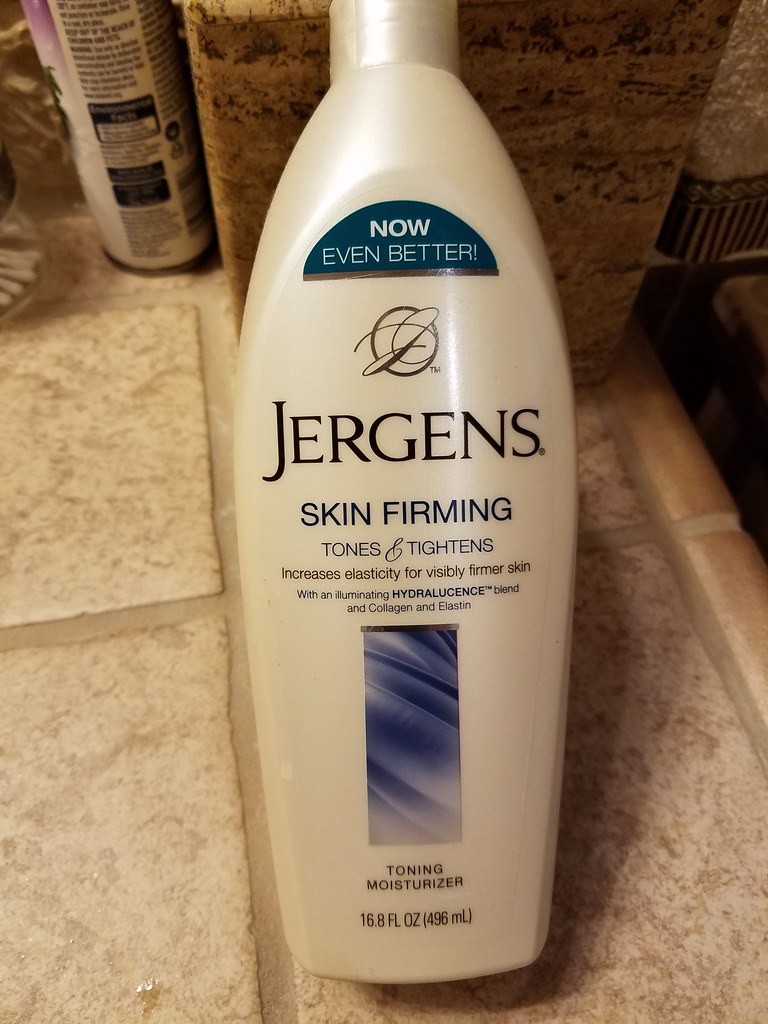
With this in mind, lets explore the backside of the ingredients which were listed in the previous blog post for the moisturizing lotion made by Jergen's -- which supposedly leaves a younger and healthier looking skin after use.  A picture of the front side of the bottle is shown below:


Ingredients


To start out with, I must admit that I have had difficulty in trying to decide the format of these blog posts with the ingredients listed on the back of the container and their associated toxicities.  In light of this revelation, bear with me through the next few blog posts.  I am finding my way in terms of design and information layout.  My plan is to lay out the ingredients in this blog with the chemical structures shown along with a brief discussion of the grouping/function of them relative to the product description.  In the next blog post, I will discuss briefly a few aspects of the associated toxicology of the ingredients.  The learning curve was much longer (took me way longer than I had imagined -- a month and a half) to find my way.  But we are here now and lets get started.


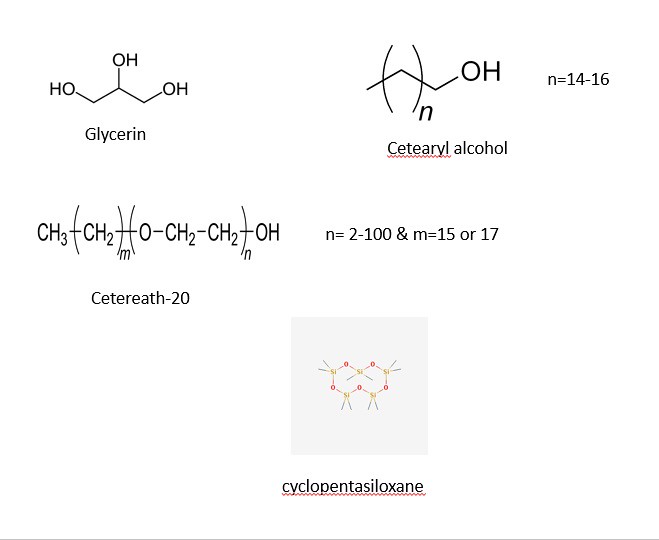
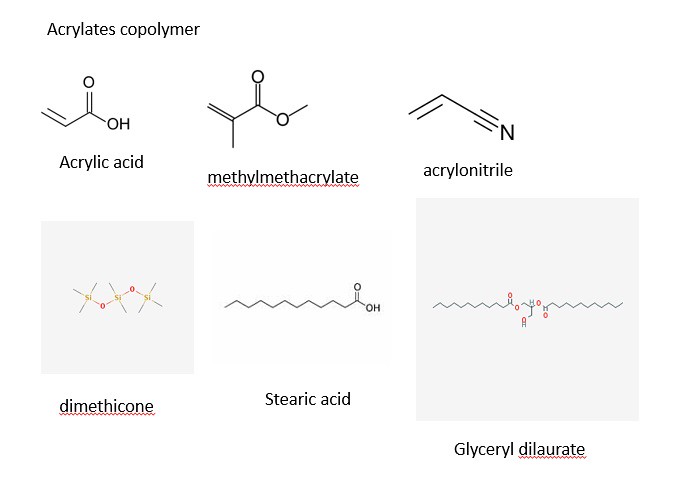
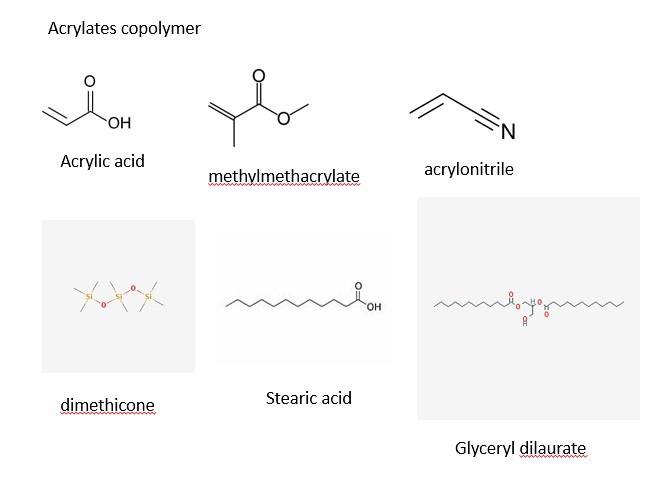
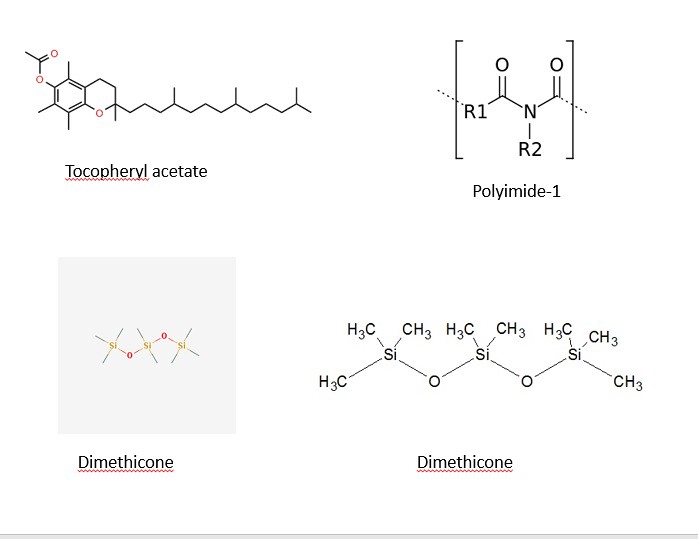
The structures of most of the ingredients are shown in the three panels below.  Initially, I decided to take structures from two main websites: Wikipedia and the Environmental Working Group.  After some time, I decided to learn a program (that I have no used in quite a while) to draw the chemical structures myself.  The advantage of drawing the images myself with a chemical sketch program is that I am allowed to orient the molecules my own way to illustrate the point of function.  With that being said, the four images below contain the chemical structures listed in the ingredients section on the back side of a bottle of Jergen's Skin Firming Moisturizer Lotion as shown below:


The three panels above show a variety of chemical structures.  Some of which might be recognizable and others that are not.  Note: the structures above were taken from different sources and might appear different.  I will discuss that shortly for clarification purposes.  I will be discussing the function of the ingredients in the product and talking periodically about the chemical structure, so feel free to scroll the mouse back up to the picture to view the structures as we move along.


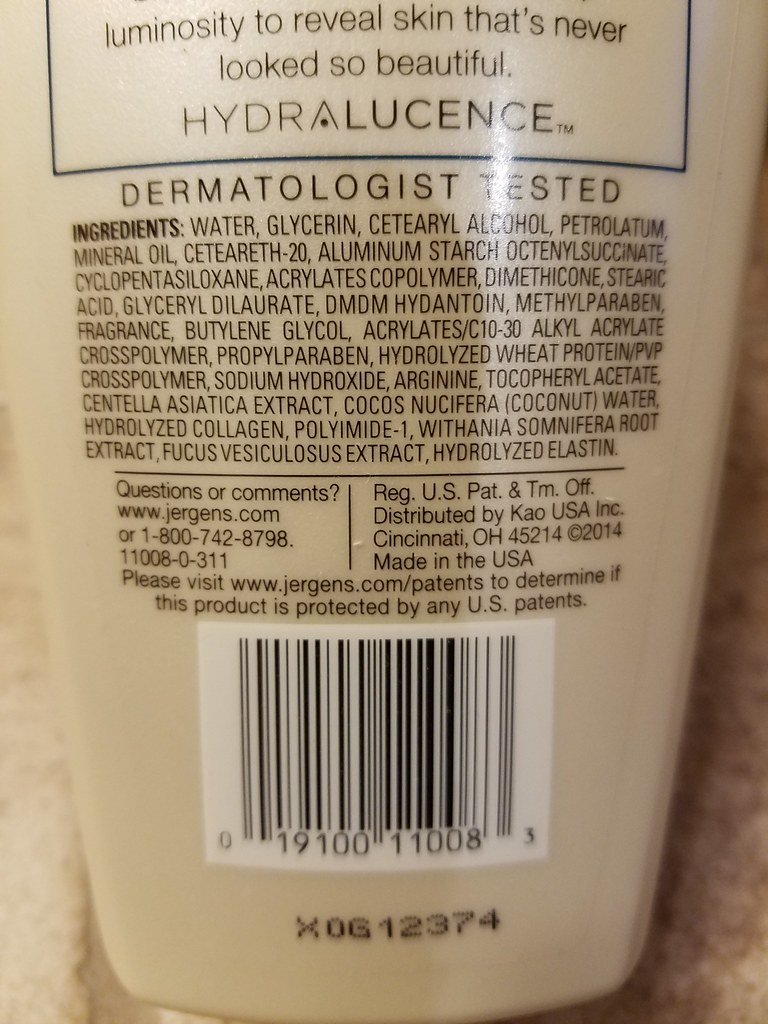
These are some of the ingredients listed on the back of the bottle of lotion as shown below:


To start with, figuring out the function of the ingredient is relatively easy.  In the previous post, I listed the function and definition of each ingredient.  The important connection is to make between the function and the reason why the manufacturer chose to incorporate the ingredient into the lotion.


Two questions can be offered at the start in order to understand the ingredients:


1) Why is the ingredient in the product?


2) What is the concentration of the ingredient in the bottle?


These questions might seem redundant, but in actuality, chemists ask themselves these two questions before starting the research and development phase.  Further, during the testing phase, these questions come up arise again if the product does not meet the intended  purpose.  For instance, does the cream spread smoothly over the surface of your skin without 'caking up'?  Part of the answer lies in understanding the concept of "hydrophilic" and "hydrophobic".  The concept of "hydrophobic" and "hydrophilic" is sometimes difficult to convey.  Here are two videos taken from YouTube that are each less than 5 minutes in length and might help clarify the distinction between the two terms.


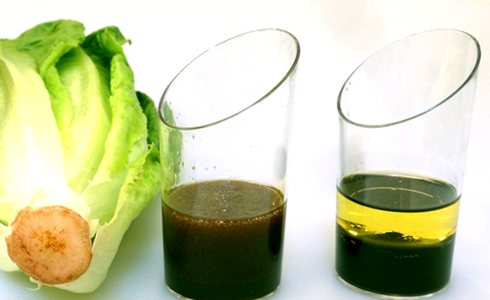
The video above is just one of many different explanations of the two terms: "hydrophilic" and "hydrophobic".  I would encourage you (the reader) to search the internet on your own for an example that taps into your learning style.  The easiest way that I can visualize the difference is to look at a bottle of Italian salad dressing whose components have separated into the hydrophobic layer along with the hydrophilic layer.  An image is shown below:


As you can see, the two components have separated completely.  If you were to shake the bottle up, the two layers would mix for a short (a few minutes) duration until the two layers.  Here is a short explanation of how salad dressing works from our website.  There are numerous explanations out online to clarify the distinction.  One explanation that I found helpful was from an episode of the wildly popular show called "Science Friday". The episode was called "Salad Dressing Science."  Here is a very simple explanation:


Most vinegars are solutions of acetic acid and water (plus some other acids and alcohols, depending on the type of vinegar you are using). Water, acetic acid, and alcohol are all examples of polar molecules—molecules that have a slightly negative charge at one end, or pole, and a slightly positive charge at another end. These slightly charged poles arise because one or more atoms in the molecule are electronegative, meaning that they tug electrons—which are negatively charged—towards them, creating an uneven distribution of charge within the molecule. Polar molecules are generally attracted to other polar molecules because their slightly negative poles have an affinity for their slightly positive poles. Polar molecules are attracted to water molecules—which are also polar—and are called hydrophilic, which means “water loving.”

Oils are a different story. Oils are a type of fat (like butter, shortening, and lard) and are considered non-polar. Fats and oils are composed primarily of long molecules called fatty acids (usually bound together by glycerol molecules into groups of three called triglycerides). Most of the atoms in a fatty acid molecule share electrons evenly and are neither negatively nor positively charged (although fatty acids do contain small regions of polarity—just not enough to make the whole molecule polar.) Non-polar molecules love other non-polar molecules and will glom together when mixed with water. You can observe this phenomenon by placing a few drops of oil on the surface of a bowl of water—eventually the drops will form a single large oil slick. Oils repel polar molecules such as those found in vinegar. Because oils also repel water, they are called hydrophobic, which means “water-fearing.”


The natural question arises when considering how the two layers stay together for a short time:


What holds the two layers together?


Obviously, whatever chemical that holds the two layers together will have to contain both properties.  That is a long chain molecule could serve as the linker.  Although, the linker (or emulsifier) molecule has to have a hydrophobic end along with a hydrophilic end too.


What does a molecule that serves as an "emulsifier" look like?


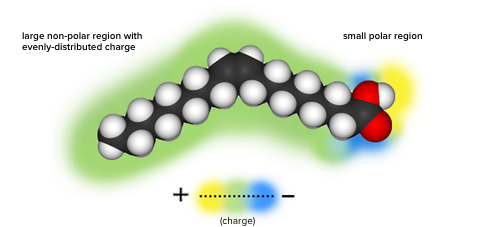
  Here is a photo of the linker molecule shown on the webpage below:


Notice how the molecule in the picture has both a polar and a non-polar end.  Again, from the website "Science Friday" for the episode "Salad Dressing Science" -- a short excerpt explaining the function of an "emulsifier":


How can we bring together polar and non-polar molecules to make something delicious like mayonnaise (which is essentially a combination of water and oil) or salad dressing? We need an emulsifier. Emulsifiers are the hand-holders of the molecule world. They contain both hydrophobic and hydrophilic regions and are able to attract and “hold hands” with polar and non-polar molecules simultaneously, pulling them together to form a special type of mixture called an emulsion. For instance, after adding an effective emulsifier to oil and vinegar and mixing thoroughly, separation of the oil from the vinegar will take much longer or won’t happen at all.


At this point, you are probably thinking the following question:


What does salad dressing science have to do with producing a cosmetic formulation?


Actually, from a chemist's standpoint, there is no difference.  Both are mixtures of chemicals.  Furthermore, each chemical has a distinct purpose (or supportive purpose) in the product formulation.  Lets start with the categories that each chemical is partitioned into.  In certain instances, some chemicals will play a dual role.  This will become clear shortly in the next section.


Categories Of Chemicals


In the previous post which contained a dictionary of 'functions' that chemicals play in cosmetics and food chemistry.  Before that, the previous post was the first post in which I chose a product as shown above -- Jergen's Skin Firming Moisturizer lotion -- to break down.  In that post, I listed each chemical with the function that each serve.  Now, the time has come to group the chemicals into categories in their respective functions -- to drive home the function of the components.


A) Categories: Hydrophobic, Hydrophilic, Emulsifier, and Surfactant:


Above, there was a brief introduction into the 'hydrophobic'(water fearing) and 'hydrophilic'(water loving) chemicals.  This distinction is very important since a large amount of chemicals are thought of in these terms in product formation.  Additionally, there are 'linker' molecules which have both properties -- 'hydrophobic' and 'hydrophilic' -- which are extremely important to make a mixture appear to be uniform.  This class of chemicals is known as 'emulsifiers'.  I will refer to the previous post with the dictionary for more information.


Note: the categories listed below -- hydrophobic, hydrophilic, and emulsifier are used for simplifying purposes.  Depending on the professional settings and synthesis, the degree of each categorical placement can be argued.  I use these categories to help the reader understand that a certain amount of  cosmetic formulations have a fatty component (nonpolar), a hydrophilic component (glycerin) and an emulsifier (cetearyl alcohol) to make a mixture.  Other chemicals are present to assist in stabilizing the mixture to hold together along with other attributes (properties) which will be highlighted below.


A.1: Hydrophobic Ingredients


The first category will be the 'hydrophobic' compounds (i.e., non-polar, oils, fats, starch, etc.) shown below:


1) Mineral Oil

2) Petrolatum

3) Cyclopentasiloxane

4) Acrylates Copolymer

5) Dimethicone

6) Stearic Acid

7) Glyceryl Dilaurate

8) Fragrance

9) Methyl Paraben

10) Butylene Glycol

11) Acrylates/C10-C30 Alkylacrylate Crosspolymer

12) Propyl Paraben

13) Hydrolyzed Wheat Protein/PNP Crosspolymer

14) Tocopheryl Acetate

15) Centella Asiatica Extract

16) Cocos Nucifer (coconut oil)

17) Hydrolyzed Collagen

18) Withania Somnifera Root Extract

19) Fusus Vesiculosus Extract

20) Hydrolyzed Elastin


Upon inspecting the ingredients in the list above, you will notice that some of them do not have chemical structures shown in the image panels above.   Which raises the following question:


Why are their chemical structures not shown?


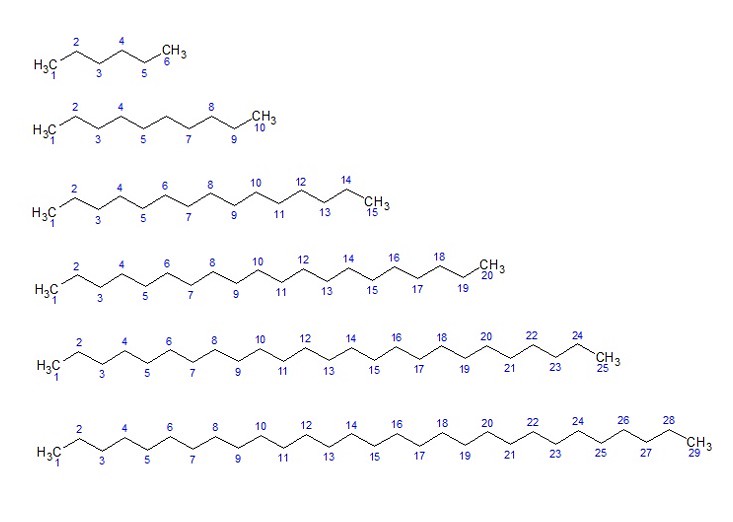
The reason is that oils contain mixtures of fats along with other long chain carbon molecules.  The chains are nonpolar and are repeating carbon atoms with hydrogen atoms attached in most cases.  In the image below, I show a distribution of carbon chains of varying length to illustrate my point:


An example of such a mixture of carbon chains is Petrolatum.   Petrolatum is a jelly with viscous properties.  The viscosity can be controlled by the distribution of chain lengths in the mixture.  For a mixture with a high viscosity, the chain length might be greater than 25 carbons in length.  Whereas, for a less viscous mixture, the carbon chains might be in the range of less than 25 carbons in length.


In the image above, I show carbon chains


A.2 Hydrophilic Ingredients


The next category is the opposite of the first in properties -- the 'hydrophilic' compounds (i.e., polar, ionic molecules, water, short chained alcohols, etc.) are shown below:


1) Water

2) Glycerin

3) DMDM Hydantoin

4) Sodium Hydroxide

5) Arginine

6) Polyimide-1


A.3 Emulsifier Ingredients


Finally, last but not least, the category of the 'linker' molecules -- 'emulsifier' compounds (i.e. surfactants, soaps, detergents, etc. ) are shown below:


1) Cetearyl Acohol

2) Acrylates/C10-C30 Alkylacrylate Crosspolymer


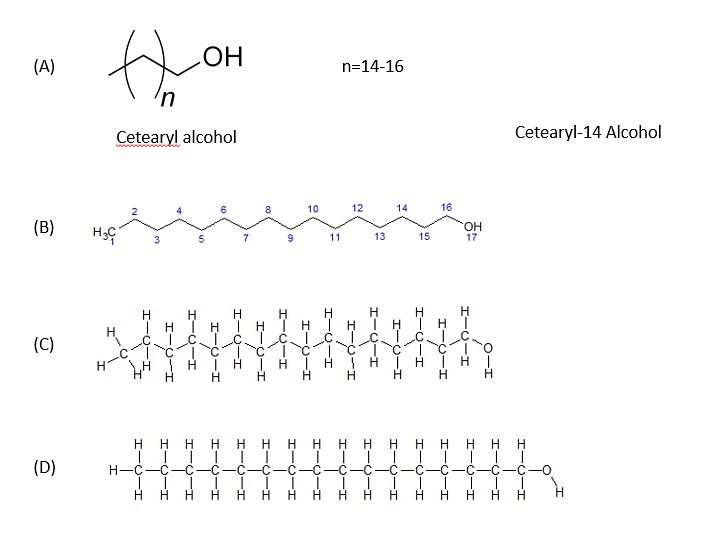
In this mixture, there are few emulsifiers present.  I must note that the structure for cetearyl alcohol is rather ambiguous in the picture above.  You probably do not understand what chemical structures with parenthesis () mean?  In the image below, the chemical structure is expanded to the chemical cetearyl alcohol-14:


Shown above are 4 different illustrations of cetearyl alcohol.  Since the length of the alkyl (carbon chain) can vary based on the index (the number outside of the parenthesis), cetearyl alcohol has many different structures.  Meaning that the length of the carbon chain will vary.  As you can probably guess, the longer the carbon chain, the more that the molecule will acts as a 'nonpolar' one rather than a polar molecule.  short chained cetearyl alcohols are 'polar'.


In the structure (B) above, cetearyl alcohol-14 chemical structure is shown without the hydrogen molecules attached.  This representation is referred to as the 'line structure.'  Often chemists will use the 'line structure' to simplify the representation to focus on other aspects of the molecular structure.  Structure (C) has all of the hydrogen atoms attached to the structure.  Structure (D) shows the full structure flattened out for clarity of the numbers and types of atoms present.  In future blogs, I might just use line formulas to simplify the case in point of ingredients in a given product formulation -- be aware!


A.4 Surfactants


Note: these are not the only three categories of ingredients.  There are other main categories which are slightly separate from the above three categories.  One such category is surfactants -- which are listed below:


1) Ceteareth-20

2) Aluminum Starch Octenyl Succinate


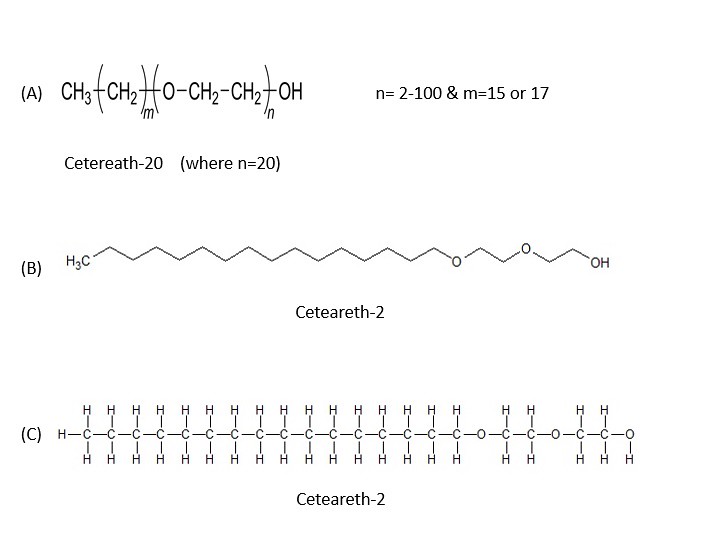
Here is the structure of ceteareth-2 shown in the image below:


Again, shown above are 4 different structures for ceteareth-2.  Notice in the structure (A) that in parenthesis there is one "O" on the chain?  If the index 'n' is two, there will be two as shown in the line structure (B).  If the index 'n' was 20 as in ceteareth-20, then there would be 20 "O" (oxygen atoms) and the molecule would run off of the page of the screen.  Therefore, I used an example of ceteareth-2 to show the chemical structure.


B) Additional Categories: Skin Conditioning Agent, Skin Protectant, Humectant, and Emollient:


B.1 Skin Conditioning Agent

1) Glycerin

2) Mineral Oil

3) Cyclopentasiloxane

4) Dimethicone

5) Glyceryl Dilaurate

6) Butylene Glycol

7) Arginine

8) Tocopheryl Acetate

9) Centella Asiatica Extract

10) Hydrolyzed Collagen

11) Withania Somnifera Root Extract

12) Fucus Vesiculosus Extract

13) Hydrolyzed Elastin


Inspecting the list above and comparing it to the three additional lists below, some chemicals will serve two purposes.  This multifaceted nature of the chemical gives rise to the distinction of definitions of these categories.  Meaning that a skin-conditioning agent is also an humectant and an emollient in certain products.  The important take-away message is that in order to interpret the function of various ingredients, look at the product.  Ask yourself the following question:


What is the purpose of adding the ingredient into the product?


To determine the function, the website EWG gives the categorical function (i.e., skin-conditioning agent, skin protectant, humectant, etc.).  In this blog post, the product is a 'skin firming moisturizing lotion' from the manufacturer Jergen's.  The list above gives a few ingredients that will not be common across various lotions (products) from different manufacturers.  Alternatively, the majority of the chemicals are common ingredients.  This will become apparent in the future posts which look at different products.


Skin conditioning agent is defined in the previous blog as:


A skin conditioning agent and an essential fatty acid that helps maintain optimal skin health and function.  Lipid Organic products found in living systems that are insoluble in water, like fats. Cell membranes are made of lipids.


The nonpolar nature of the chemicals will serve as a 'skin-repleneshing agent' to the lotion under inspection.  As I mentioned in the very first post 'anti-aging' post is that there is very little in terms of regeneration of collagen by external chemical means possible.  Therefore, the purpose of adding a distribution of lipids, oils, and fats will serve as a "coating" to adhere to the upper layer of the Stratum Corneum (the outer layer of the epidermis).  If you were to add a highly polar liquid as the major ingredient to the lotion, the consistency would change and possibly not stick to the outer layer of the epidermis.  Remember the following rule:


Like loves Like!


If you apply this principle in formulating products, then formulation will be much easier.  As I mentioned, some ingredients serve many different purposes.  Adding oils, fats, lipids that will adhere to the skin will produce a layer which might be perceived as 'new skin' or 'moisturized skin'.  Really, the layer is just sitting on your skin.  How do you ensure that the layer will stay on the skin?


In order to make that happen, you will need to add a binder and a skin protectant.  Before moving to the next section of skin protectant, remember that skin conditioning agents will diffuse down into the top few layers of the skin -- but mostly sit on the outer layer.


One ingredient to highlight out of the skin-conditioning agent list is: Fucus Vesiculosus Extract.  Research from 2002 suggests that the extract might have anti-aging properties as highlighted in the abstract to the research article shown below:


Recently the researchers found that an extract of Fucus vesiculosus, which is a type of seaweed, promotes the contraction of fibroblast-populated collagen gels through increased expression of integrin molecules. In this study, they investigated the effects of topical application of an aqueous extract of this alga on the thickness and the mechanical properties of human skin. A gel formulation that included 1% of the extract was applied topically to human cheek skin twice daily for five weeks. A significant decrease in skin thickness measured by B-mode ultrasound was elicited, as was a significant improvement in elasticity measured with a Cutometer as compared with controls. In cheek skin, the thickness normally increases and the elasticity usually decreases with age. These results suggest that the Fucus vesiculosus extract possesses anti-aging activities and should be useful for a variety of cosmetics.


The exact mechanism is not known.  The research results were preliminary and more research has to be done to decipher into the exact mechanism of the Fucus Vesiculosus extract.  This is a chemical that stands out.  Other chemicals listed above will be redundant in other products.  Next, I will comment on skin protectants below.


B.2 Skin Protectant

1) Glycerin

2) Petrolatum

3) Mineral Oil

4) Dimeticone


The list above are common ingredients which function as skin protectant.  The purpose of adding a skin protectant is to ensure that the layer of lipids, fats, oils, long carbon chains to form a film on the top layer of the skin.  Additionally, the purpose is to hold the moisture inside the upper most layer of the skin (to hydrate) which promotes the appearance of 'healthy and younger' looking skin.  Using these ingredients does not actually change the physiology of the skin.  Basically, the skin protectant serves as the outer layer of the skin -- i.e. fake layer.


Another purpose of having a skin protectant is to hold in the moisture in the top layer of the skin.  The chemicals that promote moisture build up are 'humectants.'  Humectants are chemicals which are 'hydroscopic' in nature.  Hydroscopic means that the chemical will absorb water.  Incorporating humectants into a moisturizing lotion serves two purposes: attracts water (keeps moisture in) and prevents the lotion from drying out (and cracking).  Below is a list of humectants found in the Jergen's Skin Firming Lotion:


B.3 Humectant

1) Glycerin

2) Butylene Glycol

3) Hydrolyzed Collagen


B.4 Emollient

1) Cetearyl Alcohol

2) Petrolatum

3) Mineral Oil

4) Cyclopentasiloxane

5) Dimethicone

6) Glyceryl Dilaurate

7) Hydrolyzed Collagen


The list above contains the chemicals which act as Emollients.  What is confusing to me is the vague distinction between the categories.  This is the reason why I chose the distinction of 'hydrophobic' 'hydrophilic' and 'emulsifier'.  These distinctions make more sense in formulating a cosmetic product.  Here is the definition of an 'emollient' from the previous blog post below:


Moisturizers or emollients are complex mixtures of chemical agents specially designed to make the external layers of the skin (epidermis) softer and more pliable. They increase the skin's hydration (water content) by reducing evaporation. Naturally occurring skin lipids and sterols, as well as artificial or natural oils, humectants, emollients, lubricants, etc., may be part of the composition of commercial skin moisturizers. They usually are available as commercial products for cosmetic and therapeutic uses, but can also be made at home using common pharmacy ingredients.


As you can see, certain chemicals that are categorized as 'skin conditioning agents' are also 'emollients.'  Confusing?  Yep.  Again, the idea is to return to the overall purpose of the skin firming lotion -- i.e. make the skin tighter, younger looking and moist.  All of these chemicals work in concert to form the formulation at hand.  Adding in various chain lengths of carbon (i.e., short chain - less viscous, long chain - very viscous) changes the properties of the product.  Formulating a cream or lotion is making a mixture.


Last but not least, these chemicals will not work together over time.  Spoiling might happen.  Degradation of lipids, oils, and long chain molecules when the product is exposed to the atmosphere will inevitably happen.  The following chemicals are incorporated to act as a preservative:


1) DMDM Hydantoin

2) Methyl Paraben

3) Propyl Paraben


Conclusions


Wow, that was a lengthy list of structures and functions -- right?  Although, now you have a better
understanding of the nature of the chemicals or at least should have.  Chemistry is about exploring structure and function.  Especially, since the two are intricately related.  In the above ingredient analysis, you were able to see how structure gives rise to play a part in function.  There are gaps left in the explanation -- some of which are intentional and others which are not.  Education is an ongoing process.  Remember that each of you hold the power to explore the chemicals in question on your own.  That is why I try (as much as possible) to stick to 'open source' without paywalls -- explanations.


In the paragraphs above, I have introduced you to the ingredients used in one product.  That product was Jergen's Skin Firming Moisturizing Lotion.  Since this was my first deconstruction of a product, the blog post was sort of all over the place.  If you would like to see more or less of certain content, please tell me in the comments.  This was a learning experience for me.  In the next post, I will continue with a brief analysis of the toxicology of the ingredients in the same products.  Then, I will move onto a new product which claims 'anti-aging' properties too.  At that point, the ingredients which are essential will start to become completely apparent.


Until next time, Have a great day!   References are below for the sources of the material above.



References:


1) EWG's Skin Deep cosmetic Database: 

http://www.ewg.org/skindeep/

2) Paula's Choice (beauty product database): 

http://www.paulaschoice.com/

3) Cosmetics and Toiletries.com: 

http://www.cosmeticsandtoiletries.com/research/chemistry/17390254.html

4) Chemist's Corner: 

http://chemistscorner.com/cosmeticsciencetalk/discussion/355/polarity-of-cosmetic-oils

5) Prospector:

http://knowledge.ulprospector.com/268/reduce-oily-feel-moisturizer-formulation/

6) Cosmetics info:

http://www.cosmeticsinfo.org/ingredient/dmdm-hydantoin

7) The Pharmaceutics and Compounding Lab (at UNC):

http://pharmlabs.unc.edu/labs/solubility/structure.htm

8) Web MD:

http://www.webmd.com/vitamins-supplements/ingredientmono-953-ashwagandha.aspx?activeingredientid=953

9) Fujimura T1, Tsukahara K, Moriwaki S, Kitahara T, Sano T, Takema Y.  "Treatment of human skin with an extract of Fucus vesiculosus changes its thickness and mechanical properties." J Cosmet Sci. 2002 Jan-Feb;53(1):1-9.

10)

Sunday, January 29, 2017

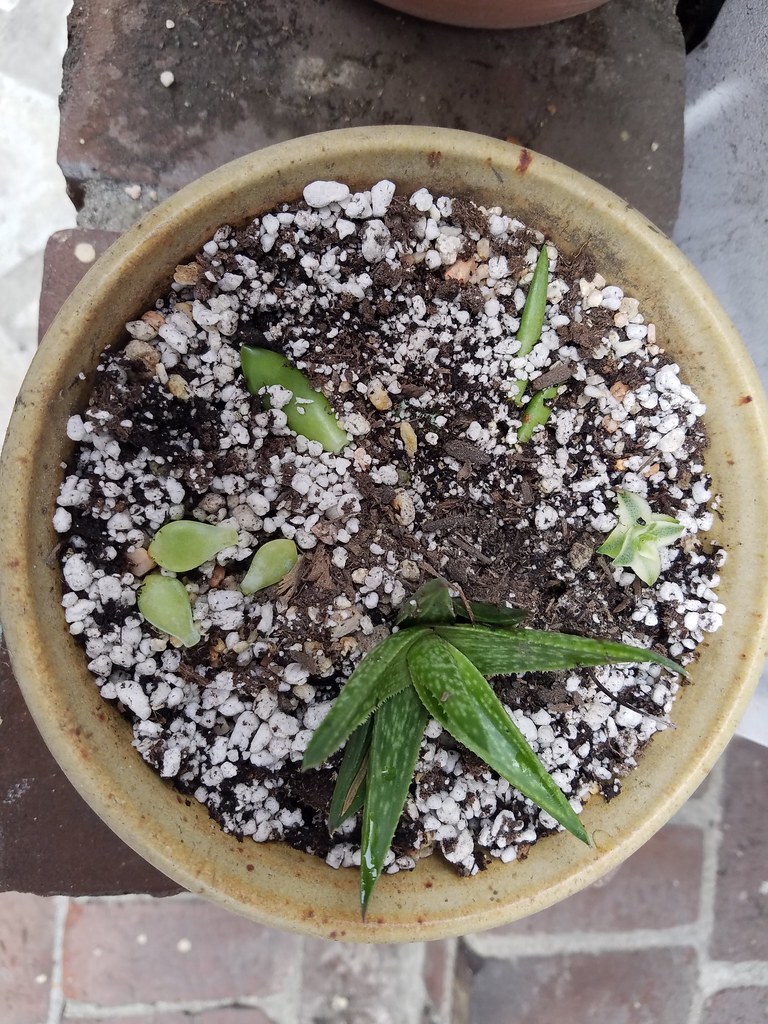
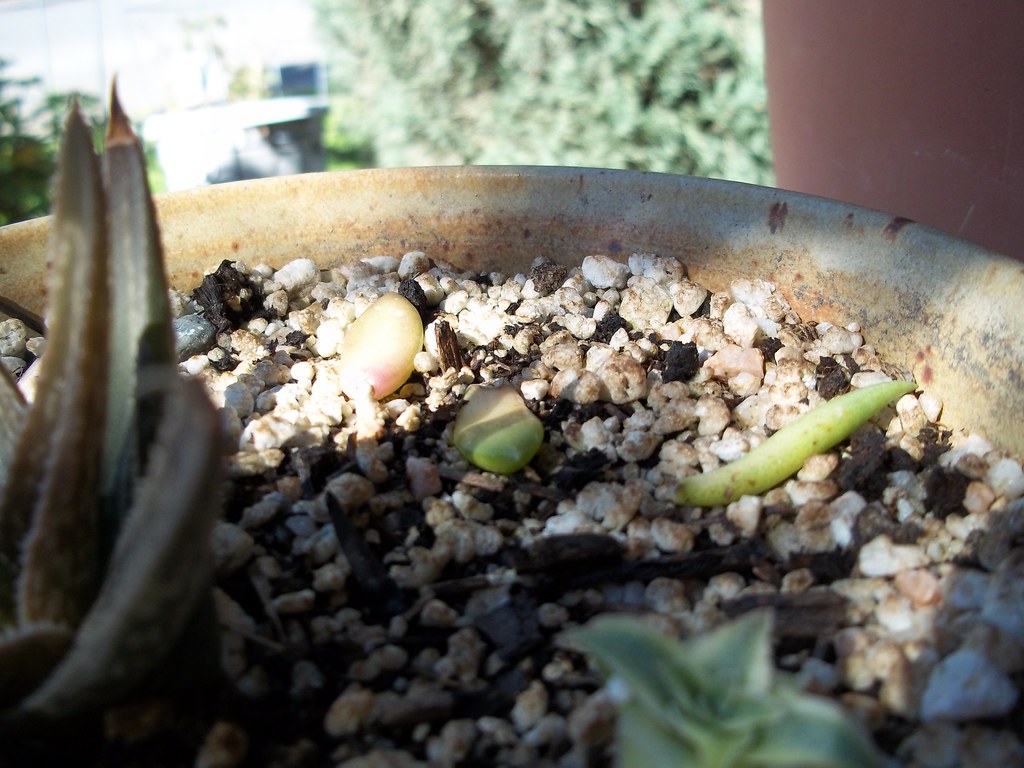
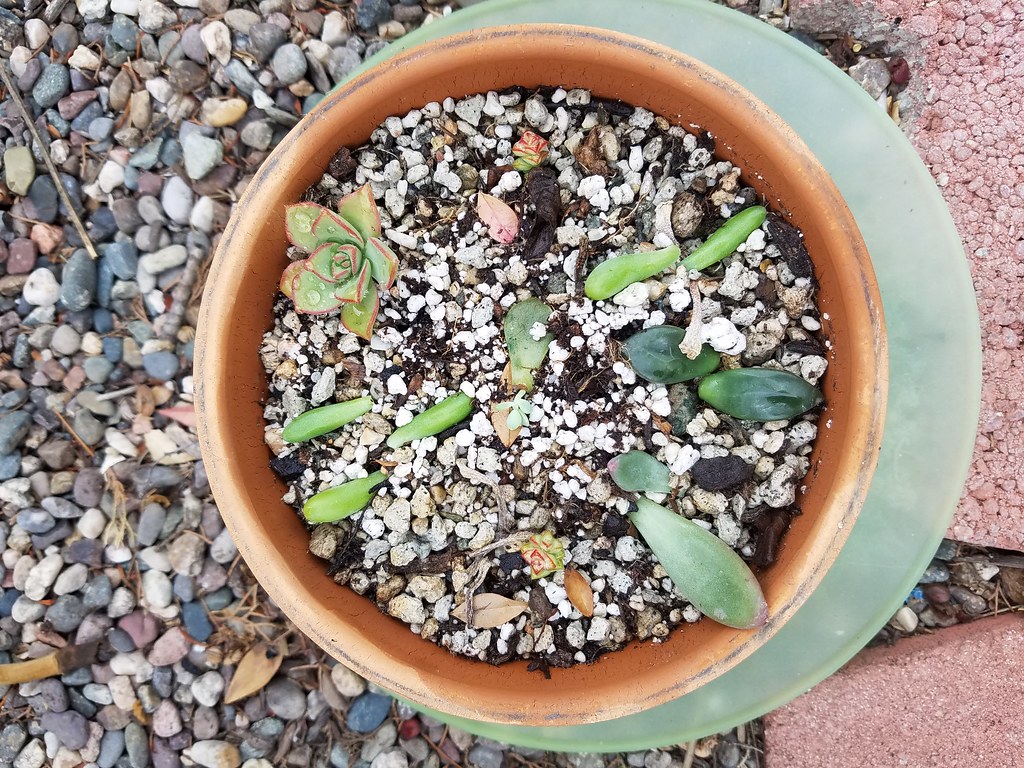
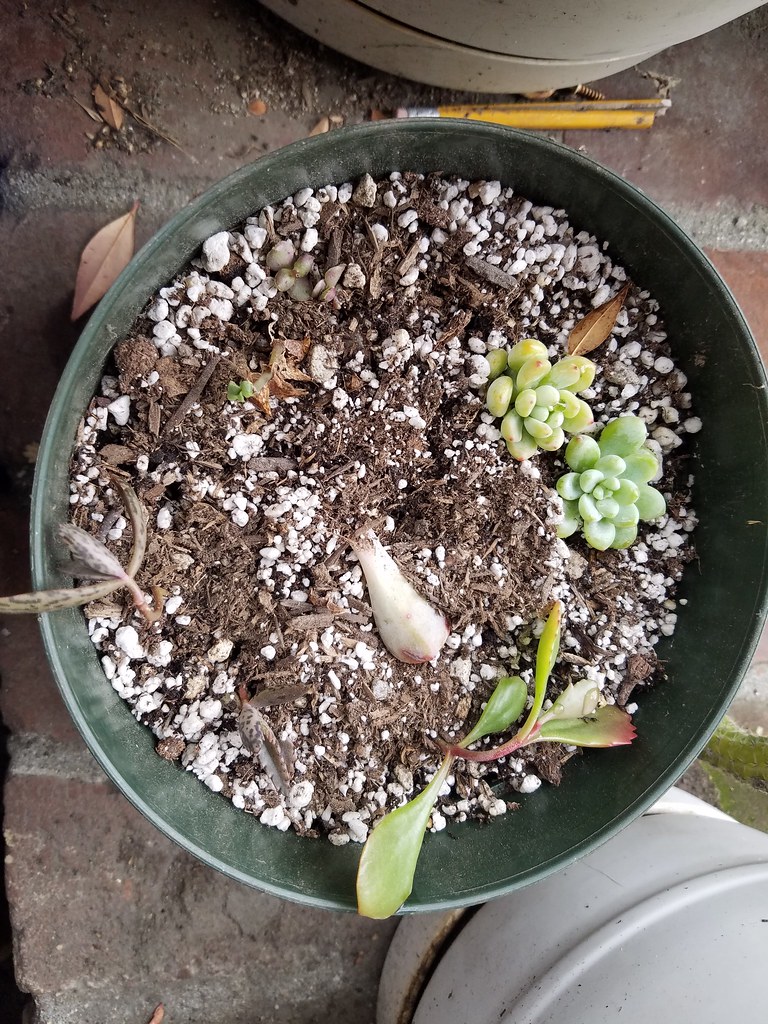
Succulent Clones

December 11, 2016
January 29, 2017 
(7 weeks = 49 days later)


December 11, 2016
January 29, 2017
(7 weeks = 49 days later)


December 11, 2016
January 29, 2017 
(7 weeks = 49 days later)


It's about progress not perfection.  And patience.

Tuesday, January 17, 2017

The Basics Of Opioids

The opioid problem has swept across the nation over the last decade and a half.  Since 2000, there have been around 300,000 opioid deaths (33,000 alone in 2015).  What is causing this emerging addiction?  Before we can understand the problem, maybe a step back would be good for us.   A step back that would entail looking at the molecular structures of various opioids.  Not Chemistry!


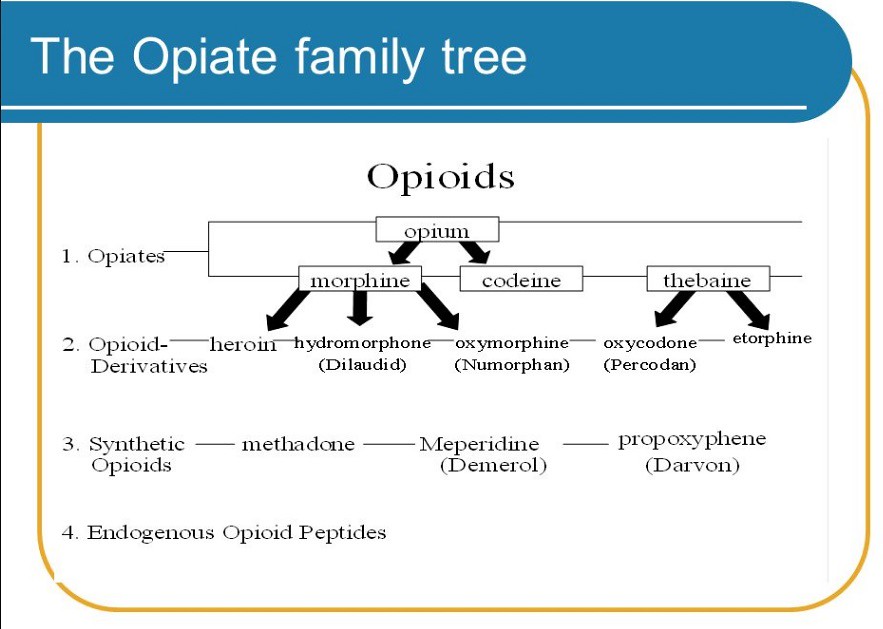
Yes, indeed - Chemistry!  In order to understand the problem, a look into the molecular similarities might be of great use.  Last weekend, Kayla -- who writes on this blog and other sites -- finished up a blog post on "opioids".  You can access that blog post by clicking -- HERE.  Kayla takes the reader on a short journey starting at the outset with the stated fact that over 150,000 plant and microorganism derived "bioactive" compounds are found in nature.  As she points out some of which are active in humans.  One class of "bioactive" compounds are the opioid family (shown below):


Structural similarities were shown to reveal that the active ingredient in cough syrup (Dextromethorphan -- derived from codeine) is not very different from the molecular structure of "vicodon" -- which is commonly abused by the public.  Although, Dextromethorphan has a lower risk of abuse.  The manner in which the drugs target a given "active site" forms a range.  This is due to the molecular structure.  Each molecular structure (in a family) has an "affinity" for a given "active site" in the body.  Drugs with a higher affinity to hit a given "active site" result in being labeled as "more potent."  Potency can be related to abuse.  Other drugs might hit a range of "active sites" which might contribute to the phenomenon of "side effects" associated with a given drug.  These drugs might not be preferable to an addict due to unwanted side effects.


The blog post is a great primer on the molecular similarities and differences  -- worth reading.  Especially for the readers who are interested in the content that is presented on this site and "Mike Thinks".  With that in mind, I hope that you enjoy the short primer on opioids written by Kayla.  Have a great day!  


Tuesday, January 10, 2017

Extreme Personality Traits And Making Small Changes

Are you a person who has extreme tendencies?


What are extreme tendencies?


What is extreme behavior?


The answer to these questions is centered around the behavior of focusing your attention or behavior (habit) on one task and going all in.  An example is of the disease of alcoholism.  Typically, as the disease progresses, the whole behavior becomes centered around the use of alcohol.  Extreme behavior is not limited to the use of drugs and alcohol.  In fact, many people suffer from being a 'workaholic' -- spending an unusually large amount of time at work.  Work becomes your life.


Why do I mention this behavior?


After returning from vacation, I had a short break from writing blogs on various sites -- which was much needed.  Over the vacation, I realized that I had taken some time off from checking in with my journal on the site "Kaiserwellnesscenter.com".  Periodically, I write about my mental journey.  These electronic journal entries are different from the learned "mental awareness" articles found on this blog site.  The last time I checked in was a few months ago.


Therefore, I wrote another entry which can be accessed by clicking -- HERE.


I hope that you find useful content on the journal entry that will help you move toward a healthier lifestyle.  In the coming week, I should be continuing the "Anti-Aging Skin Series" with the ingredients from Jergen's Skin Firming Lotion (as promised).


With that being said, I will finish the next post to publish soon.  Have a great day!



Saturday, January 7, 2017

Packing for Your Car-free Vacation


Have you ever considered taking a vacation without a car?  Yes, I mean without a car.  No rental car when you arrive at a destination.  Oh My Goodness!!  Yep.  If you are not a seasoned cyclist who engages in these types of trips, then the following sites might be of interest to you.  We are not seasoned cyclists -- although, we are becoming seasoned cyclists.  Did this happen over night?  No.  Have we tried various trips and learned different lessons on each. Yes.


Engaging in a bicycle adventure trip is easy.  First, you have to make up your mind that you are going to try to go on one.  Second, decide where you would like to travel to.  Some bloggers suggest going on an overnight trip to a local hotel near your house on your bicycles with a couple of panniers to start out with.  This is one strategy.


Another strategy is to decide to go further.  If you decide to do this, the learning curve is steeper.  But you adjust very quickly -- which is a good thing.  We started by taking trips down to the beach near family (around 60 miles away) and staying in a hotel.  This trip was simple in that the whole trip involved a bicycle and a hotel (easy to plan).


Next, we extended this toward taking the train which we ride daily to the beach to camp last year.  You can read about that experience in the following blog post -- written by Mike.  Adding a train component to a bicycle vacation is not difficult.  But remember, the train usually has limited times of departure and arrival.  Be sure to consider these schedules while planning a vacation departure or arrival time and date.


Recently (as in last week), we took a bicycle trip up north to Grover Beach and stayed in a hotel.  The bicycles served the purpose of a rental car.  We were able to explore the town car-free and stress free with a bicycle.  Part of the journey is the bicycle trip.  Most of the time on vacation, people are trying to get to a destination to enjoy the destination (such as a beach).  When riding a bicycle to a destination, the journey is part of the enjoyment of the destination.   With all of this being said, you might be wondering what to pack for such a trip.


If you are considering a car-free vacation, you may find the following links to our previous trips useful.  Each contains suggestions for packing.


Newport Beach and Oceanside (July 2014) + Metrolink + Hotel
http://bitchonabike.blogspot.com/2014/07/independence-day-ride.html

San Francisco and Santa Cruz (May 2015) + Amtrak Coast Starlight + Hotel
http://bitchonabike.blogspot.com/2015/05/sf-to-la-packing-list.html

Doheny Beach (January 2016) + Metrolink + Camping
http://bitchonabike.blogspot.com/2015/12/doheny-sb-packing-list.html
http://bitchonabike.blogspot.com/2016/01/cyclecamping-or-cyclocamping.html

Grover Beach (January 2017) + Amtrak Pacific Surfliner + Hotel
http://bitchonabike.blogspot.com/2017/01/central-coast-trip.html


We hope that you enjoy reading the above sites packed with the lessons that we have learned evolving over time while learning how to bicycle adventure.  The photos below are of the recent trip to Grover Beach which we just returned from.  Additionally, we hope to see you out on the road on a bicycle vacation.  Have a great day!


DCIM\100GOPRO\GOPR1371.
Day 1: Waiting for the Amtrak


20161230_170959
Day 1: On Board the Amtrak


20161231_111559
Day 2: View from our Hotel Balcony


20161231_122716
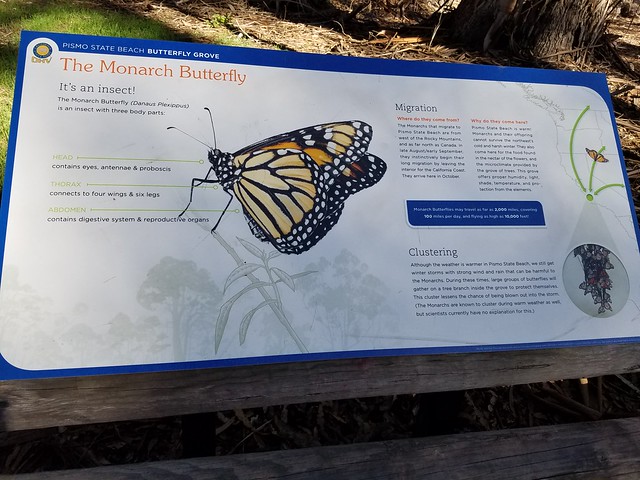
Day 2: Monarch Butterfly Grove (FREE)


20170101_132443
Day 3: Bike Ride to Avila Beach (FREE)


20170101_153705
Day 3: Bicycle Parking in Hotel Room (FREE)


20170102_123322
Day 4: Tour of the Mission San Luis Obispo de Tolosa (FREE)


20170102_152842
Day 4: Riding San Luis Obispo County Transit ($5 Day Pass)


20170103_145623
Day 5: Returning via Amtrak


20170103_165230
Day 5: A Beautiful way to End our Vacation