Tuesday, November 1, 2016

Anti-Aging Skin Series Post 5: Part 1 - Jergens Skin Firming Moisturizer Lotion

Continuing on with our journey through the scientific claims (in products) of "Anti-Aging" skin care products, the time has come to tackle a chosen product.  For those readers just joining the educational series, the series is called "Anti-Aging Skin Series" and by clicking on the title, previous posts can be accessed.  The series came out of an original post which was lengthy and addressed a couple of popular technologies.  One was artificial skin while the other was that reversing aging skin with the use of 'skin creams' which have claims of restoration of crucial ingredients in the human skin like 'collagen' or 'glycans' (on the surface of cells - which promote collagen growth).


In the paragraphs below, we will look at a skin care product that is supposedly aimed at "skin firming" by 'tightening' or 'toning' the consumer's skin to appear young and healthy skin.  Specifically, we will break the blog post into two parts: 1) An Ingredient List and 2) a discussion about the ingredients and functionality of each.  Below is part 1 of the first product -- a Skin Firming Moisturizer product.


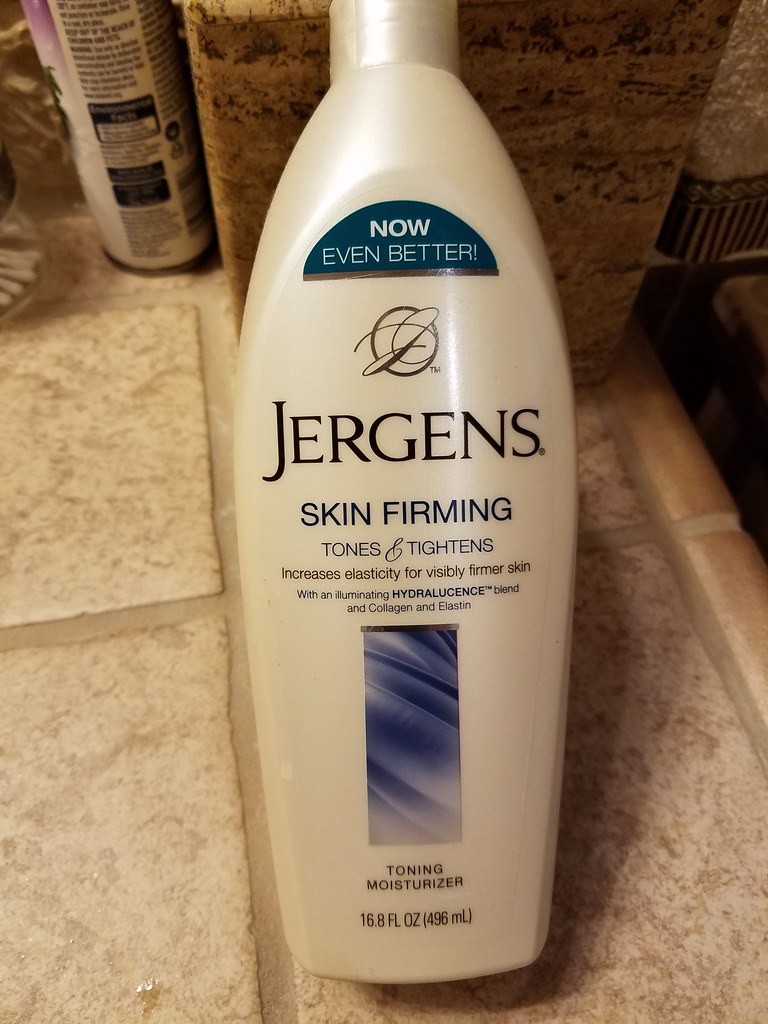
Here is a picture of the skin care product named 'Jergens Skin FirmingMoisturizer' below:


Without further ado, lets start exploring the skin firming moisturizer in greater detail.


Skin Firming Moisturizer


As I just mentioned, the product that we are exploring today is named 'Jergens Skin Firming Moisturizer' and is specifically for tightening and toning older skin to appear younger.  If we look at the product description from the website 'Amazon' -- here is what the site states as a selling point:

About the Product
JERGENS Skin Firming Moisturizer helps you achieve deeply luminous, visibly firmer skin. This unique formula tightens and increases elasticity of celllulite prone skin for visibly firmer results.
Reduces the appearance of cellulite and features a unique illuminating HYDRALUCENCE blend, Collagen, and Elastin.
Improves skin‘s resiliency, elasticity, and firmness. With an exclusive anti-cellulite Firm Perfecting Complex.
Relieves dryness and replenishes moisture to improve skin‘s tone, texture, and luminosity.


The marketing teams behind these products are amazing -- the teams can really sell a product.  I have to give credit where credit is due.  Of course, this credit is only from a 'selling standpoint' and not from a 'scientific standpoint' -- which we shall explore shortly.


According to the product manufacturer's claim, the skin firming moisturizer is a 'unique formula' that will increase "elasticity of cellulite prone skin for visibly firmer results."  Remember this claim along with other mystifying statements like "features a unique illuminating HYDRALUCENCE blend, Collagen, and Elastin."  From my read, the last statement is the most true statement: "Relieves dryness and replenishes moisture to improve skin's tone, texture, and luminosity."  After going through the ingredient list, these claims will be either proven true or false!


If the container is turned around to reveal the backside of the product container, the statement and ingredients are shown as follows:
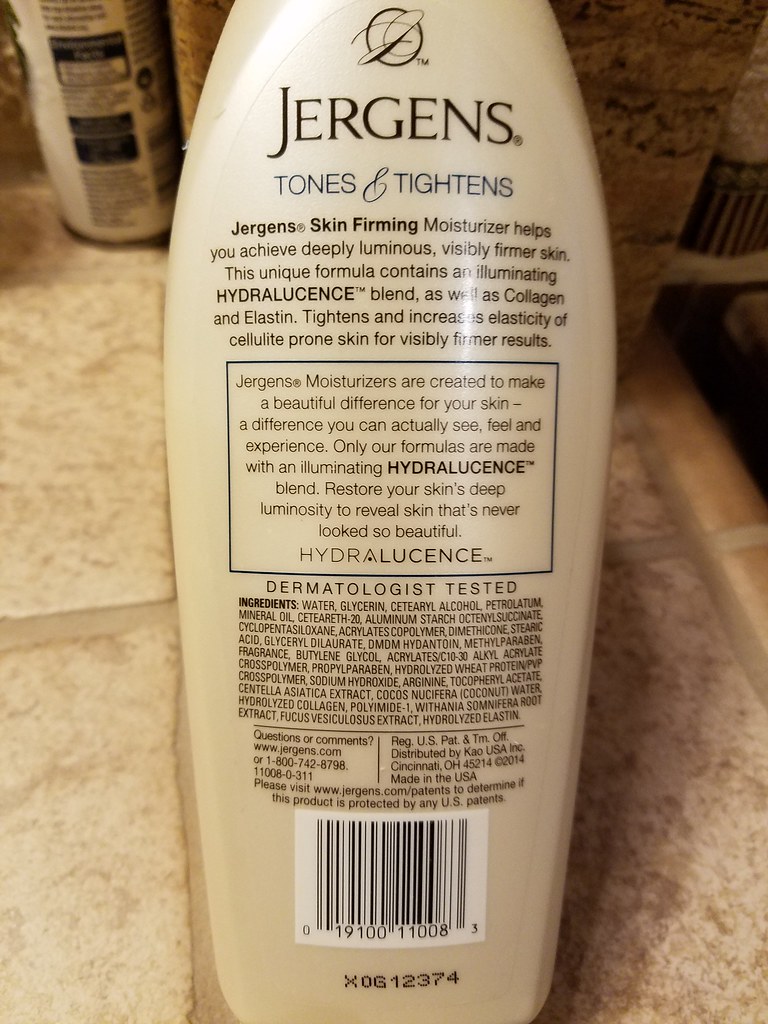


and zooming in on the ingredients, the list is shown below:
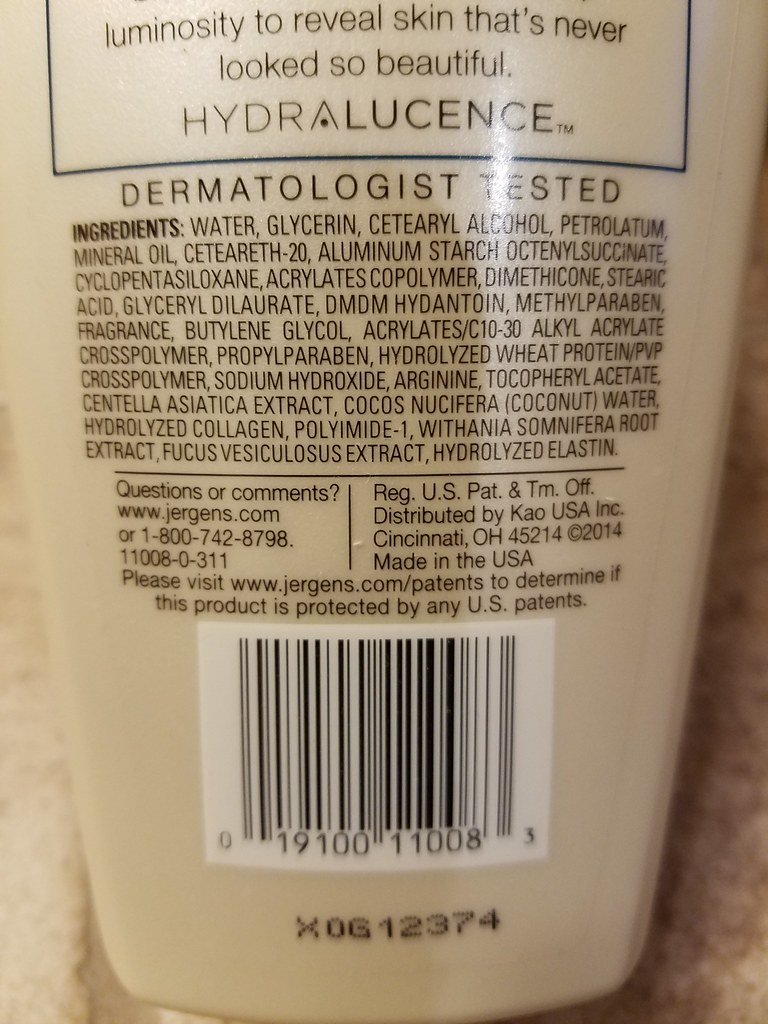


Remember in the original post that aging skin appears dry, flaky, and saggy due to the loss of 'collagen'.  Additionally, the 'saggy' skin is often referred to as 'crepey' skin too.  If a product was advertised to 'tighten' and 'tone' skin to make the skin appear to be more youthful skin, then obviously, the product would sell well and appeal to a large audience.  I imagine that is the case with the following product under review in this post.


How do the ingredients function to make skin appear 'tightened' and 'toned'?


If the ingredient list is explored into greater detail, a better understanding of the function of each ingredient will become apparent.  In the next section, a list will be formed using data collected on a very resource rich website 'Environmental Working Group'.  The EWG is a nonprofit organization whose mission is to demystify the harmful ingredients that are contained in consumer products and lobby in Washington D.C. toward safer use of chemicals in consumer products.  Their website is dense in information.


One of the overarching goals on the KaiserWellnessCenter blog is to provide you (the reader) with the correct resources that you can use for yourself in your journey toward wellness and a better understanding of the surrounding environment.  Below, I will list information 'about' the chemical in question and the 'function' of the chemical in question.  You might ask:


Where does this information come from?


One of the chemicals off of the ingredient list is "Aluminum Starch Octenyl Succinate" with an ingredient profile from the EWG that is shown below:


As you can see, the two pieces of information needed to understand the importance of the ingredient are the "about" and "function" of the chemical.  Also, the various names would be useful as different manufacturers of different products might choose to use different names.  The EWG provides a fair amount of information in the frame shown above.  Although, if you type in the chemical name like I did, there is more data on the chemical not shown in the image above.  I broke the webpage for "Aluminum Starch OctenylSuccinate" up into three images.  Here are the remaining two with additional toxicity data and resources on the references of the information above:
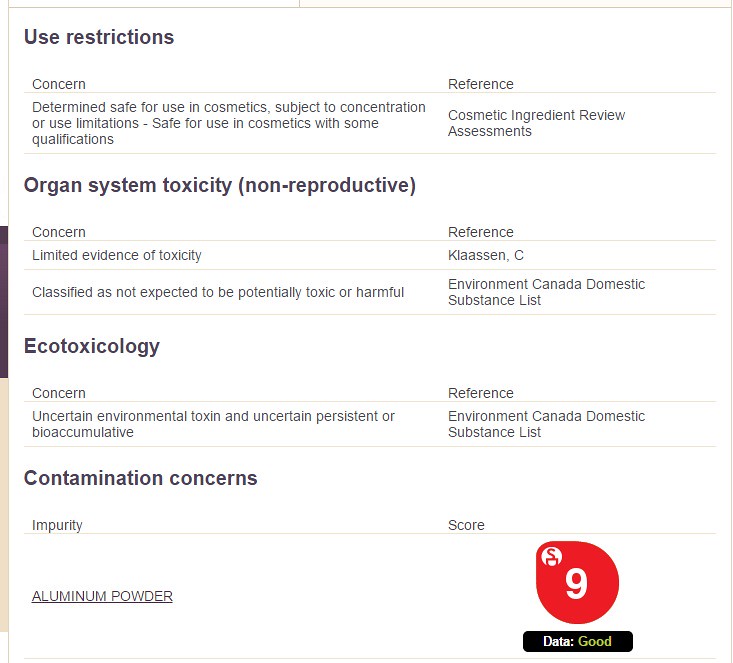


And ...



The EWG is one great resource to find information on chemicals in consumer products that are sold on the market.  Additional sites do exist along with reference books (like "A Consumer's Dictionary Of Cosmetic Ingredients") which will be mentioned as we explore different products.  For the purpose of the introductory post on a "skin firming moisturizer," the EWG will be the sole source of the ingredient list.  In the future, you will be able to type in a variation of a name and search for yourself.


Ingredient List


I just mentioned that a list of the two types of information would be made about each ingredient.   Each ingredient will be underlined and then followed by two sentences.  The first sentence will contain the "about" information.  Whereas the second sentence will contain the "function" of the chemical in the product.


Note: the information on the ingredient list is taken directly from the website - EWG.  This is to illustrate the first pass at deconstructing any ingredient list.  In future posts, only relevant functions will be extracted for the product under review.


Remember, click on any of the 30 chemicals listed and you will be directed to the original source -- the EWG website page for the chemical in question.


1) Water:

About: n/a

Function: Solvent


2) Glycerin:

About: Glycerin (also called glycerol) is a naturally occurring alcohol compound and a component of many lipids.

Function(s): Denaturant; Fragrance Ingredient; Hair Conditioning Agent; Humectant; Oral Care Agent;Oral Health Care Drug; Skin-Conditioning Agent - Humectant; Skin Protectant; Viscosity Decreasing Agent; PERFUMING; SOLVENT


3) Cetearyl Alcohol:

About: Cetearyl Alcohol is a mixture of cetyl and stearyl alcohols that can come from vegetable or synthetic sources.

Function(s): Emulsion Stabilizer; Opacifying Agent; Surfactant - Foam Booster; Viscosity IncreasingAgent - Aqueous; Viscosity Increasing Agent - Nonaqueous; EMOLLIENT; EMULSIFYING; EMULSION STABILISING; FOAM BOOSTING; VISCOSITY CONTROLLING


4) Petrolatum:

About: Petrolatum is a semisolid mixture of hydrocarbons obtained from petroleum.

Function(s): Hair Conditioning Agent; Skin-Conditioning Agent - Occlusive; Skin Protectant; EMOLLIENT; MOISTURISING; UV ABSORBER


5) Mineral oil:

About: Mineral Oil is a liquid mixture of hydrocarbons obtained from petroleum.

Function(s): Fragrance Ingredient; Hair Conditioning Agent; Skin-Conditioning Agent - Emollient;Skin-Conditioning Agent - Occlusive; Skin Protectant; Solvent; ANTISTATIC; PERFUMING; SKIN PROTECTING


6) Ceteareth-20:

About: Ceteareth-20 is the polyethylene glycol ether of cetearyl alcohol; may contain potentially toxic impurities such as 1,4-dioxane.


Function(s): Surfactant - Cleansing Agent; Surfactant - Solubilizing Agent.


7) Aluminum Starch Octenyl Succinate:

About: This ingredient is an aluminum salt of chemically modified starch.

Function(s): Absorbent; Anticaking Agent; Viscosity Increasing Agent - Nonaqueous; VISCOSITY CONTROLLING.


8) Cyclopentasiloxane:

About: Cyclopentasiloxane (cyclomethicone) is a silicon-based cyclic compound; may be associated with environmental toxicity.

Function(s): Hair Conditioning Agent; Skin-Conditioning Agent - Emollient; Solvent; SKIN CONDITIONING


9) Acrylates Copolymer:

About: Acrylates copolymer is composed of acrylic acid and methacrylic acid building blocks.

Function(s): Adhesive; Artificial Nail Builder; Binder; Film Former; Hair Fixative; Suspending Agent -Nonsurfactant; ANTISTATIC; BINDING; FILM FORMING


10) Dimethicone:

About: Dimethicone (also called polymethylsiloxane) is a silicon-based polymer used as a lubricant and conditioning agent.

Function(s): Antifoaming Agent; Skin-Conditioning Agent - Occlusive; Skin Protectant; EMOLLIENT; SKIN CONDITIONING; SKIN PROTECTING.


11) Stearic Acid:

About: Stearic acid is a naturally occurring fatty acid.

Function(s): Fragrance Ingredient; Surfactant - Cleansing Agent; Surfactant - Emulsifying AgentSurfactant-Cleansing Agent is included as a function for the soap form of Stearic Acid.; EMULSION STABILISING; MASKING; REFATTING.


12) Glyceryl Dilaurate:

About: Glyceryl Dilaurate is a diester of glycerin and lauric acid.

Function(s): Skin-Conditioning Agent - Emollient; EMULSIFYING.


13) DMDM hydantoin:

About (FORMALDEHYDE RELEASER): DMDM hydantoin is an antimicrobial formaldehyde releaser preservative.

Function(s): Preservative.


14) MethylParaben:

About: Methylparaben is in the paraben family of preservatives used by the food, pharmaceutical, and personal care product industries.

Function(s): Fragrance Ingredient; Preservative.


15) Fragrance:

About: The word "fragrance" or "parfum" on the product label represents an undisclosed mixture of various scent chemicals and ingredients used as fragrance dispersants such as diethyl phthalate.

Function(s): DEODORANT; MASKING; PERFUMING.


16) Butylene Glycol:

About: Butylene glycol (1.3-Butanediol) is a small organic alcohol used as solvent and conditioning agent.

Function(s): Fragrance Ingredient; Skin-Conditioning Agent - Miscellaneous; Solvent; ViscosityDecreasing Agent; HUMECTANT; MASKING; SKIN CONDITIONING; VISCOSITY CONTROLLING.


17) Acrylates/C10-30 Alkylacrylate Crosspolymer:

About: This ingredient is a polymer of actylic acid and related chemicals.

Function(s): Emulsion Stabilizer; Viscosity Increasing Agent - Aqueous; Viscosity Increasing Agent -Nonaqueous; EMULSION STABILISING; FILM FORMING; VISCOSITY CONTROLLING.


18) PropylParaben:

About: Propylparaben is in the paraben family of preservatives used by the food, pharmaceutical, and personal care product industries.

Function(s): Fragrance Ingredient; Preservative; PERFUMING.


19) Hydrolyzed Wheat Protein/PNP Crosspolymer:

About: Hydrolyzed Wheat Protein/PVP Crosspolymer is a crosslinked copolymer of HydrolyzedWheat Protein (q.v.) and PVP (q.v.).

Function(s): Film Former; Hair Conditioning Agent; Hair Fixative; FILM FORMING; HAIR FIXING.


20) Sodium Hydroxide:

About: Sodium Hydroxide is a highly caustic and reactive inorganic base.

Function(s): Denaturant; pH Adjuster; BUFFERING.


21) Arginine:

About: Arginine is a naturally occurring amino acid.

Function(s): Fragrance Ingredient; Hair Conditioning Agent; Skin-Conditioning Agent - Miscellaneous; ANTISTATIC; MASKING; SKIN CONDITIONING.


22) Tocopheryl Acetate:

About: Tocopheryl acetate is a chemical compound that consists of acetic acid and tocopherol (vitamin E)

Function(s): Antioxidant; Skin-Conditioning Agent - Miscellaneous; SKIN CONDITIONING.


23) Centella Asiatica Extract:

About: Extract of the leaves and roots of the medicinal plant Gotu Kola, Centella asiatica.

Function(s): Skin-Conditioning Agent - Miscellaneous; SKIN CONDITIONING.


24) Cocos Nucifera (Coconut) Water:

About: Cocos Nucifera (Coconut) Water is an aqueous solution of the steam distillate obtained fromCocos nucifera.

Function(s): Fragrance Ingredient; MASKING.


25) Hydrolyzed Collagen:

About: Hydrolyzed Collagen is a hydrolysate of animal or fish collagen derived by acid, enzyme orother method of hydrolysis. It is characterized by a significant level of hydroxyproline residues.

Function(s): Hair Conditioning Agent; Nail Conditioning Agent; Skin-Conditioning Agent - Miscellaneous; ANTISTATIC; EMOLLIENT; FILM FORMING; HUMECTANT; SKIN CONDITIONING.


26) Polyimide-1:

About: Polyimide-1 is a terpolymer that is made by reacting poly(isobutylene-alt-maleic anhydride)with dimethylaminopropylamine and methoxy-PEG/PPG-31/9-2-propylamine in a mixture of ethanol andWater.

Function(s): Film Former; Hair Fixative; FILM FORMING.


27) Withania Somnifera Root Extract:

About: Withania Somnifera Root Extract is an extract of the roots of Withania somnifera.

Function(s): Not Reported; SKIN CONDITIONING.


28) Fucus Vesiculosus Extract:

About: Fucus Vesiculosus Extract is an extract of the dried thallus of the bladderwrack alga, Fucusvesiculosus.

Function(s): Fragrance Ingredient; Skin-Conditioning Agent - Miscellaneous; PERFUMING.


29) Hydrolyzed Elastin:

Function(s): HAIR CONDITIONING; SKIN CONDITIONING.


That is all of the ingredients listed on the backside of the bottle of 'Jergens Skin Firming Moisturizer' with 'Hydralucence' technology.  The chemical named 'Hydralucence' was not listed on the above list -- why?  Because, the name is not of a chemical but of a technology.  More specifically, the 'Hydralucence' technology is the propietary blend.


Conclusion . . .


For the time being, the above information shall give you (the reader a start) into thinking about the functions of the ingredients.  Notice the following questions remain unanswered regarding the "skin firming lotion" advertised above:


1) What are the toxicities associated with each chemical on the list above?


2) What are the concentrations of each chemical?


3) How do all of the above chemicals function together to provide the marketed claims?


4) What does 'emollient' mean?


5) What is an 'humectant'?


6) What are some of the definitions of the terms listed in the 'functions' section?


These questions along with others will be entertained in the next post.  Remember, since the "Anti-Aging Skin Series" is about breaking down the initial post into digestible parts, we must stick with the tradition of doing so.  In the meantime, the above list along with the claims in the marketing listing provide you with a few terms and questions to think about until we tackle the functionality and myths associated with the ingredients and claims in the next post -- post 6.


Until next time, Have a great day!


Thursday, October 20, 2016

Anti-Aging Skin Series Post 4: What Is A Cosmetic Product?

The last post in the "Anti-Aging Skin Series" was tying up loose ends regarding the "function of skin".  In order to proceed to evaluate the effectiveness of a given anti-aging skin care product, we have to be able to validate the product first.  A given product will have claims associated with it that provide clarity as to the treatment on your skin.  Further, the ingredient list will provide the evidence that chemists can use to validate the claims.  Above all, to begin with, we must distinguish between a cosmetic product and other products.  What are the "other products"?  The other products are those whose claims fall outside the range of cosmetics.  Usually, these have to have approval by various agencies such as the "Food and Drug Administration."


Usual Disclaimer:


For some readers the material might be too elementary ( or too much detail).  I would challenge you to think deeply about the simplicity of the descriptions and also I will include links for you too (on the side with greater detail).


Overall Effect/Aim Of A Cosmetic Product


The overall aim of a cosmetic product is to provide the following:


1) Sense of effect


2) Desired effect


3) Manufacturer's claimed effect


After reading the above three effects you might be somewhat confused.  The following question might emerge as a result:


Why are all three not the same or a combined effect?


The reason lies within the claim of the product.  If I (a scientist) were to use a product with a claim, I would be looking to validate the claim.  Evidently, according to the "Chemist's Corner" that is only part of the achieved mission.  Why?  The most important statement from a cosmetic chemist is the following:


If the product does not make the person feel better, then the product designers of the product have failed.


Really?


Yes.  Even if the product fulfills the claim listed on the container (marketed as) and validated by the ingredients list?


The most important person to satisfy is the customer.  Which is one reason why I am breaking down the initial blog post into digestible bits.


Alternatively, the cosmetic industry understands this and can extend the claims (in fraudulent cases) in order to achieve the overall goal: satisfy the customer.  Once a customer is satisfied, then the message spreads about the success of the product and sales increase as a result.  Meanwhile, harm done to consumer propagates without understanding the nature of the fraudulent claim causing alarm.  There are regulatory procedures for a cosmetic product.  In the section below, the differences between a cosmetic product and a drug are highlighted.


What Is A Cosmetic Product?


To answer the question in the simplest terms, lets consult 'Wikipedia' for a definition of 'Cosmetics'.  An excerpt is shown below taken from the page:


Cosmetics, also known as make-up, are substances or products used to enhance the appearance or fragrance of the body. Many cosmetics are designed for use on the face and hair. In the 21st century, women generally use more cosmetics than men. They are generally mixtures of chemical compounds; some being derived from natural sources (such as coconut oil), and some being synthetics.[1] Common cosmetics include lipstick, mascara, eye shadow, foundation, rouge, skin cleansers and skin lotions, shampoo, hairstyling products (gel, hair spray, etc.), perfume, and cologne.
In the U.S., the Food and Drug Administration (FDA), which regulates cosmetics,[2] defines cosmetics as "intended to be applied to the human body for cleansing, beautifying, promoting attractiveness, or altering the appearance without affecting the body's structure or functions". This broad definition includes any material intended for use as a component of a cosmetic product. The FDA specifically excludes soap from this category.[3]


Relatively simple right?


Depending on who you ask, the definition can vary slightly or to a large extent.  A cosmetic product is a mixture of compounds.  Further, the "active ingredient" involved in the product is not necessarily correctly indicated on the label of the product.  Why do I mention this last statement?


Further, the FDA definition of a cosmetic product as indicated in the excerpt above specifies that the product CANNOT change the body's structure or functions.  That is extremely important to understand about skin care products.  Why?  Because, the claim may be specifying a change that falls into the category.  Can I point out an example of this?  Yes!


In the very first blog post which motivated the "Anti-Aging Skin Series," an excerpt was presented by Dr. Zoe Draelos regarding the efficacy and mode of action for "glycan skin care creams":


Dr. Draelos said the goal of glycan creams is to provide sugars or transform existing sugars to allow older cells to behave like younger cells. In theory, this would allow the skin to produce more collagen and heal better after injuries, including burns and cuts. Dr. Draelos notes one added benefit of glycan creams is that they are considered safe to apply to the skin because sugars are the body’s fuel.

However, Dr. Draelos notes current research has not shown if glycan creams can impact the skin to the extent that skin cell glycans begin to act more youthful. “The theory behind glycans’ impact on anti-aging is very much in its infancy,” said Dr. Draelos. “Currently there are other more proven treatments on the market, such as retinoids, but new research will provide additional targets for anti-aging strategies.”


You will recall that in the first part of the excerpt, Dr. Zoe Draelos describes the loss of glycans as a natural part of aging.   For the moment, a glycan is the intermediate (attached to the outside of the cell) toward making collagen.  As we age, the glycan levels vary and this reduction is thought to be responsible for the loss or reduction in collagen production.


Here is where a skin care product manufacturer might run into difficulty with product claims.  If the manufacturer states that the product enhances the production of collagen, then the product is not a "cosmetic product" and would be classified as a "drug" with different regulatory procedures to jump through to get to market.


Take home message?


The clear distinction between a cosmetic product and a drug is necessary for each of us (as consumers) to understand when seeking to purchase a product for an intended purpose.  Here are two excerpts taken from the "Food and Drug Administration's" website regarding the distinction.  First, the strict definitions of both a "drug" and a "cosmetic product" are shown below:


How does the law define a cosmetic?
The Federal Food, Drug, and Cosmetic Act (FD&C Act) defines cosmetics by their intended use, as "articles intended to be rubbed, poured, sprinkled, or sprayed on, introduced into, or otherwise applied to the human body...for cleansing, beautifying, promoting attractiveness, or altering the appearance" [FD&C Act, sec. 201(i)]. Among the products included in this definition are skin moisturizers, perfumes, lipsticks, fingernail polishes, eye and facial makeup preparations, cleansing shampoos, permanent waves, hair colors, and deodorants, as well as any substance intended for use as a component of a cosmetic product. 

How does the law define a drug?

The FD&C Act defines drugs, in part, by their intended use, as "articles intended for use in the diagnosis, cure, mitigation, treatment, or prevention of disease" and "articles (other than food) intended to affect the structure or any function of the body of man or other animals" [FD&C Act, sec. 201(g)(1)].


Furthermore, it is important to understand that both a "drug" and a "cosmetic product" have completely different "approval" routes.  Here is another excerpt taken from the FDA website regarding the approval routes for the two types of products:


How approval requirements are different ?

Under the FD&C Act, cosmetic products and ingredients, with the exception of color additives, do not require FDA approval before they go on the market. Drugs, however, must generally either receive premarket approval by FDA through the New Drug Application (NDA) process or conform to a "monograph" for a particular drug category, as established by FDA's Over-the-Counter (OTC) Drug Review. These monographs specify conditions whereby OTC drug ingredients are generally recognized as safe and effective, and not misbranded. Certain OTC drugs may remain on the market without an NDA approval until a monograph for its class of drugs is finalized as a regulation. However, once FDA has made a final determination on the status of an OTC drug category, such products must either be the subject of an approved NDA [FD&C Act, sec. 505(a) and (b)], or comply with the appropriate monograph for an OTC drug. (A note on the term "new drug": Despite the word "new," a "new drug" may have been in use for many years. If a product is intended for use as a drug, it must comply with the requirements outlined above.)


Having the knowledge above will allow you as a consumer to understand the various claims of the cosmetic product's manufacturer.  Further, the information above allows you to ask knowledgeable questions as a consumer into the efficacy and justifiable claims made.  And last but not least, you can now help the rest of the world by reporting false claims to the FDA to have the products removed from the market.  Especially, if a given product is causing consumers harm.


Conclusion ...


Over the course of writing the initial blog post which was lengthy, I have now come to realize that the skin care product business is varied in the amount of information presented on the back of each product container.  This will become apparent to the reader (you) in the weeks to come as we continue the series in investigating "anti-aging" products.  Additionally, I am surprised that consumers have so much trust in the cosmetic product market.  When all is said and done, at the end of the day, the consumer is both the market and the safety advocate.


What do I mean by this?


The cosmetic market is run by years of highly successful consumers passing on opinions regarding various products.  These opinions have been unmatched by scientific safety information.  Only after a problem is reported does a product get scrutinized.  Yes, certain ingredients have been approved to incorporate into cosmetic products.  Therein lies the large range in which these companies have to operate and market in.


As we move forward, examples will be shown of "anti-aging" products and the ingredients/claims will be further investigated.  I look forward to having the reader provide input where necessary (or interested) to enhance the quality of the material presented.


Until next time, have a great day!


Tuesday, October 11, 2016

Where Did The Summer Go?

Lately, life seems to be playing out  at  a "fast forward" speed.  When I stop to think about the last time that I have reported back to this page, I am amazed at how fast time flies by.  Especially, when a person is so busy that stopping to smell the roses seems almost difficult.  Realizing this is a great step toward living a healthier life.  How?  Below are some thoughts on this realization.


First, as the summer flew by, I have been over involved in a bunch of different activities.  As a result, I managed to get sick as did others around me.  Exposing yourself to a variety of people will inevitably result in exposing yourself to a wide variety of potential forms of a local or global form of a virus or cold.  With that being said, there is little excuse for me not to be able to check into this blog to report on my health during the "good times" of which I have had many over the summer.  I have been drawn completely to the world of "blogging" as a form of health.


To continue reading this post, click HERE!


Tuesday, September 27, 2016

Anti-Aging Skin Series Post 3: Skin -- Function - part 2

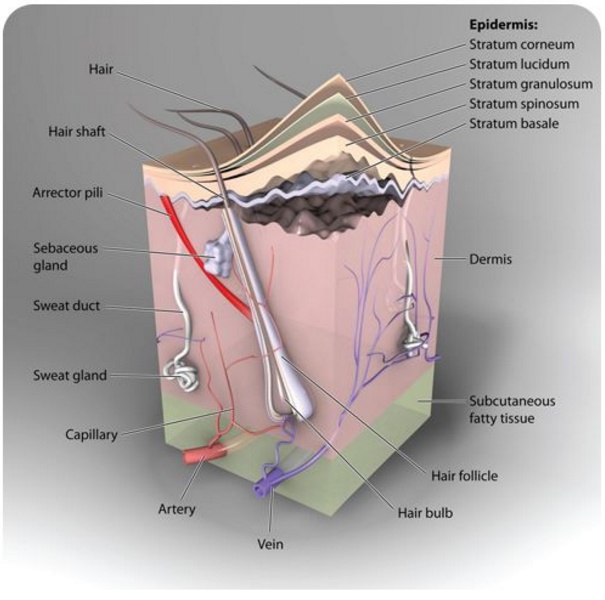
A little over a week ago, I wrote the first part of the "Skin -- Function" in the continuing series: "Anti-Aging Skin Series."  In that post, I briefly introduced the top layer of skin -- the Epidermis.  Generally speaking, there are two main layers of interest to designers of cosmetic formulations and skin care products -- the top two: Epidermis and Dermis.  The last post was concerned with the Epidermis since this layer is made up of 5 critical layers (each with a specific function).


In the interest of Kayla's advice of breaking down the initial blog post on "Anti-Aging," I chose to divide up that last post into two parts.  This post will be the second part of the function of skin concerned with the deeper layer below the Epidermis -- the Dermis.  Without further delay, lets explore the Dermis in regards to the function that it plays in the overall purpose of skin.


Usual Disclaimer:


For some readers the material might be too elementary ( or too much detail).  I would challenge you to think deeply about the simplicity of the descriptions and also I will include links for you too (on the side with greater detail).


How Important Is The Dermis?


I decided to start off this part with the question of "How Important Is The Dermis?"  Why?  In order to answer these questions, lets revisit the diagram of the structure of human skin.  A diagram of the structure of human skin taken from a book authored by Dr. Zoe Draelos and Dr. Peter Pugliese titled "Physiology of the Skin" is shown below:


As you can see the top few layers of the skin make up the epidermis and were discussed in the previous post.  From the diagram above, the first assumption of the function of the dermis in relation to the entire "skin" as an organ might be to serve the epidermis.  In the last post, we learned that the epidermis is not static and is quite dynamic (evolving over time).  Since there is no vascular layer in the epidermis, a supply of some sorts needs to come from somewhere.  Where is that "somewhere"? The dermis layer of the human skin organ.


What are some of the other functions of the dermis layer?


If "Wikipedia" is consulted to answer the question above, here is the response in the form of an excerpt:


The dermis is a layer of skin between the epidermis (with which it makes up the cutis) and subcutaneous tissues, that primarily consists of dense irregular connective tissue and cushions the body from stress and strain. It is divided into two layers, the superficial area adjacent to the epidermis called the papillary region and a deep thicker area known as the reticular dermis.[1] The dermis is tightly connected to the epidermis through a basement membrane. Structural components of the dermis are collagen, elastic fibers, and extrafibrillar matrix.[2] It also contains mechanoreceptors that provide the sense of touch and thermoreceptors that provide the sense of heat. In addition, hair follicles, sweat glands, sebaceous glands, apocrine glands, lymphatic vessels and blood vessels are present in the dermis. Those blood vessels provide nourishment and waste removal for both dermal and epidermal cells.


The dermis appears to play a large role in the production of skin.  Stem cells start forming here and move up into the Epidermis to proceed further into the five layers -- which were discussed in the previous post.  Above all else, the dermis plays a critical role in thermal regulation.  Controlling the body temperature along with providing the sense of touch, reaction to heat, and housing the glands to secrete toxins makes the dermis layer critical to having healthy skin.


Upon inspection of the dermis layer in the diagram above, the layer appears to be quite heterogenous.  Heterogenous means that there are multiple components that make up the dermis -- which have many different functions -- such as those highlighted in the excerpt above.  In order to control the body temperature, the ability to sweat is critical.  Sweating is the main avenue toward "cooling down" the body.   Along with the hair follicles and blood vessels are sweat glands.


How many sweat glands do we have on our skin?


According the American Academy of Dermatology website, we have a the following in every square inch of skin:

1) 650 sweat glands

2) 20 blood vessels

3) 60,000 melanocytes (which give skin its color)

4) 1,000 nerve endings (sensing touch, pain, etc.)


Wow!!


How many sweat glands are needed across our entire body?


In a previous post that I wrote on my personal (Mike Thinks) site, the number was set at around 2.5 million strategically spread throughout the human body surface.  These sweat glands are mixed with a system of blood vessels that differ in size and range in function -- from providing oxygen to the epidermis (lower layers) to providing oxygen and nutrients to the dermis.  Remember, the dermis makes up around 90% of the skin (three layers: Subcutaneous, Dermis, and Epidermis).  The temperature control and shock/strain control are a major function.


How Does The Dermis Produce Healthy Skin?


In the previous post on the epidermis, the outermost layer of the skin was essentially the "defining layer" toward the appearance of healthy skin.  Although, there are five layers of the epidermis that are continuously changing.  Over the course of two months, stem cells formed in the dermis layer move up through the epidermis and go through the following processes.  As the layers move toward the surface, the cells start to die out and flatten out.


At the same time, the body produces a "glue" called the "natural moisturizing factor" to hold the flattened out 'corneocytes' together.    This layer of the epidermis is responsible for holding in water and helping to regulate the body temperature.  At this point, you may be wondering the following question:


Why are you talking about the epidermis when the post is about the dermis layer of the human skin?


The reason is because the dermis and epidermis work in synchronization with one another.  Collagen, the "cushy" part of the skin -- giving skin the volume or body is produced in the dermis and then moves into the epidermis -- which ultimately flatten out.


As people age, their skin tends to lose collagen.  Additionally, as the "natural moisturizer factor" is depleted over time and not replenished by our body, then the skin tends to dry out and become irritable and flaky.  Other descriptions include "crepey" skin.  This is where the importance of using skin conditioners -- moisturizing factors become important.  That is one way of keeping healthy skin along with not smoking, drinking enough water, and staying out of the sun.


Do not fall for the scams!!


Now that you have knowledge of the process by which skin is produced, try not to fall for any scams.  For instance, if a cosmetic product has a "promise" or "claim" written on the bottle that the formulation contains "chemicals" or "ingredients" that will replenish the "collagen" in your skin -- do not fall for the scam.  The only way to produce more collagen is the genetically enhance the production.  If that were possible, the cosmetic product would still fall out of the reach of the skin care business -- and would need to be FDA (Food and Drug Association) regulated.  The product would have to be treated like a pharmaceutical product.  Be careful what you believe in a product's claim.


Conclusion...


Over the past three blogs, I have introduced the structure and function of the human skin.  Along the way, I have raised questions which should remind you (the reader) to be wary of the claims on a given cosmetic products brand.  At the same time, when a cosmetic product is being used to enhance the appearance of your skin, be sure not to interfere with the skin's natural progression (of producing new skin) to shed old skin.  Any good cosmetic product should enhance the appearance of your skin while allowing the skin to regulate body temperature and feel wonderful touches.


Remember as we traverse the landscape of anti-aging claims and products that above all, your opinion is most important.  Looking back on questions such as: "What does healthy skin look like for me?" -- are critical to consider when deciding which cosmetic product is right for you.  Alternatively, do not forget that the human skin is a living organ.  Despite the corneocytes that have died and flattened, there is a whole other layer -- dermis to consider with the vast networks of blood vessels and sweat glands along with the nerves to consider.  Quite possibly, a cosmetic product could damage the 'dynamic' nature of the skin or process.  Normally, cosmetic chemists aspire to achieve the correct formulation for a given result.  But each of us should be wary of the method by which the result is achieved.


Until next time, have a great day!!!


Thursday, September 15, 2016

Anti-Aging Skin Series Post 2: Skin -- Function - part 1

A couple of weeks ago, I wrote a short little blog post introducing the "structure of skin" in the first blog post on the "Anti-Aging Skin Series" which is a break down of a long post titled "Can Science Really Reverse Aging Skin?".  With the basics of the "structure of skin" in hand, the next obvious blog post should be on the "function of skin."  Why - you might ask?  Well,  as with most scientific advances, "structure" and "function" are the critical components of any new scientific advancement.  Many consumer products make wild claims.  Additionally, many consumer products claim to "possess" ingredients (chemicals) which will perform (in a certain way) or heal specific diseases.  With regard to chemistry and chemicals found in consumer products, understanding the "function" of a chemical based on the "chemical structure" is critical to understanding any benefit or disadvantage.


Usual Disclaimer:


For some readers the material might be too elementary ( or too much detail).  I would challenge you to think deeply about the simplicity of the descriptions and also I will include links for you too (on the side with greater detail).


With this in mind, lets explore the "function of the skin."  To understand the function each macroscopic layer plays, the easiest way is to start from the outside and work our way down - inside.  I use the term "macroscopic" to emphasize that the cellular picture is too specific for the discussion and will be referred to when needed.  The outermost layer of the skin is referred to as the "Epidermis."  If we continue down inside the organ (skin), the next two layers would be: Dermis, Hypodermis.  Since the purpose of the "Anti-Aging Skin Series" is to break down a long post into edible bites, I think in the current post, introducing the function of the Epidermis will be more than enough for one reading.  Enjoy!


What is the function of the Epidermis?


A diagram of the structure of human skin taken from a book authored by Dr. Zoe Draelos and Dr. Peter Pugliese titled "Physiology of the Skin" is shown below:


In the first chapter of the book, the content is captured appropriately by the title of the chapter -- "Behavior of Normal Healthy Skin."  Of the three types of skin mentioned in the introductory post about skin (access here), the two types of skin that are relevant to the cosmetic industry are the outer two layers: epidermis and dermis.


I am a big believer in not "reinventing the wheel" -- meaning, I like to cite other authors work and use their explanations when better understood than mine.  From the first chapter of the book, here is a description of the epidermis that captures the function in a simple but complex manner:


The epidermis is the outer skin layer that forms a outer barrier to the outer world.  This barrier keeps out water, sunlight, insects, germs, heat and cold, dirt and gases.  It keeps in fluids such as water and blood, and holds safe minerals, vitamins, hormones, proteins and heat.  An incredible self-renewing system, the epidermis provides replacement of the outer cells lost to the environment.  It provides a water proof outer layer, yet permits internal water to carry nutrients to the outermost living cells.  It provides a tough outer layer to resist friction, abrasion and pressure, yet is sensitive to the lightest touch or softest breeze.  Less glamorous, but equally as important, the skin serves as a vast waste disposal system, ridding the body of many toxic substances.


I had to read that excerpt a few times before comprehending the entire range of the skin.  Remember when your older sister or brother use to grab onto your arm skin and twist it -- to cause a sudden escalation of pain along with the outcry...."stop that you bully..."   Well, I had my fair share with dispensing a few to my younger brother.  Yet, at the time, the last idea running through my head was the dynamic range of the skin.


To be able to withstand abrasion, yet feel the softest breeze.  The body is amazing.  From the diagram above, a person would never have been able to ascertain the many functions that the outer layer of skin provided.  At least, I would not have been able to (I cannot speak for anyone else).


Here is a short -- 2 minute video worth watching to give you a basic idea about the epidermis that was taken from the website "Chemist's Corner" titled "What Is Skin For?" shown below.  I highly recommend viewing the short video before reading further into the blog post:


The producers did a great job of listing the relevant steps in the process of producing the various layers of the epidermis. If I had just started with the weird names such as "stratum corneum" you might have been asleep already, right? 


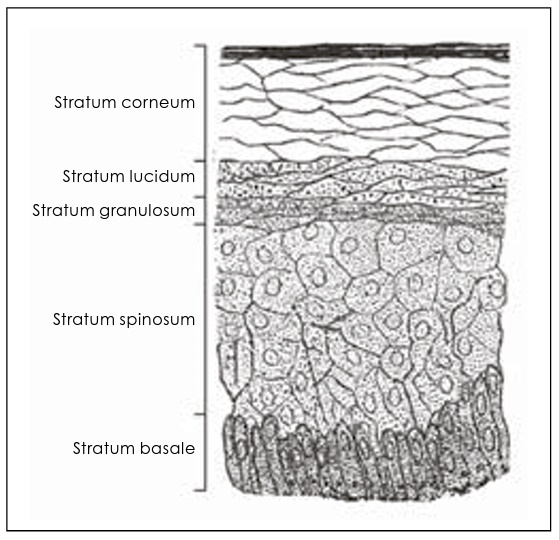
The Epidermis can be split up into five layers which are of importance.  Especially, when formulating a product.  The outermost layer of the epidermis is the "stratum corneum" and for functional purposes is the hardest.  Keeping foreign invaders out is just one purpose along with the many others listed in the excerpt above.  The four layers underneath the stratum corneum serve to different steps in production of the outermost layer -- as you will see shortly.  The video above illustrates the point just made that the bottom few layers manufacture the final outer layer of skin.  Lets take a look at the stratum corneum below.


Function of the Stratum Corneum


As I just mentioned, the stratum corneum is fueled by the layers underneath.  Below is a brief breakdown of the layers along with an excerpt to clarify a few key terms which will help us understand anti-aging products claims and effects in later blogs.  Further, at times, the Stratum Corneum will be referred to in abbreviated form -- "SC".  Here is a diagram of the Stratum Corneum taken from the book above -- "Physiology of the Skin" shown below:


Working our way to the top from the bottom, a few points about each layer should be understood by a cosmetic chemist or a consumer.  There are many claims that originate out of the "marketing" or "Public Relations" departments in product lines that have no or very little scientific basis.  After reading about the various layers, as a consumer, you might have a different perspective toward your next purchase.


Without further ado, starting with the Stratum Basale:


Cells known as keratinocytes start forming in the stratum basale layer.  Additionally, another type of cell of importance is made here -- melanocytes which produce the chemical pigment melanin.  Melanin is devoted to skin color but also contributes as a defense mechanism again harmful UV rays.


An important note about the various layers of the epidermis is that there is an upward movement of the layers.  Think of a reptile like a snake which over time will shed it's skin or the teeth of a shark which produce a new set every weeks.  Similarly, the keratinocytes and melanocytes that are made in the basale layer will eventually make their way up to the outer stratum corneum layer.


Note: But first, on their way, transformations will occur.  These transformations will be a change of polarity in the proteins itself, death (cells will flatten out and dry out/die), and production of natural moisturizer factor.  That is to say, cells that arise in the basale layer will eventually die when they reach the stratum corneum.


Next, the Stratum Spinosum:


In the stratum spinosum, the keratin cells start becoming "spiny" -- which is to say, their shape starts to  change.  Lipid production has already occurred in the previous layer, therefore, the lipids are very similar in structure.  This layer is referred to as "early differentiation."


The "Zone of Transition" -- Stratum Granulosum:


In the "zone of transition," many changes are starting to occur.  There is the keratin proteins have started to fill the cells completely.  Earlier, in the stratum spinosum, lipids were 'static' (i.e. not changing).  That is not the case in the stratum granulosum.  Along the way, the production of various macromolecules have started to take place.  In this phase, sterol production is increased along with glycolipids, and cholesterol sulfate.  The SC is now close to formation.


Finally, the Stratum Corneum:


In the last layer -- the layer closest to the environment (the outside world), the keratinocytes have lost enzyme function and are doomed to flatten out into their final shape.  The cell has lost most of the function -- except that the new function is to be flat and hard -- to serve as a barrier toward to outside world.  As the cells (keratin protein filled) harden the matrix forms of "flattened cells" -- called corneocytes.


The matrix of corneocytes have intercorneocyte layers.  Intermixed in the layers are lamellar bodies.  These bodies serve an important purpose.  The secretion of vital chemicals (such as free sterols, sphingolipids, and other compounds like glycoproteins).  Combined, this chemical matrix permits both hydrophilic and hydrophobic materials to pass through the intercorneocyte space.  The matrix serves as a "guard" agains foreign invaders.


Overall, the layers of the underlying skin have produced the critical components for the formation of the stratum corneum.  Here is another excerpt that might help clarify the complex stratum corneum from the book:


Keratin is the protein that makes up the bulk of the SC.  Keratin is a helical, or coil-shaped fibrous protein made up of a series of building blocks, known as polypeptides.  These polypeptides are, in turn, made up of the most basic substances, known as amino acids.  Amino acids are arranged in a variety  of orders to form chains of polypeptides, which are then twisted around each other to form proteins.  These polypeptides vary in different parts of the body so that the skin protein is not homogeneous, but rather heterogeneous.  The protein is resistant to water and many chemicals.  It is this complex structure that provides part of the protection from the outside.  Manufacturing proteins is one of the major functions of the skin.  
These keratin proteins are formed and arranged into cells known as corneocytes that are held together with fats, known as lipids.  The SC can be thought of as a brick wall, with the protein-rich corneocytes forming the bricks and the lipids functioning as the glue.  It is this brick wall that provides the barrier necessary for the beauty and health of the body.
The lipids that keep the proteins glued in place in the SC are water-insoluble, oily substances.  They can be classified by their electrical charge and by their structure.  The two major groups of lipids are polar lipids and nonpolar lipids.  Polar lipids have an electrical charge.  Examples of this type of lipid are phospholipids, glycolipids and cholesterol.  Non-polar lipids have no electrical charge.  Tryglycerides, squalene and waxes are examples of this group.
The six major structural groups of lipids are: triglycerides, the most abundant lipid in the body, which function as energy strorage compounds and make up between 12-25% of the lipids in the SC; fatty acides, which give the oily feel and make up between 12-20% of the lipids in the SC; waxes, which make up 6% of the lipids in the SC; and cholesterol, shingolipids and ceramides, which make up between 14-25% of lipids in the SC.


Does the Stratum Corneum seem complicated?  This layer is the smallest layer and most crucial layer toward the outside world.  The total thickness is around 150 micrometers.  To give you an idea of the relative size of this layer, a human hair is around 70 micrometers.  The stratum corneum is roughly two hair strands in diameter and of the upmost importance with the multifunctions that it provides in relation to protecting the body from outside forces.


And last but not least regarding the stratum corneum -- it is the only layer that is visible on the skin.  Therefore, the stratum corneum defines the image of the skin on the body.  Scary to imagine that a layer of the skin that is roughly two strands of hair thick -- gives rise to the image of healthy or diseased skin -- Wow!  Additionally, the process of producing a new layer is accomplished over a ten week cycle (every 2 months a new SC)!


Conclusion...


The structure of the outer layer of the skin -- the Epidermis -- is more complicated than you would have initially thought.  Although, I would like to highlight that you do not have to be a professional medical doctor or a dermatologist (specialist) to understand the physiology of the skin -- the basics.  Additionally, I would like to drive home the point that you need not be a professional to tease out the "false" or "absurd" claims that cosmetic manufacturers use to get the consumer (you ) to buy their product.  Each product has different benefits and disadvantages.  Some more than others.  Ultimately, you will decide which you will purchase and use.  I just provide some insight in the process.


A few final questions that you (the reader) should entertain after reading the post (and the next blog post) would be:


1) How do cosmetics (skin, creams, lotions, etc.) affect the function of my skin?


2) How is my skin different than other people's skin?  - i.e., dry skin, itchy skin, psoriasis, etc.


3) What does healthy skin look like for my skin?


Each person is different.  Therefore, each of us have different skin needs.  There exist general skin functions as highlighted above.  Although, when a person has a unique skin condition or need, the function might be slightly different.  This is not a bad observation.  In fact, this observation might be a saving grace for you -- in terms of money and health.  Until next time, have a great day!


Saturday, September 10, 2016

$100 Garden

We had a great time at the Cactus and Succulent Society of America (CSSA) Inter-City Show. Exhibitors from Los Angeles, Long Beach, and San Gabriel Valley showcased their potted plants. There were CSSA members from as far as Fresno (a 3.5 hour drive). They got together and chartered a bus!
These are the beauties we brought home
It took some time to investigate more about each of these plants.  I'm going to tell you about each of the 13 plants I bought, in an effort to better understand them myself.  We spent $100 at the CSSA show to bring these plants home.  I spent a bit more on larger clay pots and some cactus & succulent specific potting soil to create a home for each of them.  I'm interspersing this story with some of the blue-ribbon winning specimen from the CSSA show, which tangentially relate to the plants I bought.

The spikey green plant in the upper left corner of my box is a bromeliad (Dutericonia brevifolia), affectionaly called 'The Dude' due to its Latin name.  'The Dude' likes full sun, regular water in summer, no water in winter.

brevifolia
The next two members of the top row in my box from left to right are a cactus (Gymnocalycium mihanovichii) commonly called 'Moon Cactus' and a succulent (Pleisopilos nelii) 'Royal Flush.' These two are currently sitting in front of my computer screen.  The 'Moon Cactus' is actually orange due to a lack of chlorophyll (the green pigment in leaves) so it cannot tolerate direct sunlight especially in summer, also not frost-tolerant and detests humidity during winter.  'Royal Flush' needs a deeper pot to accommodate its taproot, full sun, and weekly watering in late summer to early fall, so I've got to find a place for it either at school or outdoors in the yard.

Gymnocalycium 
The cactus in the upper right corner is (Opuntia basilaris) 'Beaver Tail' which is blue in color and may be allergenic for some people.  It needs maximum light exposure in full sun. Below it is a succulent (Crassula perforata) called 'Giant Buttons on a String' or 'Pagoda Plant.'  This plant can be grown between windows, which is an interesting idea.  Bright light brings out red tones, adaquate water will ensure the leaves do not shrive unduly.  A relative is in the lower left corner, Crassula rupestris sometimes called 'Tom Thumb' or 'Jade Neckalace.'  Due to its compact leaves, this variety can be good in miniature gardens.  Thrives in a shallow pot for years.  Needs water year-round and full-sun to stay compact.

Echeveria 
The middle row has a purple-hued plant at the far left, between 'The Dude' and 'Tom Thumb.' This succulent is a variety of Echeveria called 'Cubic Frost' that forms fleshy, somewhat square, recurved leaves in frosty lilac-pink with blue-green centers. It may eventually produce bell-shaped flowers in orange, which would provide nectar for pollinators.  Echeverias need bright light to prevent "stretching," grows slowly, and tolerates thorough watering so long as soil is quick draining.

Echeveria 
The two cacti in the middle may look like they are related, but in fact they have little in common. The wavy one is called Echinocereus melanocentrus and is native to Texas.  It needs blasting sun and a wide pot, requiring more moisture than true desert cacti to grow and produce flowers.  It is a tiny cactus, most likely will not grow taller than 1 foot and wider than 4 inches.  The other cactus in the middle of the box is called Opuntia microdasys 'Bunny Ears' and is native to central Mexico.  It needs a good amount of light and is sensitive to overwatering.  It has a few other funny names including angel's-wings and polka-dot cactus.  Although slow growing, it may eventually form a dense shrub, under 2 feet in height.  
Fenestraria 
The last cactus in the box is perhaps the most fascinating. It has an unassuming spherical shape barely protruding from the ground, green, up to 2 inches in diameter. It is called Pygmeaocereus bieblii, a name which hints towards its diminutive size. In dry months, its stem retracts and dives under the ground. It is only in wet periods that these plants become visible as they absorb moisture and swell.  Its spines look more like warts or insects rather than spikes, and it is native to Peru.

Lithops 
The plant in the bottom right corner is a succulent (Sempervivum) sometimes referred to as 'Hen and Chicks.'  It needs full sun, although cannot tolerate heat, therefore tolerates shade.  It takes little water and could rot if watered too often.  The other two plants I have not yet discussed, unfortunately have perished.  In the course of one month, I let the plants sit indoors for 2 weeks, the moved some of them outside for 2 weeks.  I didn't water them for 2 weeks, watered them once, and then let them sit for two weeks.  Fenestraria aurantiaca 'Baby Toes' and Lithops karasmontan v. Summitatum 'Living Stones' pretty much shriveled up and I believe them to be dead now.  Maybe it was a lack of sun in the first 2 weeks.  Maybe they needed more water.  Now I know why the woman at the CSSA show was admiring her colleagues work so much.  You really appreciate the "green thumb" of another gardener after you've experienced a failure in your own garden.


One challenge I'm having now is that when I water some plants, the hose drips on others.  Some plants are intolerant of winter watering, so I have to make a water-free area for them.  Also, I put some plants in what I believed to be the sunniest part of the yard, only to come home and see that the shade-loving plants were in the sun and the sun-loving plants were in the shade.  I think the important lesson to learn is patience and forgiveness when things grow slowly and sometimes challenges arise that you've already missed the opportunity to solve.  In conclusion, that's what $100 buys you at the CSSA inter-city show.

Tuesday, September 6, 2016

Where Is Post #2 For "Anti-Aging Skin Series"?

It's been a couple of weeks since the first post appeared in the "Anti-Aging Skin Series" and I am sure (just kidding) that everyone is waiting for the next post?  Right?  Well, a week and a half ago I managed to pull a muscle in my back and could not write (type at the computer).  This injury coupled with the beginning of the academic semester here at the university at which I work has impeded (slowed down) my blogging progress.  No worries though -- I am back and ready to go.


With this in mind, I want you (the reader to know) that I will get a post out within a week.  I have been thinking about the series and I am excited about the series.  After I give an introduction to the "structure and function" of the skin, we will head into the claims in the previous blog -- the original blog -- titled "Can Science Really Reverse Aging Skin?"  Then from there, we can head into looking at a few popular "anti-aging" products that are sold at various venues such as "Massage Envy".  In doing so, the various claims will be matched by the ingredients.  Along the way, references will be provided for you to verify.


Last week, I just was speaking to my father -- who is a doctor (vascular disease specialist).  On the day of our discussion, he just so happened to be reading about "dermatology".  I decided to tell him about the series.  Specifically, I discussed the order with which I would introduce the concepts and arguments about the discoveries that science has produced.  He was fascinated for many reasons and offered some advice.  I will incorporate that advice into the series.


I look forward to releasing the next blog post soon (within a week) on the "function of skin" in the "Anti-Aging Skin Series" for you to enjoy.  Until then, have a great day!